



16 JANUARY 2026 | ANALYSIS
What started as a standard day in Reform UK’s maverick politics – an 11am press conference to announce the Scotland Reform leader Malcom Offord, who is now a former Lord – was just starting as Kemi Badenoch launched a video on X, to the surprise of everyone.
In the video, Badenoch announced she had been made aware of “irrefutable evidence that [Robert Jenrick] was plotting in secret to defect in a way designed to be as damaging as possible to his Shadow Cabinet colleagues and the wider Conservative Party”.
Subsequently, and rather unceremoniously, she kicked him out of the Shadow Cabinet, removed the Conservative whip and also suspended his party membership.
This was a seismic announcement, timed to cause damage to the Reform Party rather than the Conservative Party, and predictably Reform’s announcement of their Scottish leader was completely overshadowed by the psychodrama of Kemi kicking out Jenrick over his apparent and imminent defection to Reform.
Protestations came from Mr Farage over questions about Mr Jenrick defecting, with Mr Farage claiming that while he had had dinner with him months ago, there was no final agreement on a defection, let alone a date for one.
Questions from journalists were typically chasing answers for this story, with Mr Offord only being asked secondary questions – almost as a courtesy, rather than for any particular scrutiny.
Over the day, there was much speculation as to what Jenrick’s next move would be; he was completely radio silent, with the only footage of him being on Sky News simply walking away from camera. Farage was making light-hearted jokes at the morning conference about calling Jenrick after they finished, keeping all eyes on the Reform Party for a defection.
There was an afternoon announcement to be made that, according to Farage himself, was about Conservative and Labour cancelling council elections and an update on Reform’s judicial review of these decisions.
Speculation about how true this was was debated on X, as well as on emergency podcasts and broadcast shows, since it was odd for Farage to fly hundreds of miles from a Scottish leader announcement to simply give an update on a judicial review.
For five hours, speculation continued as there was nothing to be heard from Reform or Jenrick about his next moves. Many Tories were announcing their dismay that Jenrick could be so selfishly ambitious as to leave the Tory Party, of which he was likely to be next leader, to join Reform in a position that certainly would be no higher than the Shadow Cabinet.
During this time, the Shadow Justice Secretary position was not long vacant, as Nick Timothy was announced to take up the position, which is quite the promotion for a newcomer to Parliament. The only announcements from Reform were ignoring the Jenrick drama, and instead trying to remind everyone that they now in fact have a Scottish leader that had become a footnote for the day by noon.
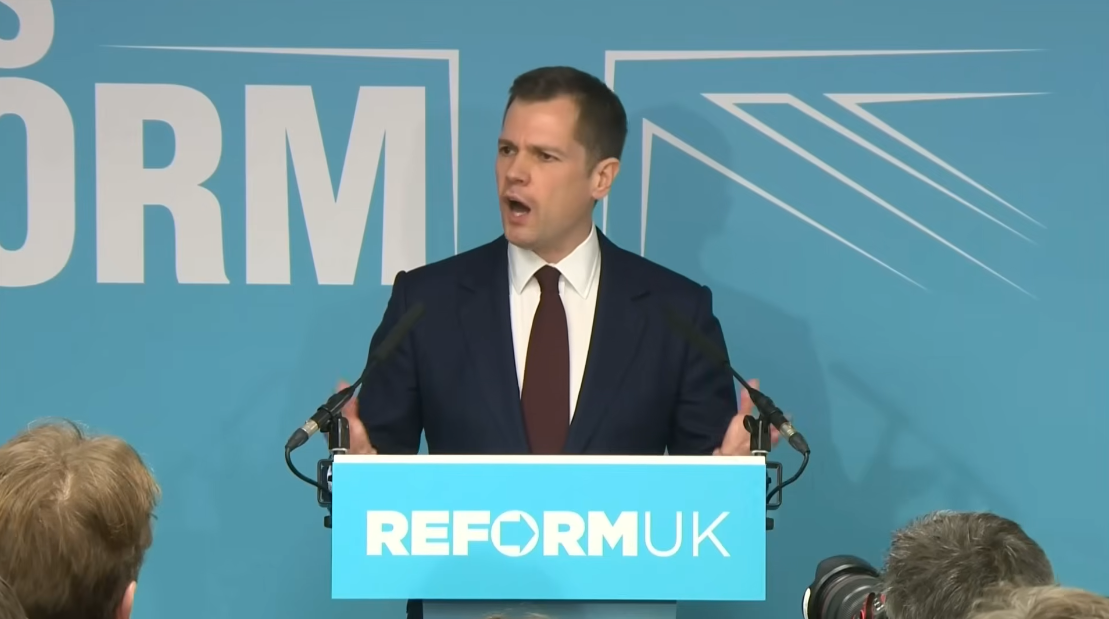
At 4:30pm, Mr Farage took the stand at Reform HQ to announce he was planning on announcements for Reform’s challenge to cancelled elections, yet given the morning conference was overshadowed, he thanked Badenoch for pushing Jenrick out and straight into Reform’s arms.
After an awkward minute or so of Jenrick missing his cue to come in and announce he was joining Reform, he finally came in, made a speech hitting all the notes we hear from ex-Tories.
He spoke of how the awful policies and results that Labour have delivered were, in fact, problems and results of over a decade of chaotic Tory rule, which Jenrick does not feel as though the party has sufficiently apologised for.
Thus, Jenrick has joined Reform to personally make amends for his part in that and deliver what was ultimately promised by the 2019 Tory Government. His job at Reform is not exactly finalised yet, but he will clearly be bringing his experience to help the party as they prepare for governance.
Possibly the most important announcement that Farage repeated through the afternoon was that defectors only have until 7 May – the day of the local elections – to join Reform.
The logic is that there is little risk to the Tories after the local elections, as Reform are expecting to do very well and remove the Conservatives as a political force in both Wales and Scotland, as well as many areas of England, so there is no riding the Reform wave if it might well be guaranteed.
This will also ease the anxieties of Reform turning into the Tories 2.0 – a label that is sticking. This is a problem also being addressed by Farage repeating through both conferences that there will be a Labour defection next Tuesday, which is more information about a defection than we have had before – showing how aware Mr Farage is of this Tories 2.0 problem.
Time will only tell, but yesterday was certainly more than just another day in the increasingly choppy waters of contemporary Westminster politics.