



9 JULY 2025 | OPINION
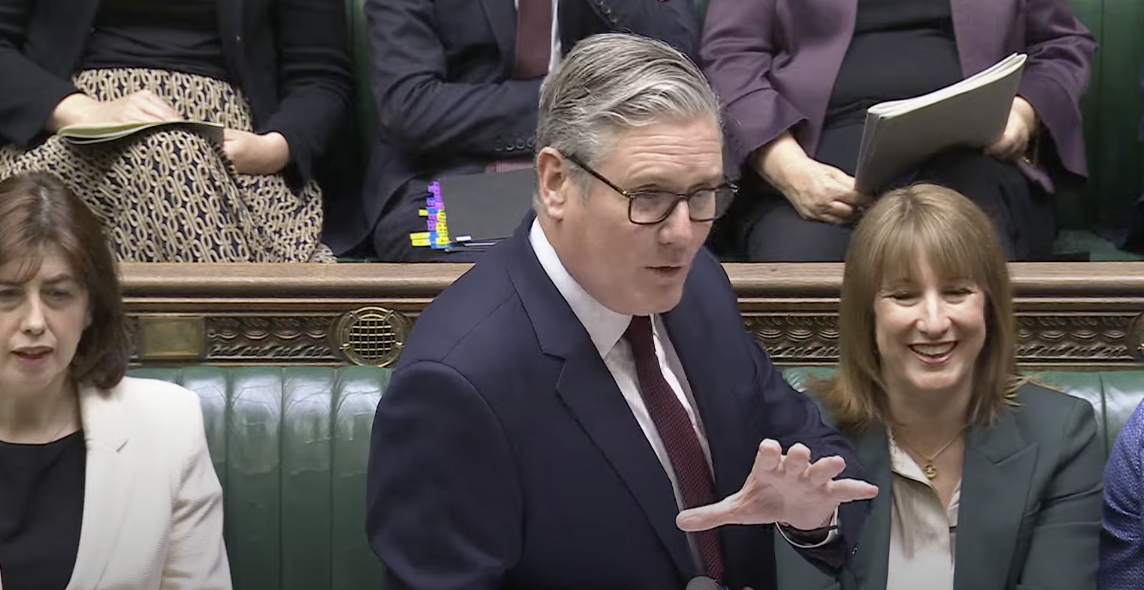
In their opening remarks, the PM and the Leader of the Opposition both paid tribute to Lord Tebbit, who died on Monday.
Mrs Badenoch said Tebbit had “helped to save our country from the chaos of the 1970s”. She said that Sir Keir was “dragging us back” to that era, what with “doctors’ strikes; tax bombshells; the wealthy leaving in droves”.
Kemi’s questions still need sharpening. When she said: “In its Manifesto last year, Labour promised not to increase income tax, not to increase National Insurance, and not to increase VAT. Does the Prime Minister still stand by his promises?” Starmer simply replied: “Yes”. Readers can work out for themselves the weaselly angles in that answer; not for nothing does The Mail’s Richard Littlejohn call him “a complete and utter lawyer”.
Similarly, Badenoch said unemployment has risen every month in the last year, while Starmer said 384,000 jobs have been created. It is possible for both statements to be true; what has been clarified?
The PM spoke of “£120 billion of inward investment” into the UK, but it is hard to find a breakdown of that figure. Is it investment that will provide a profit for us? For example, the US giant BlackRock has reportedly bought £1.4 billion worth of UK houses – cui bono? As Harold Macmillan said in 1985, criticising the Conservatives’ privatisation strategy: “First of all the Georgian silver goes, and then all that nice furniture that used to be in the saloon. Then the Canalettos go.”
Starmer goes further, in the case of Chagos – he gives away the asset and then pays heavily for its use. On the strength of that, Mauritius is cancelling its national debt and exempting 80 per cent of its employed from income tax. If he could do that here, we’d all vote for him.
Instead, there is talk of a wealth tax on the rich, as mooted by Neil Kinnock and former Welsh First Minister Mark Drakeford. The PM refused to be drawn on this, either by Badenoch or the Greens’ Adrian Ramsay. Qui tacet consentire videtur. Let’s see where a Denis Healey-like “squeeze” gets us. Will it apply to ‘property speculators’ BlackRock?
It is not clear that the PM can distinguish between investment and charitable spending. He said the employers’ National Insurance increase was an “investment that […] went into the NHS”. Naturally, we want the sick, injured and disabled to be supported, but how much of that yields a profit in the form of a return to taxable work?
Another difficult area is Special Educational Needs and Disability (SEND), especially in the case of children. The PM said Labour had “invested an additional £1 billion in SEND”. Your correspondent has worked in SEND for years and the interventions are hugely expensive. Primary age children excluded from mainstream settings can be helped, and then it often blows up when they progress to secondary schools, where tolerance is limited because teachers have more pressing goals to attain.
These causes are worthwhile, but we need to be able to afford them. The country cannot get back on track if it continues to add foreign claimants on a massive scale. It may swell our GDP, but at what point will inward migration actually pay for itself? Astonishingly, Starmer asserted that “migration [is] coming down”; there must be some exceptionally subtle way to justify that.
When Nigel Farage aired the issue he could scarcely be heard for barracking; his Reform UK colleague Lee Anderson raised this as a Point Of Order, and the Speaker blandly replied that Farage “is capable of dealing with his own battles”.
The PM himself had said Reform UK had no reason to complain about immigration, as they had voted against his Borders Bill – without revealing one of the devils in the detail: it “abolishes the Home Secretary’s power to remove asylum seekers to so-called “safe third countries”. That link refers to the possible legal objection of “refoulement”, but it must be remembered that a sovereign UK Parliament can do anything it wants, provided the Bill’s wording is clear and explicit – notwithstanding any other law anywhere.
One way to save money is on justice for the wronged. Ben Lake (Plaid Cymru) told how a constituent who had been exonerated at a retrial after five years’ imprisonment could not get compensation “due to a 2014 change to the law that requires those who have been wrongfully imprisoned to prove their innocence beyond all reasonable doubt. That is an almost impossible hurdle to overcome.” Sir Keir said he had “undertaken to look at it”, which is almost a non-promise.
The PMQs session segued into a further sinister development: the creeping plan to do away with jury trials. The Justice Minister, Sarah Sackman, told Robert Jenrick (Con) that, in the interests of swift justice, jury trials “will remain in place for the most serious cases”. We can hear a progressive cutaway coming, as with King Lear’s retinue.
Peter Hitchens is quite right to warn us, as he does today. Having served on a jury, your correspondent can confirm how important it is to weigh up the evidence and arguments of witnesses, police and court officials in the minds of the jurors, who are given the greatest responsibility and a derisory allowance for their time.
The Minister quoted Clause 40 of Magna Carta as saying: “To no one will we … delay right or justice”, but the debate needs to centre on Clause 39:
“No free man is to be arrested, or imprisoned, or disseised, or outlawed, or exiled, or in any other way ruined, nor will we go against him or send against him, except by the lawful judgment of his peers or by the law of the land.”
This does not specify a jury trial, though in customs and practices, that is what it has long been taken to imply. Once juries are largely done away with, the system can drift towards bureaucratic efficiency – impatience in a gown.
If there is a court backlog, perhaps it is because crime has proliferated owing to lax policies regarding policing and a reluctance to prosecute, along with sentencing that seems set to offer up to an 80 percent reduction in time actually served.
Evil grows out of anarchy – not out of just, prompt and firm rule. Have we not seen this with the grooming gangs? And then, when society feels itself under threat, will come tyranny.
Long live Magna Carta.