Home Blog

PODCAST: Down the Pub #12

Along with Peter Simpson, we discuss what Labour has left out of the Budget analysis, the upcoming local elections, the grooming gang report, the two-child benefit cap, and how the Leader of the Green Party has suggested that some jobs ought to be reserved for migrants.

Watch the interesting discussion below!

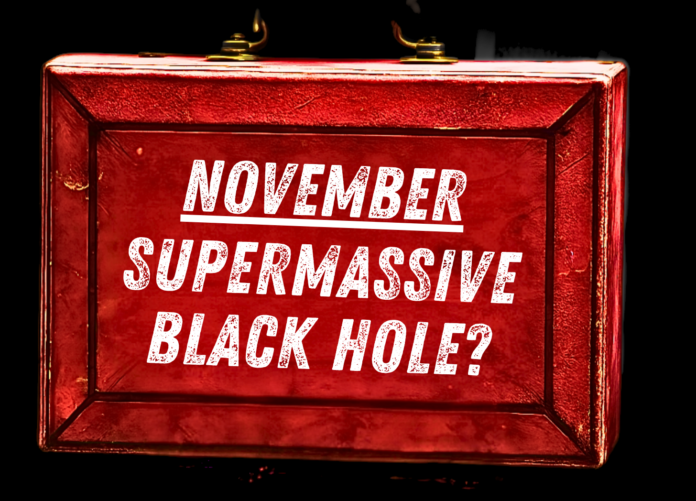
Supermassive Black Hole? November: Labour’s Budget Fiction, Crime Failures and Chaos

9 DECEMBER 2025 | OPINION

Black Hole of Honesty

November was the month when the numbers stopped adding up – not in the spreadsheets, but in the story being told about them.

Rachel Reeves came to the Dispatch Dox insisting there was a £22 billion “black hole” that demanded one of the biggest stealth tax grabs in modern British history. Within days, it emerged that the hole was, in fact, a surplus – and that the Treasury knew. The figures had been ‘presented’ in a way that justified raiding people’s pay packets to compensate for a flatlining economy, all while claiming Labour was doing the responsible thing.

That is not just a bad look; it is a fundamental breach of trust. The Chancellor – and by extension the First Lord of the Treasury, the Prime Minister – is supposed to be the person who tells the country the truth about the economy, even when it hurts. Instead, money trees – sorry, taxpayers – watched the numbers bent to fit the politics. For a government elected on the promise of honesty after chaos, this is not an accounting error; it is a choice.

Folded into this was the scrapping of the two‑child benefit cap. From the Labour benches, it was sold as a moral crusade that would “lift children out of poverty” and prove the party’s heart was still in the right place. In reality, it was throwing a bone to backbenchers baying for blood. You are paying more because Starmer wants to be Prime Minister a little longer.

Scrubbing the cap is economically illiterate. Labour has chosen to fund its great act of supposed compassion not by bringing an out‑of‑control welfare budget to heel or boosting productivity, but by taxing low and middle earners harder for at least a decade. That does not ‘lift’ anyone out of poverty; it shuffles poverty around. Families who never claimed a penny now face higher tax bills, just as living standards are forecast to fall because of government policy. You do not get to call that a moral good.

At the same time, Labour quietly diluted its flagship Workers’ Rights Bill. The Manifesto promise of unfair dismissal protection from day one was watered down to six months, hailed by Ministers as pragmatic and by unions and Labour MPs as a straight breach of faith. And because Starmer boxed himself in with a ‘no rise in income tax rates’ pledge, the chaos around the Budget exposed the truth: the real squeeze will come from frozen thresholds and stealthy grabs elsewhere, not from the honest, up‑front argument the country was told to expect.

Hovering above all this was the OBR fiasco. Richard Hughes, the watchdog’s chair, presided over the premature release of key Budget documents – a basic failure in an institution that can move markets with a PDF upload. He resigned; in truth, he should have been fired. But even that serious lapse is now being used as political cover, while the much bigger sin – a Chancellor massaging the national narrative with a fictional black hole to justify a historic tax grab – drifts quietly into the background.

If November had a motto, it was this: the country will be held accountable for every penny; the people writing the budgets, almost not at all. What does it say when the people dictating the nation’s finances seem insulated from the pain they are inflicting on everyone else? Put bluntly: the people who broke the rules on their own properties now want to send you the invoice for cleaning up the mess.


Crime and Punishment?

The justice system did not escape the November purge of accountability; it just redirected it downwards.

On the railways, we saw the now‑familiar horror of a mass stabbing on an inter‑city trail;, passengers trapped in a carriage, while a man with a knife turned an LNER service into a crime scene. Terrorism was quickly ruled out, but that barely mattered to the public. The message was simple: we cannot guarantee your safety on basic national infrastructure anymore. The same man had been involved in another incident with a knife the night before, and the police let him go. No-one has been held accountable for that, either.

At the same time, the Government was forced into a series of excruciating statements admitting that prisoners had been mistakenly released from custody. Not one isolated blunder, but a pattern – a systemic problem that has been rumbling away for years, now spiking into a wave of ‘accidental releases’ that has got noticeably worse on Labour’s watch.

Yes, the mess was inherited. No, they have not fixed it. In fact, they have made it worse. For a party that campaigned hard on crime, protection and public safety, it raises an obvious question: was that yet another lie?

Layer onto that the ever‑ongoing migrant hotel saga. Voters were told, repeatedly, that the hotel era was coming to an end. Sites would be shut down, people would be moved on, order and normality would return. Yet November’s Budget quietly pumped even more money into the very hotel contracts that were supposed to be winding down. Incidents in and around those sites continue to mount, fuelling local anger and feeding the sense that both border control and basic law and order are non-existent. Ask the people of Crowborough, who were told their area would not be turned into an overflow holding pen, then watched the money and the coaches arrive anyway.

Accountability looked equally optional in Birmingham. West Midlands Police advised that Maccabi Tel Aviv fans be banned from attending their Europa League tie at Villa Park, citing alarming foreign intelligence about supposed “ultras”. The match went ahead behind a ring of protests, arrests and empty away seats – and by the end of the month, Dutch police were disputing key claims and MPs were accusing the force of ‘fitting’ the evidence to justify an easier policing job. Nobody who signed off the ban has yet paid a price for shutting out an entire set of travelling fans based on information that now appears, at best, badly mishandled.

How do you give something more money if you are supposedly closing it? You do it when the announcement mattered more than the reality. Once again, Labour looks like a party that will say whatever it needs to say in the moment and hope no one reads the Budget tables that follow.


Institutions on Trial

Britain’s institutions spent November going through the motions of accountability without ever quite committing to it.

The Covid inquiry finally produced more volumes of carefully lawyered prose. We learned, at great public expense, that ministers were disorganised, that WhatsApp groups were messy, and that Dominic Cummings swore a lot. What we did not meaningfully confront were the real questions: were lockdowns the right tool at all, in those forms and for those durations? Were we even remotely prepared for a pandemic of this scale? What should be fundamentally different next time?

Instead, the inquiry largely asked whether we should have locked down earlier and harder, not whether the entire approach was structurally sound. It turned into a blame pageant: Ministers sniping at each other, advisers settling scores, a national exercise in reputational laundering on the taxpayer’s dime. Most of the public, after years of delay, shrugged and moved on.

November also brought a devastating reminder of what institutional failure really looks like. The independent review into the murder of ten‑year‑old Sara Sharif concluded that “the system failed to keep her safe”, cataloguing missed warnings, confused responsibilities and professionals talking past each other while a child was being tortured in plain sight of the state. Taken alongside the still‑unresolved grooming gangs scandal – where inquiries drag on, prosecutions falter and politicians tiptoe around the ugliest truths for fear of giving offence – it exposes something darker than mere incompetence. We have built a society that is terrified of offending the right people, and it is children – again – who pay the price. It is hard to read any of this and still believe the usual reassurances that lessons have been learned and processes improved.

One television moment cut through more sharply than hapless breakfast TV presenters were counting on. A 100‑year‑old veteran calmly said that, looking at the state of the country, losing his friends on the battlefield in the Second World War “wasn’t worth it”. That one sentence prolonged the two‑minute Remembrance Sunday silence longer than many would have wished – and it was not just an indictment of Covid policy, but of the political class and the nation they have built.

Over at the BBC, the collapse was more specific. Tim Davie and Deborah Turness walked away after the Trump documentary scandal – a programme that, through editing choices, left viewers with a misleading impression of the current US President’s actions around the Capitol riot. The corporation insists it was an “accident”. It was not. On paper, this is accountability: two senior figures step down, reviews are launched, statements are made about “learning lessons”. In practice, it looks a lot like choreography.

Even the security state joined November’s dance. MI5 took the unusual step of issuing a formal espionage alert to every MP and peer over a “covert and calculated” Chinese attempt to penetrate Westminster, while Ministers promised fresh laws and tougher powers. Necessary, yes – but it also raised a quieter question in the background: how long had these efforts been going on, and who, if anyone, will ever be held responsible for missing them sooner?

If you can misrepresent the words of a sitting President in a flagship documentary and still be treated as an unfortunate victim of events, rather than the author of them, then what ‘accountability’ really means in modern Britain is the appearance of consequence, not the reality of it.


Politics Without Consequences

Inside No. 10, November felt less like a government in control and more like a party slowly realising that power has exposed its contradictions faster than expected.

Between No. 10 and No. 11, the neighbours descended into briefing wars. Stories about “chaotic” operations, mixed lines, and backbenchers panicking about a decade of tax rises became a constant drumbeat. Leadership challenge gossip, once confined to bored lobby hacks on slow days, started to feel less fanciful – especially when Labour MP Clive Lewis openly offered his seat to Greater Manchester Mayor Andy Burnham. This was no longer palace intrigue; the first shot of the impending civil war had been fired.

Hovering over it all is Morgan McSweeney, Labour’s Rasputin‑like strategist – the strategist whose fingerprints are on everything from the tax raid to the attack lines, and whose presence in the shadows fuels the sense that this is a project run by a tiny, unaccountable court rather than a serious Cabinet.

Labour’s left flank, meanwhile, is eroding. For years, progressive voters were told the only adult thing to do was hold their nose and back Labour. Now, month by month, the Green Party is quietly eating into that vote. The polls show Greens edging into double digits and, in some snapshots, nipping at Labour’s heels among younger and more urban voters. The Greens do not need to form a government; they simply need to split the vote on the left enough to turn Labour majorities into marginals and marginals into losses.

And on the opposition benches, accountability came with its own twist. Reform UK’s former leader in Wales, Nathan Gill, was jailed for more than ten years for taking bribes to push pro‑Russia lines – a brutal reminder that some politicians do, eventually, face real punishment. Yet, even as Reform found itself under that cloud, the stench of Russia around the party is starting to linger and people are noticing. Its polling surge has stalled, and Kemi Badenoch, now Leader of the Opposition, has begun to find a sharper footing – using the Budget chaos and the watering‑down of the Workers’ Rights Bill to argue that Labour breaks its word on both tax and jobs, and that there is still a Conservative route back if her party can start telling the truth.

That is the real danger of November’s Budget moment for Starmer. It is not just that people dislike being taxed more; it is that they feel they were misled about why, and they do not see any real contrition when the numbers are exposed. Once voters conclude that ‘they all lie’ again, the ground opens up for anyone who can plausibly claim to be telling the uncomfortable truth – whether that is the Greens, independents, Your Party, or a yet‑to‑be‑invented vehicle.


November’s Rain

Thread these stories together and November stops looking like a random scatter of crises and starts to resemble something more coherent and more disturbing.

A Chancellor sells a historic tax grab on the back of a fictional “black hole”. A welfare change marketed as a moral triumph risks pushing more families into relative poverty. A flagship workers’ rights promise is diluted while Ministers swear blind that no manifesto pledges have been broken and that income tax will somehow never rise.

A justice system that cannot keep trains safe, cannot keep dangerous offenders behind bars and cannot get a grip on the migrant hotel system continues to insist the real problem is you, not them. A policing decision in Birmingham shuts out an entire set of football fans on the basis of intelligence that now looks, at best, badly mishandled.

A safeguarding system is told, in black and white, that it failed to protect a ten‑year‑old girl from torture and murder. A Covid inquiry that should have been a reckoning becomes an exercise in asking the wrong questions. A national broadcaster treats a serious editorial failure as an ‘accident’, allows its leadership to walk away comfortably, and carries on.

The security services issue stark warnings about Chinese espionage in Westminster, while nobody is quite sure who, if anyone, will be held responsible for the years it went unnoticed. A rising vote to Labour’s left quietly signals that voters are already shopping around for someone – anyone – who might mean what they say, just as Reform’s Russia‑tainted brand collides with a Conservative leader who finally sounds as if she has spotted the open goal.

In some of these stories, nobody has taken the fall. In others, people have walked away tidily. A handful have ended in real prison sentences. And a few more now carry the unmistakable smell of a reckoning postponed, not avoided.

This is not just about competence. It is about consequence. Modern Britain is becoming a country where accountability is something imposed on the powerless, not practised by the powerful. November 2025 will not be remembered for one single headline.

It may, however, be remembered as the month a lot of people quietly decided that if the institutions will not hold themselves to account, they will eventually find somebody else who will.

PODCAST: Down the Pub #11

Along with Peter Simpson, we discuss the allegations against the Chancellor that she misled Parliament over the Budget shortfall, what it means for the Prime Minister, and a major donation in cryptocurrency to Reform UK. Alongside this, the formation of a new local party by Rupert Lowe MP.

Find out more by listening to what we had to say below!

Riding Out The Storm – PMQs 3rd December 2025

Credit: UK Parliament / YouTube
3 DECEMBER 2025 | OPINION

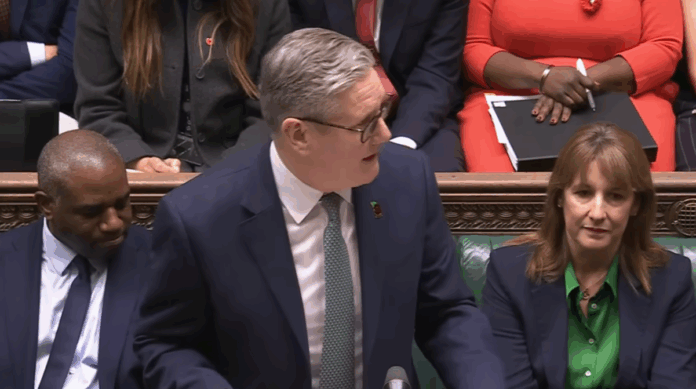
To begin at the ending, a very good place to start. Starmer was finally told off for his time-wasting habit of making a speech before questions commence. According to Quentin Letts, Speaker Hoyle fumed: “Never again!” We shall see if the PM heeds the scolding.

The latest speechlet was inter alia about the cost of infant formula and the Tories’ failure to lift children out of poverty. That linked well to the first query, Ian Lavery’s, which spoke of the low incomes and shortened lives of his constituents in the North-East and asked Sir Keir for a discussion about the way forward.

Lavery blamed the crippling legacy of deindustrialisation on the Tories, but sadly Sir Keir had little to offer by way of solutions. Instead, the PM boasted of abolishing the two-child benefit cap, raising the minimum wage and a £150 discount on domestic energy bills. That is palliative care, not a cure.

Life on poorly-paid employment and government handouts is killing Lavery’s people – deaths of despair (from suicide and alcohol/drug abuse) are more than twice as common than in London. What they need is decently-paid work so that they can support themselves and their families, and pay their taxes.

Manufacturing has not disappeared; it’s gone abroad. So has much of our cash, spent on importing the goods we could have produced for ourselves – that is one reason why money now circulates half as fast in our economy as it did in the 1980s.

We have to rebuild our industrial base, and above all we need cheap energy. Until we abandon Net Zero, the country’s finances will continue to unravel ever faster, as we import millions more who Labour hopes will be a replacement loyal voter base for them.

For rather than fight for national recovery, the PM has given up on the Northerners to focus on Labour’s re-election strategy. “Starmer’s abandoned us,” a Red Wall MP told the Mail’s Dan Hodges. “It’s basically every man for himself.”

In the exchanges between the PM and LOTO, Sir Keir said the Chancellor’s Budget last week would “create the conditions for economic stability”. He claimed growth was up, wages were up. So was unemployment, retorted Mrs Badenoch; “no-one believes a word the Prime Minister says”. 

Hearing Starmer’s cheery claims, one is reminded of Iraq’s “Comical Ali”, reporting victory as US tanks rumbled in the background. He is correct in saying the Conservatives have failed us, but he (or would that be the Cabinet Office?) shows no awareness of our economic vulnerability and how to mitigate the damage. If Steve Keen, one of the few economists who predicted the 2008 financial crisis, is correct, we are facing another deflationary collapse like that of the 1930sEven the Bank of England is warning of a crash.

What do we get instead? Emotive language. “Shame” was a word used six times by Sir Keir as he clobbered the Opposition with poor kids, the NHS and the Conservatives’ hurty words about the Chancellor. Also “apologise“ and “decency”, twice each. Pretty soon, he will reply by holding up emoticons like these: 😳 🙏😔😇 for the benefit of our increasingly less well-read electorate. Not that they will have the chance to vote, if he has anything to do with it.

The Leader of the Lib Dems described as “wise” the PM’s Chief Economic Adviser’s suggestion of a fresh Customs Union with the EU. Starmer told Reliably Wrong Man that the UK was working on closer relationships with the EU, but that there were some “red lines”. If there is any doubt as to the folly of running back into the arms of Brussels, remember that David Lammy has also been promoting the idea.

We really don’t need to tie our little ship to the rudder of the Titanic. We should concentrate on battening the hatches.

PODCAST: Down the Pub #10

Along with Peter Simpson and Szymon Sawicki, we discuss the Budget we all knew was coming, what it means for the country, and who will pay for it.

Watch below to see what we had to say!

PMQs and Budget – 26th November 2025

Credit: UK Parliament / YouTube
26 NOVEMBER 2025 | OPINION

Today, we will group PMQs by party.

LABOUR

Rachel Hopkins celebrated the freeze on rail season ticket prices. Cat Eccles urged buying in the High Street rather than online. Leigh Ingham wanted road-building projects to be completed more speedily. Luke Akehurst criticised Reform’s Durham county council for cutting support for working families. Jenny Riddell-Carpenter said the Tory-led Suffolk county council should improve safety measures outside schools. Jen Craft quoted the Covid inquiry’s figure (based on modelling) of 23,000 preventable deaths caused by the Johnson government’s delays. Mrs Sureena Brackenridge congratulated a men’s health organisation. Ben Coleman said we should boost economic growth by closer trade ties with the EU, blaming difficulties on the Tories’ “poorly-managed exit” from that organisation. Emily Darlington campaigned for the “White Ribbon promise to never use, excuse or remain silent about men’s violence against women”.

CONSERVATIVE OPPOSITION LEADER

Mrs Badenoch paid tribute to the farmers who had come that day to Westminster to protest the family farm tax.

She noted that the OBR’s analysis of the Budget had been leaked prematurely and quoted the former Chief Economist of the Bank of England as saying that Labour’s “fiscal fandango” is “the single biggest reason growth has flatlined”.

She called on the PM to deny that his advisers had briefed against members of the Cabinet. He did so, at least as regards those at “Number 10”. She replied that his Chief of Staff had investigated himself and found himself innocent.

She noted that the PM had said he wanted Angela Rayner back in the Cabinet, despite her recent resignation for tax evasion. Would Rayner be made to pay her tax and return her severance pay? Sir Keir did not say yes or no to that.

Mrs Badenoch summed up by saying his Government is chaotic and has lost the trust of his MPs, the markets and the public.

OTHER CONSERVATIVES

Mark Pritchard spoke of a hypersonic and ballistic missile threat from Russia, to which we have no “current counter”; how would the PM keep us safe? Lewis Cocking talked of the economic cost of roadworks and traffic jams.

LIBERAL DEMOCRAT LEADER

Sir Ed Davey asked why Labour were raising taxes instead of “fixing the £90 billion Brexit black hole in the public finances” with a better trade deal with the EU. Following the jailing of Reform’s leader (Nathan Gill) in Wales, he also wanted the PM to launch an investigation into Russian infiltration into our politics; China was not mentioned.

OTHER LIB DEMS

Alison Bennett highlighted the problem of patients who could not leave hospital because care packages were not in place. Josh Babarinde deplored the lack of a statutory requirement to report incidents of physical restraint on school transport for SEN children, as well as of national training standards. Sarah Dyke wished the PM to rethink the damaging family farm tax. Adam Dance asked Sir Keir to safeguard defence-related employment in Yeovil by confirming a new medium helicopter contract.

PLAID CYMRU

Liz Saville Roberts echoed Sir Ed Davey’s call for a “full investigation into foreign interference in our democracies”; again, she only mentioned Russia.

For context, it may be worth remembering that Reform came a strong second to Plaid Cymru in October’s by-election in Caerphilly, and that Nathan Gill’s criminal offence was committed when he was a UKIP MEP in 2018 (he resigned from UKIP shortly afterwards and joined the Brexit Party in 2019.)

PRIME MINISTER’S REPLIES

Aside from agreeing with his friends’ praises, much of what Sir Keir says is like the ‘chaff’ that military planes blast out to distract enemy missiles. For example, his reply to Luke Akehurst’s question on financial support for families in Durham turned into what Nigel Farage may have said as a schoolchild.

Perhaps his most interesting statement was the response to Mark Pritchard’s query on defence:

“It is the first duty of the Prime Minister to keep this country safe; that duty is paramount and above all else, and I take it extremely seriously and treat it as my number one priority. We review our security and defence arrangements all the time, and we are, particularly, a leading member of NATO, which is the single most effective military alliance the world has ever seen.”

**********************************

THE BUDGET

The Chancellor’s Budget is just as woeful as had been feared and again represents a redistribution of wealth from the productive to the unproductive. The BBC gives some details of the changes, but there are many other sources of analysis and lament.

Some commentators see it as a collection of sops to Labour backbenchers to shore up their political support for the PM and the Chancellor herself.

It is unfortunate for Ms Reeves that – having condemned the Office of Budget Responsibility (OBR) for their accidental (?) leak – she should now be embarrassed by the OBR’s revelation that the new “black hole” the extra taxes were supposedly to fill does not exist. She now denies that she misled the public.

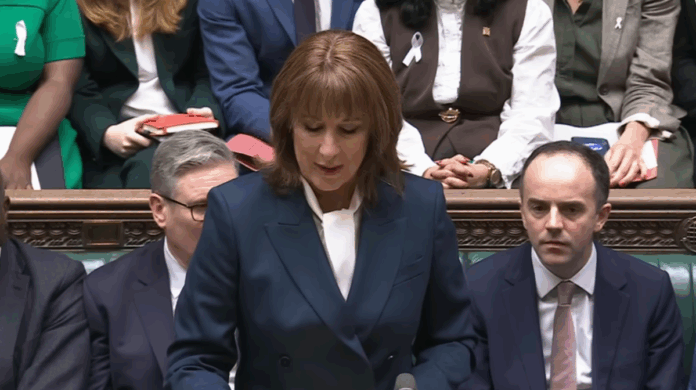
Her embarrassment was even more acute during Kemi Badenoch’s excoriating response to the Budget speech. Her facial expression began to wilt under the onslaught. It is worth watching in full.

Still, what use are words? During PMQs, also watch Starmer’s blank, merciless face traversing left and right in the Chamber as the Opposition protests. It declares: “We are the masters at the moment and shall be for some considerable time.”

The words “chaos” and “chaotic” were used seven times in PMQs, and a further seven in the resolutions after the Chancellor’s Budget speech – right every time, whether describing Labour now or the Tories before them. Nevertheless, it seems we have no choice but to endure the chaos.

PODCAST: Down the Pub #9

Along with Peter Simpson and Szymon Sawicki, we discuss the upcoming Budget, including the likely edge forward and roll back on those matters.

Have a listen to what we had to say below!

PODCAST: Down the Pub #8

Along with Peter Simpson and Szymon Sawicki, we discuss the paranoia at the top of Government, the drag on the economy, and how the Leftist wing is trending in British politics.

You can listen to what we had to say below!

Binfire Night reprise – PMQs 12th November 2025

Credit: UK Parliament / YouTube
12 NOVEMBER 2025 | OPINION

It did not begin well.

The honour of welcoming the PM back to the House fell to the Conservatives’ Lincoln Jopp, who gained his seat for the first time in 2024. Asking for a promise that Starmer would never again miss a Wednesday session, he said last week’s PMQs were “a bin fire”. There are two views about that, and I have already discussed James Cartlidge’s inept grilling of David Lammy.

Ex-Army Jopp also managed to bracket himself with Sir Keir on the subject of attempted coups (“I particularly remember being in West Africa in 1997”). Frankly, almost anyone other than Ed Miliband would be preferable in Number Ten, though whoever it is will be merely a fresh teddy on the radiator of Labour’s truck with its cargo of “watermelons”.

Despite its Net Zero zaniness, Labour is losing voters to the Green Party, the ‘limes’ who are eco-green outside and Pally-green inside – its leader Zack Polanski named “calling out the genocide in Gaza” as one of his missions and, within a week of taking over, got Conference to label Israel “apartheid”. Sir Keir’s paltering over “Palestine” has not stemmed the outflow, which has split like the four rivers, leaving the Garden of Eden: Greens, Lib Dems, Reform and militant Islamists.

It did not continue well.

Even Starmer’s prefatory remarks were like pogo-sticking in a minefield:

  • Marking Armistice Day (for the day before), he welcomed 100-year-old veteran Mervyn Kersh to the Gallery, noting that Kersh had entered Bergen-Belsen days after it was liberated. Sir Keir also remembered Holocaust survivor Manfred Goldberg, who died last week. So, a nod to the Jews, having also given heart to the “odium theologicum” of Hamas. I was once told of a union rep who would metaphorically pour oil on troubled waters – and then set fire to it.

A centenarian not mentioned by the PM is Alec Penstone, who shocked Good Morning Britain presenters by saying the sacrifice of his comrades “was not worth it”, seeing what has become of the country. For the avoidance of doubt, he was not against immigrants, “provided they behave themselves”: his objection was:

“There are too many people with their fingers in the till. Faith in our country was the best thing, but nowadays there’s too many people that just want their own little corner, and bugger everybody else.”

My father, who was with the British 11th Armoured Division that freed Bergen-Belsen, would have agreed. There is the money-grubbing, particularly of the Right, and the power-grabbing, particularly of the Left, who have been happy to suppress mention of industrial-scale organised rapes for the sake of holding onto votes. I now wear a dog-whistle as an amulet against Lucy Powell.

And so to the show, which Mr Jopp awaited so eagerly.

The curtain-raiser was from Labour’s Sally Jameson about giving Coal Board pension scheme surpluses to its members, as promised in the 2024 election Manifesto. From my IFA days, I recall that it has never been definitively decided whether the surplus in a ‘defined benefit’ scheme belongs to the employee or the employer – the latter is responsible for remedying a deficit and, by implication, may be entitled to any positive excess. But if £2.3 billion extra is passed on to ex-miners, it will be a shot in the arm for what used to be the Red Wall constituencies. There may be a political conundrum, in that Starmer has said he represents working people who do not have savings…

The main feature was Mrs Kemi Badenoch, who mounted a broad attack on the PM, beginning with the Health Secretary Wes Streeting’s claim that there is a “toxic culture” in Downing Street. Sir Keir praised Mr Streeting’s achievements in over-delivering NHS appointments and scrapping NHS England. “He is doing a great job,” said the PM, eschewing the now-ominous phrase “full confidence”.

“Full confidence” was a term also not used, as Kemi noted, for Starmer’s Chief of Staff Morgan McSweeney, who seems to have done so much to help him into Number Ten. The matter of £750,000 in undeclared donations to Labour Together is still a reputational issue, even though the Electoral Commission has ruled out another investigation. Nevertheless, Sir Keir must hesitate at the thought of “dropping the pilot”.

The previous evening, Starmer’s allies had accused Streeting and Energy Secretary Ed Miliband of launching leadership bids; he denied authorising such criticisms. The Daily Mail tells us Home Secretary Shabana Mahmood is also touted as a potential successor and an unnamed minister is quoted as saying the PM is at the mercy of “feral” Labour MPs from the 2024 intake. Badenoch quoted the adjective, but Sir Keir insisted his team is “united”.

The audience participation was becoming lively. Speaker Hoyle told them: “If people want to audition for a pantomime, I suggest they go to the Old Vic.”

The exchanges moved on to the economy with the usual claims, counter-claims and blame-storming. Employment was up and so was unemployment. One Starmer boast – “we have secured £230 billion of private investment” – reminds us again of the Earl of Stockton’s 1985 comments about sell-offs.

We cannot detail all the other questions, but the BBC continued its lamentable accounting for events by misquoting Rupert Lowe when he called for “the reintroduction of the death penalty for both foreign and domestic criminals” for extreme crimes. They told us he had said “overseas and foreign criminals”, and were swiftly forced to correct their “error”. Does nobody at Broadcasting House have access to Hansard online, where the draft transcript typically appears two hours after PMQs? Of course they do.

No sooner had Sir Keir finished echoing (Labour) Kevin Bonavia’s praise for our armed forces veterans than the Tories’ Stuart Anderson asked about “lawfare” against them. He referred to a letter signed by nine generals deploring “legal activism”. For context, last month the Government approved a new inquest into the SAS’ 1987 operation at Loughgall and SAS recruitment and retention has been reportedly plummeting. There is, however, no provision in the proposed Northern Ireland Troubles Bill for rescinding the Blair-era “letters of comfort” sent to Republican terrorists responsible for an estimated 300 murders. The PM “respected” the generals’ service and their views and said something about “getting the balance right”; perhaps the BBC could offer us one of their helpfully inaccurate paraphrases.

PMQs did not end well, either.

Labour’s Richard Quigley told the House of an NHS Trust’s decision to place a 19-year-old anorexic on an “end-of-life care pathway”:

“The decision directly contradicts guidelines from the National Institute for Health and Care Excellence, and the statement from the Minister for Care in September that eating disorders are not a terminal illness.”

“My thoughts are with Lilly and her family,” said Sir Keir. The details were “deeply concerning.” He would “ensure a swift response” from Health Ministers. Squeeze the comfort out of that.

Decriminalising late term abortion; assisting suicide; executing young mental health sufferers. We are in the grip of an official death cult. I would like to see this Satanic trend consumed in a “binfire”.

David Lammy may have his faults, but he is a Christian.

PODCAST: Down the Pub #7

Along with Peter Simpson and Szymon Sawicki, we discuss the upcoming Budget, proposed education reforms, and the ongoing turmoil of the present Government.

Find out more about what we had to say below!

More from this author

Don't miss...

Wolves of Westminster