



Home Blog Page 72

The Road to a Senate – Patrick Timms

14 MAY 2019 | OPINION

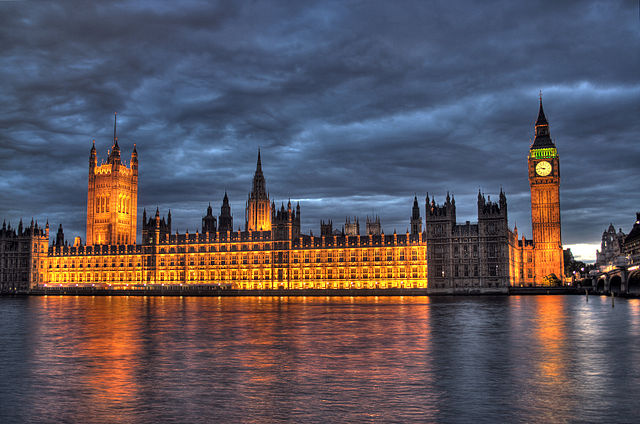
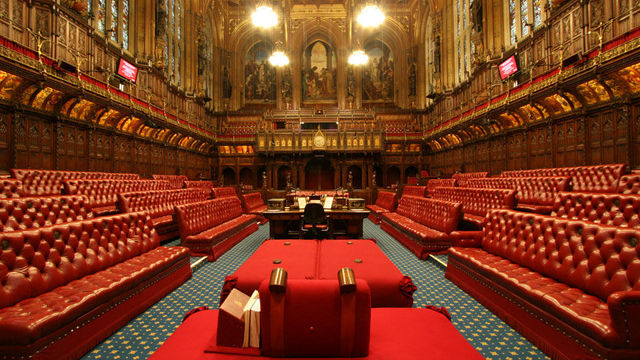
A proposal for the reform of the House of Lords

It has been suggested many times over the years that maintaining an unelected Upper House is no longer democratically sustainable.  Some believe that the second chamber should consist entirely of elected representatives, following the tradition of the Commons, while others believe that it should simply be abolished.  In my view, there are some problems with both of these positions.

It is vital in a democracy that those with the power to initiate legislation are democratically accountable to the people – which is to say that they can be both elected to govern and directly removed at the ballot box.  However, the trouble with being elected is that one must periodically seek to be re-elected.  We have seen over time that this can have an unfortunate effect upon the mind, particularly in the realms of the conscience.

The counterweight to the problems with elected representatives is to be found in those who are appointed.  These representatives are more free to consider matters carefully and deeply, ultimately commenting and acting from that standpoint, without the need to worry about how politically popular a notion might be.  There is a second, but equally vital role to be played here in our system of governance, although it is also important that those who cannot be removed at the ballot box should not be allowed to initiate legislation.

With this in mind, there would be simply no point in having two elected chambers: one holding the real power to propose and ultimately ratify new laws, and one without it.  That would lead to all the problems inherent to elected representatives, while obviating any of the gains from those who are appointed.  Indeed, the argument for abolition of the second chamber in its entirety would certainly be strongest in such an event – but that is not the scenario we face.  There is, however, an argument for reforming the Upper House as it stands.

First, albeit almost as an aside, we should put through the constituency boundary changes that would reduce the size of the Commons from 650 to 600.  We should then ensure that the Upper House can never exceed the size of the Lower while fundamentally altering its character – but not its role – which could be achieved in the following way.

In these 600 seats, we would see a 100/100/400 split.  The first hundred would remain what we currently know as ‘political appointments’, in essence, but with a focus on sending very experienced people to the Upper House.  These could include former Cabinet Secretaries or Prime Ministers, and other politicians and officials with a long history of outstanding service.  This allows those who have retired from front-line politics for whatever reason to continue to offer their experience of how government actually functions at the top.

The second hundred would continue to consist of hereditary peers in the old tradition (expanded slightly from 92).  Many in the wealthy British families of the landed gentry are brought up to inherit these roles, and taught the importance and responsibility that come with them – just as we see with the Royal Family.  It remains an important tradition within our broad constitutional framework, and I see no reason to abolish it entirely.  However, a hereditary peerage should become inheritable by both men and women.

The remaining 400 would be composed of highly capable, respected and experienced experts from a wide range of fields in science, business, economics, industry, academia and the arts.  It would be considered a great honour within one’s field – and wider society – to be appointed as a member of the Upper House, and these figures would bring their considerable experience of reality across a wide spectrum of life to bear in considering and proposing amendments to Government legislation.

We would ensure that the Upper House does not exceed the size of the Lower by operating a ‘one in, one out’ system for the first hundred; by maintaining the current system for the second; and by imposing a 20-year term limit for the remaining 400 members.  We would strive towards greater discipline and rigour by setting an appropriate floor standard for attendance levels, which if persistently not met would result in a Peer’s expulsion.  To accommodate those who wish to continue to work in their field alongside their House duties, this could be set at 50%.

In this way, we would see the Upper House transformed into an organ that operates far more like a Senate, whether or not we also chose to rename it as such.  It would function in a respectful and respectable manner in providing independent scrutiny of Government legislation, but with a focus on expertise as opposed to party lines.  It would also offer a route to invite those with a track record of professional skill and experience to contribute to the governance of their country, providing a pathway for rewarding excellence while also taking advantage of this to the benefit of sound and sensible legislation.

It is my view that reforming the House of Lords in this manner would provide us with a stable and functioning Senate fit for the 21st Century, while also maintaining certain elements of our political and constitutional traditions that have stood the test of time and should not be lost.

As in all things, we find that balance is often the best way forward.

This is how you deconstruct a democracy – Patrick Timms

6 May 2019 | OPINION

What we are seeing in Britain today amounts to nothing less than a quiet, determined deconstruction of democracy in our country. It is not merely an attempt to frustrate one single outcome of the democratic process – it is an attack upon its very soul.

The foundation of democracy is a bond of trust between a government and its citizens. The power to govern is derived from an expectation that the will of the people will be enacted. Key to this is an understanding that power flows from the people to the executive, and not vice versa.

It would seem, however, that the assumption of those in power has been quite the reverse in recent years. When they speak of “representative democracy” – as so many have lately – it almost appears as though they believe their constituents ought to represent them. This is a fundamental misunderstanding of democracy, and it breaks that bond of trust.

Following on from that logic, in the case of the EU referendum, the people were trusted by the executive to make the “right” decision. When that result spectacularly failed to emerge, their reaction was one of barely-concealed shock. After all, that is a very human response when we feel that someone has let us down.

Angry and frustrated as they were with the outcome, it seems our ruling classes’ faith in even their own distorted view of democracy has been shattered. They are now at a point where it is far easier for them to simply dismantle the whole thing than try to repair it. And so has begun a long, slow assault on that great enterprise spanning some 800 years, but which let them down so badly when they needed it. In doing so, they have all but destroyed the true faith envisioned by a democratic system: that held by ordinary voters, for whom it may well be the only tool they can wield.

The easiest way for politicians and civil servants to gradually boil down the largest democratic mandate ever handed to a UK government was to work to make it undeliverable in practice. There were many planks to this strategy, but the most fundamental one of all was to quietly take “no deal” off the table.

Naturally, this was never said openly – although plenty of voices in the UK Parliament could be relied upon to call for it, almost from the outset. Nonetheless, when one analyses the various twists and turns of this whole saga, it becomes obvious that neither the current government nor the last one ever had much intention of negotiating with the strength of hand that only the ability to walk away from the table can provide.

The outward confidence that the UK displayed as a nation when the Prime Minister made her Lancaster House speech was absolutely on point. It set out a negotiating position and strategy that was exactly what one might have expected in order to honour the referendum result, and negotiate from a place of strength. Looking back now, however, it would be difficult to deny that we have worked backwards from there towards our current state of capitulation.

From agreeing to the EU’s timetable for negotiations, to failing to prepare adequately and publicly for a potential “no deal” scenario from the outset, those who wished to ensure that no deal could never be better than a bad deal have taken successive steps to game a situation in which everyday voters themselves were left, in the end, with that belief.

For this is how you deconstruct a democracy: you undermine and gradually eliminate its people’s faith not only in their government, but also in themselves. You convince them that it is not, and never was, a good idea for ordinary people to take a collective decision on the future of their nation. You paint them a picture of how disastrous the situation now is, while papering over the deliberate steps you took to make it that way. You leave them, at the last, with the impression that perhaps they should never be trusted with their own futures again. That, after all, is your job.

It is said by some that “hurt people hurt people”. Perhaps, in the case of an establishment that has felt comprehensively rejected by the masses, we can see just how true this is.

The key to opportunity – Ben Fisher

31 March 2019 | OPINION

So far, Brexit has been a mess. The UK is subject to a situation of complete uncertainty. Parliament has led us to an abysmal state of affairs whilst disregarding the voice of millions of people across this country. Our MPs must realise the problems the EU has created across the continent. If they can do this, and enact on the 2016 referendum result, a brighter future may be ahead.  

One has to just travel the roads of our continent to see first-hand how poverty and poor governance has ripped the heart from Europe. I’ve spoken to hundreds, if not thousands of Europeans who are, at best, disconnected from their political establishments. At worst, they are grabbing high visibility jackets and rioting on the streets of Paris. The EU has turned the city of love into one of anger. 

But our country holds the key to a better future. The key that can open trade with new markets. The key that will allow us to build a future with the Commonwealth. The key that will enable us to reduce import taxation and support those on the African continent to develop business and trade, reducing poverty across the world. No longer will the EU be able to tax imports of roasted coffee beans because it suits businesses in Italy or Germany. Every true capitalist must see the potential we have to untangle ourselves and trade freely with the world. 

Leaving the EU will reset the clock and open a new chapter for Britain that we can write, a chapter that brings stability and certainty to our proud nation. No longer will we be restricted with our trade nor be told by a bureaucratic organisation how our country should be governed. 

We have a chance to thrive, to build relationships with our friends across the globe. We have the opportunity to invest in new technology and infrastructure that will be required, creating jobs and investment. We can hold onto our future and guide it whatever way we see fit. No longer being nannied by those who live in entirely different cultural and political environment across the channel. 

Most importantly, Brexit provides us the opportunity to vote out those who disrespect our democracy. We must grab this opportunity. And we must do so now. 

————————————————-

Ben Fisher is a political opinion writer. 

Follow him on Twitter @BenFisherCT

The only options for a second referendum – Joe Smith

24 March 2019 | OPINION

If we hold a ‘People’s Vote’, there should be two options on the ballot paper.  Remain and hard Brexit.  

Both Remain and hard Brexit  are compromises; both are a step towards the other. Why? Our democracy and social fabric absolutely depend on the outcome. 

There is a strong case for a binary choice rather than a three-way vote. Three choices could cause the outcome with 34% of the vote to be carried out, despite the other two options having 66% of the electorate’s support. It might also be favourable to put in place a rule which states one of the two options must gain at least 55% of the vote on a turnout of 70% of those eligible – this would enhance the legitimacy of the outcome. 

The Remain choice would suggest an element of reform. Imploring policy makers to pursue a fundamental shift in our policies within the EU. The hard Brexit option would cut off our membership completely but still maintain vital networks, as well as deep diplomatic, security and defence co-ordination. This outcome would include a two year transition as currently planned, it would mean we can still get cancer treatments through EURATOM and that aeroplanes can still travel between the UK and the EU. 

The UK is a powerful voice within the EU, we can influence our allies in the EU to restructure the institution. The UK and other Euroskeptic nations could join a coalition to negotiate what Nick Clegg called “an EU of concentric circles”, with our position in the middle ring. 

If we vote to Remain and reform, the UK electorate will have stated that they want membership of the single market and the customs union and our MEPs to have a role in forging the way forward.

This should be the choice; a barebones deal to stop chaos, or Remain in the outer circle of the EU, mainly an economic player but also with influence over the direction. We can be close allies with the EU and simultaneously say we don’t want to continue with Macron and Merkel’s deep integration. 

Or we can leave, forge our own trade deals, chose our immigration system, increase trade with our allies further afield in the Commonwealth and give them Visas in return. We can keep a close alliance with the EU with diplomatic ties, with cooperation through NATO, and with a robust agreement over the Irish border we can maintain peace through the Good Friday agreement. 

The bare bones Brexit agreement should be followed by a general election. This will determine which party governs into the future and, importantly, the party which will negotiate the UK’s future trade agreement and partnership with the EU. This second referendum should determine if we leave – based on all we have learnt in the past two years – and if the UK votes for a barebones Brexit, the following general election will determine our future partnership with the EU.

All campaigns should have manifestos before the official campaigns are awarded designation, and a clear leadership structure. This is to incorporate some accountability – which was so lacking in 2016 – to make this process a legitimate and democratic one. It also to encourage the campaigns to take a longer view, and say what future relationship they want with the EU. This means no abstract promises, no unrealistic negative economic forecasts, but a campaign based on facts and compromise. 

This is no easy thing to carry through but politically it can be done. It is the following twenty years which will restore or further damage trust in politicians, journalists, judges and ‘the elite’.

Parliament is out of touch with the people – Toby Amiel

20 March 2019 | OPINION

Making a success of Brexit was always going to be difficult. The last three months have brought these challenges into sharp focus. 

Any member of the public looking into British politics could easily be excused for wondering what on earth is going on. Westminster, the mother of all Parliaments, is paralysed. As we approach the legal Brexit date of 29th March MPs are divided and the Government has lost control.Archaic political stunts, the creative reinterpretations of Parliamentary conventions and the reworking of Parliamentary rules are all becoming part for the course for politicians wishing to scupper, delay or soften Brexit. 

Peter Hennessy claimed the British constitution is no longer made up of precedents and conventions; now anything goes. We have had an MP attempt to march out of the Commons with the Parliamentary mace in a bid to stop proceedings, lengthy debate and contestation over the meaning of the word ‘forthwith’ and most recently, cabinet ministers and government whips defying their own whipping operation. Not to mention the lack of leadership shown by Theresa May. In contrast to Brexiteer cabinet resignations, of which there have been many in the last 12 months, she seems terrified of resignations from Remainers in her cabinet, notably Amber Rudd, David Gauke and Greg Clarke. She continues to appease them by having free votes on the most important issue facing this country in decades and is even showing inconsistency herself. 

She has repeatedly claimed that ‘no-deal is better than a bad deal but despite Parliament twice declaring it is indeed a bad deal, she votes to rule out no deal. She repeatedly stated the UK would leave the EU on 29th March but then votes for an extension. She has experienced not one but two of the biggest Parliamentary defeats since Ramsey McDonald in 1924. The list goes on and on. Historical convention dictates a Prime Minister would resign should they lose their flagship legislation by even a solitary vote, let alone 230. But these are not normal times. In any other moment in history the Prime Minister would be gone, yet she fight on. She has been unable to reconcile the combining factions in her party and has left it to the likes of Nicky Morgan and Steve Baker to attempt this through the so-called Malthouse compromise.

The views of MPs are inherently at odds with those of the majority of the British people. Out of the 650 MPs at Westminster, only 158 campaigned to leave the EU. For the first time in the history of referendums held in Britain, the British public voted against the majority held view in Parliament .The sovereignty of Parliament has collided head on with the sovereignty of the people. 

To make matters worse, this was not a passive instruction; the people have not proscribed parliament from actively implementing a policy it supports, rather they have instructed it to actively implement a policy it does not support. As a result a thick fog has engulfed Westminster and resulted in the stalemate we are in. The vast majority of MPs want to be seen to be implementing Brexit simply because they feel they have to, despite their own beliefs. 

Most of the public have a much greater belief in this country to get through challenging times than the representatives they send to Westminster. A Comres poll conducted over the weekend showed 44% of respondents now favour no-deal and many others have shown that a majority of Brexit voters now favour leaving the EU with no-deal. Indeed, the vast majority of Brexiteers in Parliament voted to keep no-deal on the table. It was Remainer MPs who voted to remove it and this in a nutshell demonstrates they have taken control of the process. Many MPs have reneged on promises they made following the referendum result. Sarah Wollaston, Dominic Grieve, Nick Boles etc all stood on a Conservative manifesto pledging to leave the single market and the customs union. 

Parliament subcontracted its sovereignty to the people and it’s important for it to carry out the decision, whether there is a deal on the table or not. What we are witnessing right now are not the realities of carrying out an impossible task as many Remainers would have us believe, rather the difficulty of having politicians carry out an instruction the majority of them don’t believe in. 

There is no historical precedent for what happens next and this is why the process is so hard to predict. Every faction in Parliament still believes their preferred option is obtainable. Only time will tell which one is correct.

————————————————-

Toby Amiel is a political commentator and postgraduate student at King’s College London. 

Follow him on Twitter @TrainSpotter747

Is there any trust left in the Brexit debate? – Patrick Timms

10 March 2019 | OPINION

The trust placed in politicians to deliver on what they promised the electorate, and to do so with competence, is a fundamental principle that is essential to any healthy, functioning political system. 

When they appear unwilling, or simply unable to do so from their voters’ or party members’ perspective, the trust in that system begins to break down. The Transport Secretary, Chris Grayling, has recently been at the sharp end of discovering this – his personal approval rating within his own party has now plummeted to -60.

Trust is an issue that finds itself at the very centre of the entire Brexit debate. I  find, in debating, it can be helpful to try to work back to the original ‘point of divergence’ – the one key issue where the two parties initially disagree, and from which the rest of their views then follow. When I have debated Brexit as a Leave voter with people who voted Remain in the past, there is a particular commonality I have observed – although it is by no means universal. This is that, when it comes to affairs such as environmental protections, workers’ rights and civil liberties, I often hear something akin to “I don’t trust the UK”. The logic that follows is along the lines that we therefore require EU membership in order to maintain the supposed advantages of its rulings and directives.

This is the fundamental point of divergence in the Brexit debate. I do trust the UK and its institutions to govern itself and its people competently and fairly, and I do trust the electorate of this country to bring a government to power that will give effect to this. I find it frankly unnerving how many of my fellow countrymen do not seem to, but I must say that if I agreed with them on this point, I can well imagine I would share many more of their views, and I would most likely have voted Remain myself. Indeed, one person I have debated with even went so far as to say “vice versa” on that score.

Trust is an issue that centres around human beings, and the way that real people choose to behave. One may speak of the trust between the electors and the elected, to deliver on democratic instructions. There is then the question of how much trust exists between the Government and its Opposition (which, believe it or not, can still prevail in a functioning parliamentary system) to unite on key issues in the national interest. There is also the issue of whether or not two negotiating partners – the UK and the EU – can actually trust one another to find solutions that will work for both sides.

I would argue we have found ourselves at our current impasse precisely because trust has brokendown in all of these areas. The present Government does not trust Her Majesty’s Opposition at all, with the Conservative Party living in genuine fear of what a Corbyn-led Socialist government could mean for the country – while the hard-left Labour leadership will simply never trust anything ‘a Tory’ says. Indeed, the Shadow Chancellor has stated publicly that he could never even be friends with a Conservative MP. In respect of UK-EU relations, it could well be argued that the only reason the much-reviled ‘backstop’ arrangement even exists within Theresa May’s Withdrawal Agreement is because neither side fully trusts the other to work towards a mutually beneficial outcome in time.

As for the electorate, the trust that Leavers have placed in parliamentarians to deliver Brexit is now teetering upon a knife edge. The Labour Party has announced that it is officially backing a second referendum on an issue that should have been closed back in 2016, which has led many Leave- supporting Labour voters to feel utterly betrayed – and some have been vocal in saying so. 

Meanwhile, on the opposite side of the House, the Leader of the Conservative Party and our esteemed Prime Minister has offered the Commons a vote on whether to bind Britain’s negotiating hands by taking the option of a No Deal Brexit off the table in a move that has sparked outrage among those who now favour leaving on WTO+ terms, including a great majority of that Party’s own members. While such a vote would not in theory alter the existing statute in the form of section 20 of last year’s Withdrawal Act, the Prime Minister was also clear in saying that Britain would “only leave without a deal on 29 March if there is explicit consent in the House for that outcome”.

One can only wonder what might happen, then, if Brexit – and not BRINO – were not delivered in full and, ideally, on time? It follows that the country would then find itself with a highly cynical electorate. If there were so many people who voted Remain because they did not trust the institutions of the UK to begin with, along with so many Leavers who had now lost that trust… then we would be in totally uncharted territory. We would have more or less an entire electorate that does not trust its own country, for one reason or another. To those who call a No Deal Brexit a ‘disaster’, I would say: try this on for size instead.

The Conservative Party and social reform – Paul Maginnis

5 March 2019 | OPINION

I bet I’m not the only Conservative whose blood boils when they hear the Labour Party talk about the NHS. No matter how much money the Conservatives put into the NHS, it is still being ‘cut’. 

In every election since the 1950s they have accused the Conservatives of healthcare ‘privatisation’. Somehow, it  still exists and is providing treatment to more of us than ever. The most infuriating comment has to be the Labour claim, ‘we created the NHS so of course we are the only party who will look after it’. 

As Conservatives there is an easy way to respond to this incorrect assumption that because Labour created the NHS they own the issue. We simply have to remind everyone of our own record on social reform. The Conservatives in government gave the working-class the vote. Do we own the working-class? The Conservatives gave equal voting rights to women. Do we own women? The Conservatives in government oversaw the creation and development of the BBC. Do we own the BBC? The answer, of course to all three, is a resounding no. Put simply, that is not how we think. We need to take on Labour and show that no political party can own an institution or a particular reform.

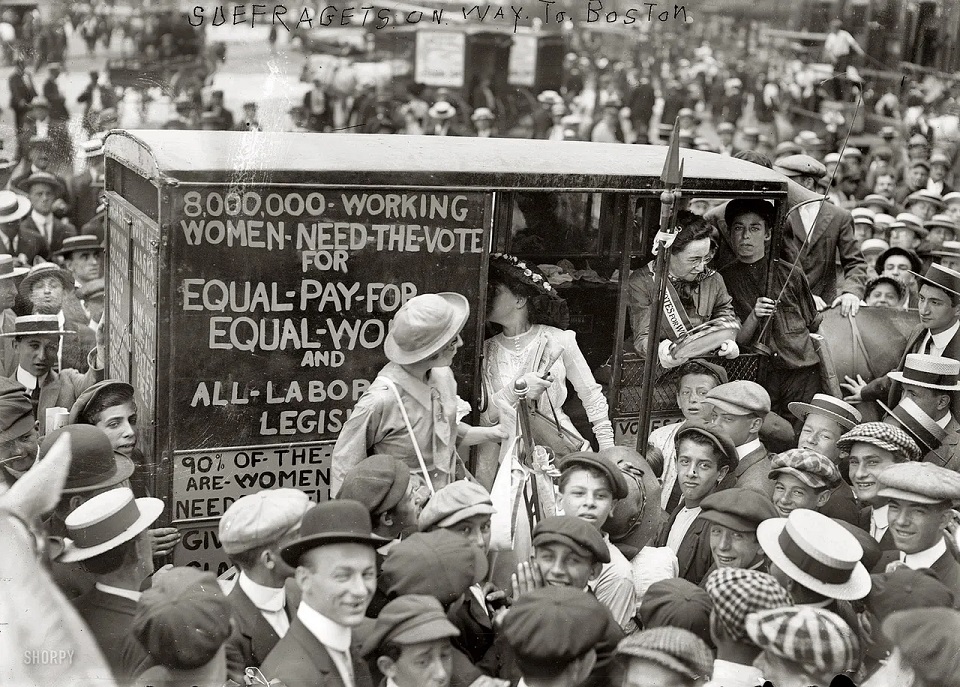
Another great claim by Labour, is that they are the only party who believe in equality. We Conservatives do believe in equality – equality of opportunity, not equality of outcome. For all the talk of ‘equality’ from Labour let’s look at the facts. As stated above, it can never do us harm to remind people it was Conservatives in government who gave the working-class and women the vote. Let’s not forget the great suffragette Emmeline Pankhurst was a member of the Conservative Party and was selected as a candidate to stand for parliament. Even before this period who was the man who dedicated his life to end slavery throughout the British Empire? It was William Wilberforce, a Tory. 

Turning to modern debates on equality, it is the Conservatives who have had two female leaders and prime ministers, the first of which was elected as leader 44 years ago. Even if Labour do manage to elect their first female after Corbyn, it will have been near enough half a century after the Conservative Party. Who was the first Muslim cabinet minister? The Conservative, Sayeeda Warsi. And who is the first Muslim to be in one of the great offices of state? You guessed it, our current Home Secretary, Savid Javid. 

This defence of the Conservative Party’s record on both individual and institutional forms of social reform is not as starry eyed as it seems. In many circumstances we have often been behind the curve and have needed to catch up with the rest of British society. 

This article is simply a reminder to fellow Conservatives that the Labour Party do not own these issues and we have many proud achievements we should not forget.

————————————————-

Paul Maginnis is a Conservative Party member, and author of The Return of Meritocracy: Conservative Ideas for Unlocking Social Mobility.

Follow him on Twitter @paulmaginnis1

Is supporting Brexit an extreme position? – Toby Amiel

3 March 2019 | OPINION

The eleven MPs who now sit as independents do not have a coherent platform on which to stand. They know not what they are for, only what they oppose. The only issue that binds them is their opposition to Brexit. 

They claim that their former parties have become too extreme on the issue of Europe and that a new centre ground party is required. The former Labour MPs argue that by not embracing a second referendum sooner, Jeremy Corbyn has betrayed the country to provide meaningful opposition to the Tory government. They have now welcomed his pledge to back a second referendum. 

The three former Conservative MPs argue that the European Research Group (ERG) has taken over the party and it is has morphed into ‘blukip’. This is a farcical assertion. Since the 2017 election, the majority of cabinet resignations over Brexit have been by leave supporting MPs. What does that tell us? It tells us  the Government’s position has been firmly leaning towards the softer end of the Brexit spectrum. In a recent statement to the Commons, the Prime Minister sided with the Europhiles in her cabinet and party by effectively ruling out leaving with no deal at the end of March. 

Anna Soubry MP told Newsnight last week that she had urged Theresa May to adopt the policy of UK single market and customs union membership. She failed to mention that such a compromise would not fulfil the referendum result of 2016. Former Prime Minister David Cameron stated that voting to leave in the referendum meant voting to leave the single market and the customs union. The Government funded leaflet posted through everyone’s letterbox during the campaign made this very clear. As did the manifestos of both main political parties in 2017. 

Theresa May’s Brexit deal is very close to customs union membership and the backstop might keep us in indefinitely. By opposing this, the ERG are not extreme, rather they are playing an important role in holding the government to account on their referendum and election pledges. By contrast, Remainers in the Cabinet have been openly flouting collective responsibility and briefing against the government’s leverage of no deal. Such infighting against a policy of no deal being the default option, simply because we cannot see it appearing on the horizon, is undermining the Prime Ministers negotiating position at such a crucial stage. The EU now have no incentive to offer any concessions to the deal knowing the ‘can’ can just be kicked further down the road.

In 2017, leaving the EU along with its customs union and single market were manifesto pledges made by both the Conservative and Labour parties. This was the platform that all eleven now Independent MPs stood on. In the space of eighteen months this commitment is now being dismissed by these same MPs as an extreme position. They all propose a people’s vote with the option to remain in the EU. Considering their views have changed, if they were consistent in their logic they would hold by-elections. 

UK politics has long needed a shake up to stay representative of the people it claims to serve. Brexit can be the catalyst to achieving this. Unfortunately this new independent group of MPs only ambition is to maintain the status quo.

————————————————-

Toby Amiel is a political commentator and postgraduate student at King’s College London. 

Follow him on Twitter @TrainSpotter747

The future of the NHS – Tom Pritchard

25 February 2019 | OPINION

Save Our NHS! Save Our NHS! is the tone of today’s healthcare debate across Britain. Tory moderates say they are in favour of the NHS and more inward investment. They also say it’s good for the economy and good for Britain. But are they actually right?

We need an outside perspective. Former Republican Congressman Bob McEwen from Ohio takes a different view: “Attlee took the greatest Parliament in the World and turned it into a hospital board meeting”. He remarked that he watches PMQs every week and continually sees MPs asking about A&E waiting times and hospital parking charges. In McEwen’s own country, President Franklin D. Roosevelt’s ‘New Deal’ was a disaster and flew in the face of everything President  Coolidge did a few years earlier in relation to limited government. After the crash in 1929, America elected Roosevelt who would introduce his ‘New Deal’ which, according to Congressman McEwen lead to too much Government interference. As a result, Americans can no-longer get the health care that is right for them. 

Those on the liberal-right put this down to health care being a third-party purchase. If a consumer wishes to purchase a product, they are interested in two factors; price and quality. Consumers want the best quality for the best price. This is called a first-party purchase. Expenditure in which neither price nor quality are considered is a third-party purchase as an individual is using money that isn’t theirs to buy something they will not personally consume. As a consequence, all public sector purchases are third party purchases.

As well as neutering the quality of Parliamentary debate, it can safely be said the NHS is not sustainable. This was pointed out by former Shadow Health Secretary Ann Widdicombe in 1998 at the Conservative Party conference when she claimed a serious cross-party debate needed to be had on the future and the changes needed in health care delivery. I agree. We need a frank, constructive discussion about the NHS, with valid arguments and solutions being put forward from any party; no-matter personal politics which would be a useful debate to have. The sooner this happens, the sooner we can all get the health care system we want.

When Prime Minister, Tony Blair involved private enterprise in health care delivery. This could still be a solution to the problem, whilst  keeping the NHS free at the point of delivery which would satisfy moderate Labour MPs, Liberal Democrats and the Independent Group. Whilst this could bring about a consensus in Parliament, it would still suffer the problem of not being cost-effective due to the Government being a third-party payer.

Overall, I am yet to be persuaded as to how we can reform the British healthcare system. There are many different suggestions that each have varying degrees of credibility. It is clear that it needs to be reformed, we cannot carry on with this. The British people deserve better.

————————————————-

Tom Pritchard is the Branch Secretary for the Tunbridge Wells Conservative Association. Follow him on Twitter @ClowesPritchard

Celebrating the jobs boom – Paul Maginnis

21 February 2019 | OPINION

Statistics can often be dull. But when it comes to discussing the British job market, using them is unavoidable. 

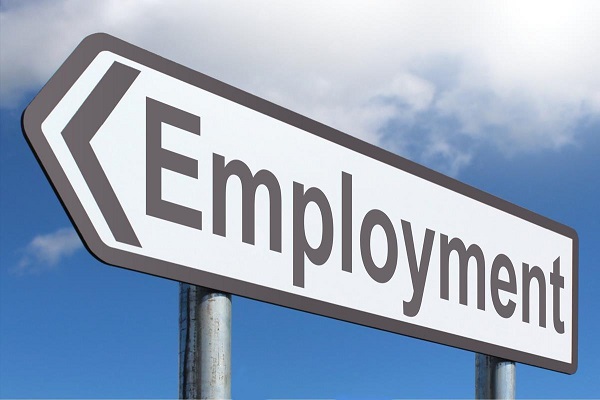
3.8 million jobs created since 2010. Unemployment fallen from 8% to 4% (its lowest since 1975). A record 32.5 million people in work. 750,000 more people in work since the Brexit vote. More women, young people, single parents, ethnic minorities, disabled people and pensioners in work than ever before. This is something the Conservative Party can be proud of. 

How has employment increased so dramatically since the Conservatives entered government back in 2010? 

There are three major reasons.

Firstly, business incentives were put in place by the Conservatives to attract big businesses and higher earners to invest in the UK. This in turn has led to over 3.8 million more private sector jobs being created in the last eight years. Corporation tax was cut from 28% in 2010 to 19% by 2017. This means we have the most competitive tax rate out of all major industrialised countries. In 2009–10 corporation tax raised £36 billion at a rate of 28%. By 2016–17 over £50 billion was raised with a lower rate of 20%. These figures are self-explanatory and this is why I am incredulous when I hear that the Labour Party are planning to abolish tuition fees at a cost of £11.2 billion a year with a 7% rise in corporation tax. Never mind fake news, this is the definition of fake maths.

Secondly, changes the Conservatives have made to tax, minimum wage and welfare have helped the jobs market dramatically. Put simply, the government have made it more attractive to be in work. Cutting income tax by raising the tax free personal allowance has meant many lower wage families have been able to keep more of their money. The introduction of the National Living Wage has been another great incentive. The lowest paid 20% of workers have seen a £2,000 pay increase in the last two years. Since April 2016, those on the lowest wage have had an increase of 11% in pay after inflation is taken into account. This has been a significant achievement as the government strives to create a high wage, low income tax society. 

Thirdly, since 2010 there has been as explosion in self-employed workers. The general narrative is that self-employment has largely been driven by the ‘gig economy’. Clearly, there are issues arising from the gig economy which need to be debated and discussed but research shows  the rapid growth in self-employment has been driven by people in higher paid jobs. The Resolution Foundation found that 57% of the growth in self-employment since 2009 has been amongst educated people working in law, accountancy, health services and management consultancy. They are generally earning £45,000 to £65,000 a year. Many enjoy the flexibility of self-employment and the chance to ‘be your own boss’.

Britain’s jobs boom has undoubtedly been a major success since 2010 but the rise of the gig economy has been a challenging side effect for government. As well as the positive stories of self-employment throughout the last seven years there has been a surge in bogus self-employment. It is estimated that out of the 5 million self-employed workers in the UK, about 500,000 (10%) are in bogus self-employment. This includes companies who have complete control of their workers but seek to classify them as self-employed. This means that workers miss out on holiday pay, the government miss out on tax revenues as less National Insurance is paid and responsible businesses are undercut. 

We need to be celebrating the fact that so many are in work. There are many issues within the jobs market but this governments record is an overwhelmingly positive one.

————————————————-

Paul Maginnis is a Conservative Party member, and author of The Return of Meritocracy: Conservative Ideas for Unlocking Social Mobility.

Follow him on Twitter @paulmaginnis1

More from this author

Don't miss...

Wolves of Westminster