Home Blog Page 74

Brexit Fireworks – Ted Jeffery

7 January 2019 | OPINION

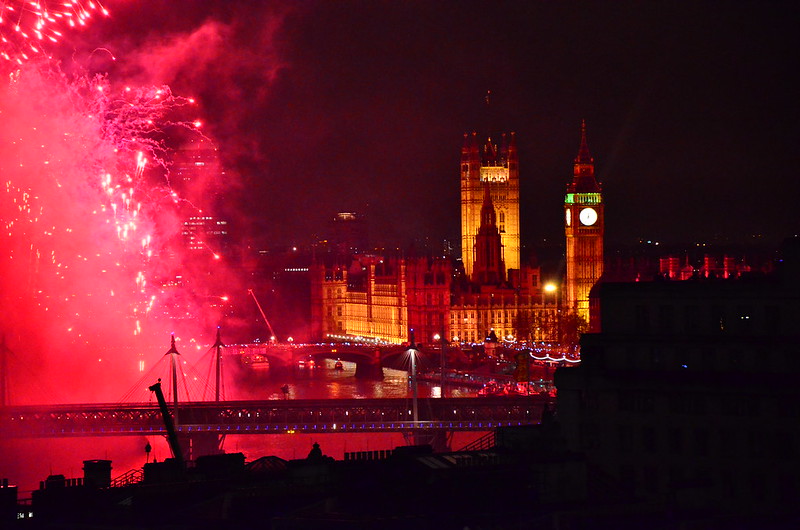
For many, the New Year fireworks display is a celebration of the good and the bad, but more importantly that the future holds excitement and prosperity. 

The UK has never disappointed with its London Eye fireworks show. However, this year Brexiteers were disgruntled by Sadiq Khan using the display to promote a pro-EU message. 

It’s crucial we don’t try to turn every TV show, exhibit and stand-up routine into an opportunity to degrade the idea of Britain withdrawing from the European Union. New Year celebrations should not be the time for political statements. It should be about celebrating the past and looking forward to the future. Many would argue it is about bringing both sides of a politically divided country together to celebrate its shared humanity.  

The Mayor of London was wrong to use the New Year festivities to push a political message. There are many ways of promoting an ‘everyone is welcome’ message without passing comment on an issue like Brexit. The Guido Fawkes blog was quick to pick up the fact that Mr Khan’s #LondonisOpen message wasn’t actually that open. They reported on how Sadiq was only allowing artists from the EU to have their songs played during the event; not only does this show disregard for artists who were born outside of the EU but it seems oblivious to the fact over two-thirds of foreign born Londoners are from outside the European Union.

There are 195 countries in the world, and only 28 of them are members of the EU. There are many better ways of being pro-immigration than only acknowledging 28 countries from the same continent. The political framework of 2019 should be about the UK on a global scale, not a continental one. 

The best way to argue against the political posturing of Sadiq Khan would be to hold a Brexit fireworks display either on March 29th or June 23rd. This would allow Britain to promote a message that the UK is open to the world, not just 27 member states. 

So here is my petition to get our very own Brexit Fireworks Display – Will you help me out?

Click this link to sign the petition:

https://petition.parliament.uk/petitions/236381/sponsors/new?token=IzgFxYhQ4aGhPhZ2bGy

————————————————-

Ted Jeffery is a journalist and podcaster. Follow him on Twitter @TedJourno

Conservatism and social mobility – Paul Maginnis

23 December 2018 | OPINION

There are many vital issues which this country is currently grappling with. From Brexit, to terrorism, to funding our NHS, the country faces monumental challenges. As crucial as these issues are, it is clear there is a noticeable absence of coverage when it comes to promoting a meritocratic society. 

My book The Return of Meritocracy examines social mobility in Britain since the Conservatives took office in 2010 during the midst of an economic crisis. In addition to a modern historical analysis, I propose radical Tory solutions to revive meritocracy in Britain by transforming society and the economy.

As a result of growing up in a single parent family on the outskirts of Belfast, I have always been fascinated by social mobility. This fascination began when I failed my 11 Plus and attended the lowest performing secondary school in Northern Ireland. As well as discussing national politics, I share real life personal and employment stories when examining the impact of Conservative policies. I hope this mixture of anecdotal and empirical evidence will make it readable to many who follow politics to varying degrees. The book focuses on the following themes: 

Brand

Before non-Tories can trust our party to improve social mobility, we need to tackle the Party’s image problem and let ordinary people know we are on their side. This chapter examines the historical reasons why the public perceive the Conservatives as ‘rich, elitist and nasty’. It details David Cameron’s efforts to modernise the Party and identifies where this has failed. It scrutinises the Conservatives disastrous 2017 General Election campaign and its negative connotations for the Tory image. Finally, it imagines how the ‘next Conservative Government’ can detoxify the brand and how a true ‘House of Commons’ can be created.

Economy

Every Conservative understands that social mobility is not possible without a strong economy. Chapter two is dedicated to the economy and aims to show that the Conservatives have been much more ‘progressive’ during the austerity programme than the mainstream media suggests. I conceptualise ‘fair’ and ‘unfair’ inequalities and how the Conservatives can tackle the latter through radical Tory ways such as reducing taxes for the lowest earners. A spirited defence of capitalism is made but not without criticisms of some big businesses who do not play by the rules. Lastly, Brexit offers a chance to rebalance the economy towards manufacturing and free trade which is outlined in the final part of this chapter. 

Education

The current Conservative Government’s most radical reforms have been in education, which is the focus of chapter three. The major theme throughout this chapter is Michael Gove’s reforms to school structures and standards in a bid to improve social mobility. I present my own ideas for how changes to the education system can promote a more meritocratic country. I analyse this across a broad range of topics from creating a new type of grammar school to focusing on incentivising the best teachers to work in the poorest areas. I conclude with an examination of the political ramifications for the Conservatives if we simply ignore young people’s fury about tuition fees, therefore a graduate tax is proposed.

Family & Community 

A strong family unit within a cohesive community is crucial in strengthening social mobility. The Cameron years sought to promote collectivism through the Big Society which was a clear third way between Thatcherite individualism and an overbearing State. This concept was much ridiculed but I will make a defence for parts of this vision becoming a success. Other issues such as same-sex marriage and immigration will be discussed as they have an immense impact on family and society. Finally, further ideas for strengthening family and community will be outlined. This means tackling family breakdown, expanding the charity sector and controlling unskilled immigration. 

Welfare & Poverty 

Arguably the most controversial reforms the Conservatives have made in recent years are in welfare. Such reforms have been imperative in increasing social mobility which is why this is the focus of chapter five. After almost doubling the welfare budget, the Labour Party ensured in many cases it paid better to be in receipt of benefits instead of in work. This chapter will discuss all working age benefits which have been reformed by the Conservatives since 2010. I illustrate this through anecdotal stories from my time working with the homeless and in youth unemployment. Ideas for further reform are outlined, which proposes Britain has a contribution based welfare system going forward.

The Case Against Socialism 

Chapter six is entirely focused on my personal case against socialism. Socialists can never truly support a meritocratic society as by definition it will create inequality. As opposed to the Conservative belief of equality of opportunity, socialism’s ideology is focused on the equality of outcome. This chapter ends by imagining Labour winning the ‘2020 General Election’ and implementing policies which would make Britain a much more equal society; but ultimately a much poorer one.

A Future Conservative Government 

The final chapter of the book imagines that instead of Labour winning the 2020 General Election, the Conservatives are elected instead. This will be the most successful government since Thatcher in regards to improving social mobility and spreading capital amongst generations. With the Conservatives democratising the Party and tackling its image problems, a mass membership is built to rival Labour. Popular capitalism is promoted through tax cuts, housing investment and promoting business. The attainment gap in education is closed as new grammars in the poorest areas are opened. Policies to combat family breakdown and bring in contribution based welfare are implemented to create a fairer system. Instead of stale and bland rhetoric, the Conservatives introduce long lasting radical policies which dramatically increase social mobility in Britain and promote a shift towards a classless society. 

Following the disastrous 2017 General Election campaign, the Conservative Party is at a crossroads and needs to redefine its values as well as its policies. There is an urgent need for fresh thinking from Conservative grassroots members. 

————————————————-
Paul Maginnis is a Conservative Party member, and author of The Return of Meritocracy: Conservative Ideas for Unlocking Social Mobility.

Follow him on Twitter @paulmaginnis1

Jeremy Corbyn is odds on to become next PM – James Marlow

20 December 2018 | OPINION

Anyone in Britain under the age of 45 years old has never experienced a hard left wing government run by the powerful trade unions with regular strikes amongst the rotting rubbish in the rat invested streets. At one time in the seventies you could not even be admitted into hospital or bury the dead without the consent of the unions.  

Under James Callaghan as Prime Minister, the unions brought the country to its knees and the International Monetary Fund (IMF) had to step in to bail out Britain. 

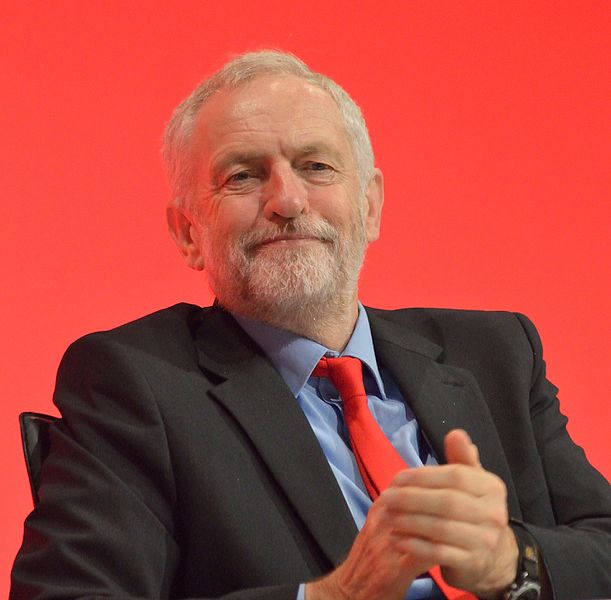
This week Betfair placed Jeremy Corbyn as favourite to become the next British Prime Minister with odds of 4/1. Next came four Conservative names: Home Secretary Savid Javid, former foreign secretary Boris Johnson and former Brexit secretaries David Davis and Dominic Raab all on 6/1. Michael Gove who is currently the environment secretary was listed at 8/1. 

But if by some fluke, Labour were able to garner more parliamentary seats than the Conservatives in a general election, there would be a fundamental shift in the way Britain is run.

Jeremy Corbyn is an experienced protester with a strong track record for marching in the streets and opposing government policy – but that is where it ends. He has no real plan on economic policy or leaving the EU and his performance at the dispatch box during Prime Ministers Questions is dreadful. 

But more importantly Jeremy Corbyn is also judged by the company he keeps. Palestinian Front for the Liberation of Palestine, Hamas and Hezbollah are just some of the “friends” he still associates with while admiring Hugo Chávez,the very man that destroyed Venezuela with the same economic policies his shadow Chancellor would pursue.  

When Chávez died in 2013, Corbyn tweeted: Thanks Hugo Chavez for showing that the poor matter and wealth can be shared. He made massive contributions to Venezuela & a very wide world.

But Venezuela collapsed into civil turmoil and economic crisis and has been in recession for five years. According to the IMF, inflation reached a shocking 1,000,000% this year. 

The crisis in Venezuela is not just confined to the economy with mass protests across the country but also to the high death toll. Still Corbyn praises the current President Nicolás Maduro for “his commitment to democracy and socialist values.” But Maduro banned nationwide protests last year and anyone who defies the ban faces a jail sentence of 5-10 years. Not exactly the democratic paradise Corbyn so emphatically endorsed.

Corbyn’s camp continues to hail Chavez and Maduro as shining examples of the change they want to see in the world – a vision to be replicated in Britain. 

So what’s with Britain’s current hard left fetish with a totalitarian regime in which civilians are starving and dissenters are locked up.

Labour says they will offer “mainstream politics” because austerity has failed and wages have not risen for 10 years. But will re-establish links with trade unions and change the law where strikes can take place anywhere anytime in solidarity with other workers.  

Labour plan on generating the cash by introducing an active business economy and industrial policy and point to Germany as an example. 

It is true that the German government were influential in using high skilled workers especially after the integration of the east to build a manufacturing base economy and this was instrumental in the development of the country, but what can Britain manufacture and sell if it is cheaper to import from Asia?  

Former Director General of the CBI and Minister of State for Trade, Lord Digby Jones says he and others are happy to pay more tax because they want to see a public sector that works. 

But Lord Jones says Labour is driven by a political ideology which is the hatred of capitalism and business and they are very open about it.  

“It is only business that creates profit that pays tax and creates jobs” he said this week. “Nothing else in Britain actually generates the money that pays for the jobs which pays the tax and therefore pays for the public sector. So if you hate the very thing that generates the money to pay for your hospitals and schools, people will move somewhere else and bang go the jobs.” 

According to Jones the entrepreneurs and good quality business people will say that “globalization allows us to leave the country whilst the boardrooms in Detroit, Delhi, Beijing and Cape Town will say we are not going to invest in Britain and the people who voted Corbyn in will be stuck in Britain paying more tax and getting nothing.”

We know that Corbyn doesn’t like America, the world’s largest economy and potentially a major trading partner and if you go on record to say you hate capitalism which actually generates the wealth in the country, history tells us that you cannot compete in a global economy. 

One MP told me this week at Westminster as the leadership vote took place that Theresa May is incompetent but Jeremy Corbyn is dangerous. 

Elections in Britain are always held on a Thursday and by Friday morning shock would have set in. Come Friday night the country will be on a new path to disaster after the political left destroyed South America.

Therefore it is unlikely Corbyn will ever get his hands on power and crash the economy. 

————————————————-

James Marlow is a journalist and international news contributor. Follow him on Twitter @James_J_Marlow

A second EU vote should be on how we leave, not if – Toby Amiel

13 December 2018 | OPINION

It didn’t have to come to this. The Brexit vote was a wake up call to the political establishment that they weren’t listening to peoples’ concerns about a range of issues from uncontrolled immigration to regional economic imbalances. They are still not listening.

Over two years after the referendum and politicians are still squabbling. The reality is Parliament is now trying to hijack Brexit. Brexiteer MPs generally believe the public voted to leave to regain national sovereignty. Theresa May’s deal makes it clear that she thought the public voted leave to control immigration and nothing else. Labour appears to want to protect the economy at all costs while ardent Europhiles such as Liberal Democrat and SNP MPs believe the people were at best lied to and at worst too stupid or too racist to rationally comprehend what they were voting for. Parliament wants to take no-deal off the table and with it any chance of a clean Brexit which many voted for.  

The obvious answer when Parliament is in deadlock is to hand power back to the people in a referendum. But how can we avoid the discord, vitriol and anger that resulted from the last one, returning a second time on such a passionate political issue which Jeremy Hunt warned this week, could result in civil unrest and riots on our streets? Here’s an idea. Take remain off the ballot paper. A second referendum is favoured predominantly by remain voters who see it as a mechanism to reverse Brexit. However, we had a referendum two years ago where we were told the result would be implemented. Having a second vote with the losing option of remain on the ballot paper before we have even implemented the result of the first vote would be deeply damaging for democracy. It would not be so much a ‘people’s vote’ as a ‘losers vote’. Having a vote now on how to leave, not on whether to leave, would preserve the publics faith in our political system while also achieving a consensus for the way forward.

Vernon Bogdanor, intriguingly came up with the notion last month that a further two referendums are required to break the deadlock. Firstly, remain or leave and then if leave wins, how we leave. Well, we had the first one in 2016 and leave won. This brings us to the second, how we leave. The will of the people was to leave the EU but how to leave and what people voted for the first time is what is causing so much uncertainty and division. If politicians really accept the result of the referendum as so many of them often claim, they should stop trying to second guess why people voted to leave and actually give them a final say. 

Theresa May’s deal has united both leavers and remainers against it, and with time running out on the Brexit clock, the government must look to an alternative off the shelf model offered to the UK by Brussels. Many leave voters want to have a Canada style free trade arrangement or a managed no deal Brexit whereas those remainers who say they have accepted the result of a referendum are pushing for a Norway style model with membership of the single market and the customs union. It therefore makes sense for these to be the two options in a referendum. As long as citizens rights and some minor deals are agreed such as an Aviation treaty to keep planes in the skies, there is no reason why a managed no-deal should not be an option on the ballot paper. Only those who have not accepted the result two years are still pushing for a remain option. We must not let them win.

The silencing of the lambs – Alex Nieora

6 December 2018 | OPINION

On the issue of free speech, we are in at best a managed decline. 

Social media

Social media exerts extreme influence on what we think and say and it is increasingly omnipresent. Despite this it was, for a limited time, at least ours – we were the content creators. 

Jordan Greenhall wrote one of the most compelling and widely shared analyses of the political landscape in the wake of the election of Donald Trump – ‘Deep Code’ – about how the consensus mainstream media reality “Blue Church” – CNN, NYT, BBC, had been disrupted by a new insurgent “Red Religion” – the emergent thinking of a new reality, characterised by a grassroots insurgency mobilised by social media platforms. This has all changed within the last 18 months. 

Platforms such as Twitter regularly suspend accounts. This year we have witnessed the Twitter accounts of Alex Jones, Infowars, American comedian Owen Benjamin and Conservative commentator, Laura Loomer, taken down.  Others like US conservative Candance Owens and James Wood have also faced temporary suspensions. One does not have to agree with what these individuals say to make the argument that they have a right to be heard. 

Twitter CEO Jack Dorsey seems to be testing the waters in relation to account suspension. He is currently being investigated by US Congress for the censorship of right-of-centre voices. Alex Jones’ Twitter suspension followed a heated exchange between Jones and a CNN reporter when Jones live-streamed on the Twitter-owned video service Periscope criticising Dorsey. This was after back-to-back US Congressional hearings in which Dorsey faced accusations of political bias. The suspension seems personal rather than objective or impartial.

Government and universities 

Some governments appeared to have overstepped the boundary too. 

In March, Lauren Southern, a conservative journalist, was barred from entering the UK under schedule 7 of the Terrorism Act 2000 – a provision criticised by a human rights group as a ‘ breathtakingly broad and intrusive power to stop, search and hold individuals at ports, airports and international rail stations’. This was due to the fact she had previously distributed offensive leaflets in the UK. 

There has also been a series of attacks on lectures in British universities. I was present at Kings College London when masked thugs violently stormed the building, attacked security guards and students and interrupted Sargan of Akaad (Carl Benjamin)’s talk on Ayn Rand. More thugs were similarly aggressive towards Jacob Rees Mogg MP who was assaulted during a talk he gave at the University of West England. It is becoming increasingly difficult and expensive for universities to protect free speech for students, professors and speakers on campus, which they are statutorily obliged to do under section 43 of the Education Act 1986. 

What can be done?

It appears Jordan Greenhall was right in his assessment – to disempower media corporates we must decentralise the media and create our own blogs, YouTube channels and social media pages. 

The only answer to the creeping censorship must be free-market competition. Always seek alternatives. I encourage everyone who has not already done so to set up a Gab.com account. There are other online alternatives too – Duck Duck Go as a search engine, Brave or Opera as a web browser and Signal as a messaging service, to name but a few.

George H W Bush – Life and Legacy

2 December 2018 | OPINION

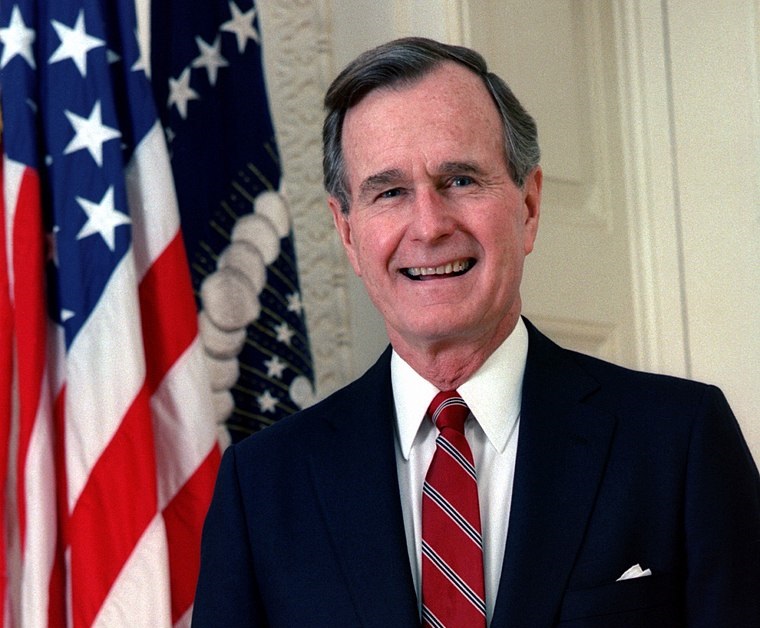
The 41st President of the United States, George H W Bush, died at the age of 94 this weekend. 

Many political commentators were quick to pay their respects to a great statesmen who dedicated his entire career to public service. George Bush was a one-term president and achieves only a moderate score in the historical ranking of former presidents, and as such his presidency is perceived to be an uneventful one sandwiched between two more charismatic and effective presidents in Ronald Regan and Bill Clinton. Nevertheless, Bush was in office during a very turbulent period in world history, and his calm, pragmatic and experienced hand helped transition the world through the end of the Cold War to a more stable and prosperous world. 

There are many areas of Bush’s legacy that historians and academics have been less favourable towards. Most famously, his questionable handling of an economic downturn towards the end of his presidency in which he raised taxes despite his famous quip “read my lips – no new taxes”. His Democratic rival Bill Clinton successfully used this U-turn to unseat Bush in the 1992 presidential election. 

Bush is often criticised for failing to possess the character or the charisma which is required of a modern U.S. president, and he was viewed as somebody who was out of touch with every day Americans. This was encapsulated when Bush infamously checked his watch whilst being asked a question during the presidential debates of 1992. 

The main criticisms of Bush come in the realm of foreign policy. He is best known for being the President who oversaw the first Gulf War, and is often criticised for not removing Saddam from power after he had successfully ordered U.S. forces to liberate Kuwait. And despite having overseen the end of the Cold War, many academics question Bush’s lack of vision and doctrine, arguing that he missed an opportunity to be more forceful in setting the agenda as the world transitioned to a new era. 

Nevertheless, Bush 41 should be best remembered as being a steady, experienced and pragmatic hand who helped steer America through turbulent times and had many diplomatic successes along the way. Amongst these was of course the ending of the Cold War without a single shot being fired, a rapid improving of relations with the collapsing Soviet Union marked by the signing of the START-1 treaty. 

His defining moment of success was his leadership in overseeing the reunification of Germany, which was far from assured given Prime Minister Margaret Thatcher and President Francois Mitterand’s deep opposition to it. Despite this, Bush used his diplomatic skills to ensure that Germany was unified within NATO. History has shown that the reunification of German has been a force for good, and the nation have been a force for democracy and human rights in the years that have followed.

Another shining moment of the Bush presidency was his decision to build a comprehensive and genuine coalition to remove the blood-thirsty dictator Saddam Hussein from Kuwait during the First Gulf War. Bush had a vision of a world in which the international community would act in solidarity to stop and deter rogue states. His famous declaration of a “New world order” was centred on an ambition to make the United Nations fit for purpose, and to help it achieve its goal for the first time since its inception. This has not come to fruition given the state of relations between the west and Russia today, but the vision for a more stable and collaborative world was the right one. 

George H W Bush’s pragmatism and moderate approach is also to be admired and is a key part of his legacy, something that seems like a distant memory in today’s polarised American society. Unlike his ideologically driven predecessor Ronald Reagan and his son George W Bush, George H W Bush was a pragmatic, steady-hand who steered America and the world through the end of the Cold War without a shot being fired, and a man who dedicated his life to the service of his country, and that is what he should be remembered for.

We must protect our Union at all costs – NI and Brexit

24 November 2018 | OPINION

Ever since Theresa May gave formal notice to the European Council that the United Kingdom intended to withdraw from the EU, the issue of Northern Ireland’s place in the Union of the United Kingdom has been critical to the subsequent negotiations. This is hardly surprising, given Northern Ireland’s sensitive relationship with the neighbouring Republic of Ireland and the potential impact that Brexit could have on the Good Friday agreement. Shockingly, it was an issue that was hardly mentioned by either side during the referendum campaign. It is vital that we keep our precious union of four nations together following our withdrawal from the EU – and this deal does not guarantee this. 


The current deal on the table would by no means secure the future of our United Kingdom. Admittedly, this deal does deliver a guarantee that there would be no hard border on the island of Ireland. The Good Friday Agreement of 1998 is sacred and has maintained peace between the UK-ruled north and the Irish Republic for over a decade. Nevertheless, it is also crucial that the Northern Ireland’s position in the union is not jeopardised at any costs – and the ‘backstop’ arrangement currently part of the deal would not guarantee this. In fact, if the backstop does become a reality, of which the UK would not be able to prevent should the EU decide against agreeing an alternative arrangement, then effectively there would be a trade border down the Irish sea. This is simply not acceptable to the people of Northern Ireland and threatens the integrity of our union. 

As the DUP Deputy Leader Nigel Dodds told his party’s conference yesterday, our union is “non-negotiable”. There are many things that the DUP advocate which are wholly wrong. That said, they represent the people of Northern Ireland and they are right to say that this deal is not in their nations interest. Were a backstop to come in to effect, Northern Ireland would be separated from the rest of the UK and aligned with EU regulation. This would isolate Northern Ireland from the rest of the UK and could lead to other constituent nations seeking a special relationship with the EU, jeopardising the whole of our United Kingdom. 

Any deal that goes through parliament must respect and protect our sacred union of four nations. A deal that fails to deliver on this would be wholly unacceptable. It is vital that we respect the wishes of the people of Northern Ireland, protect our union, and ensure that all four nations are treated equally. If this cannot be delivered, then perhaps we need to have a serious rethink about the consequences of Brexit.

May’s deal is the worst possible outcome

19 November 2018 | OPINION

The Brexit deal that Theresa May has put on the table is the worst possible outcome for the United Kingdom as we draw ever closer to our withdrawal from the European Union. 

As somebody who actively campaigned for the Remain campaign, I think it is a more than a fair assessment to assert that the deal currently being proposed would be far worst than the prospect of crashing out without a deal. Although a no deal scenario is a leap in to the unknown, the prospect of being tied to the European Union’s rules and regulations without a voice at the table is absolutely preposterous. The UK would be aligned to single market rules in large areas of  policy, such as agriculture and the environment, not to mention numerous other areas where it would have detrimental impact, most importantly the threat it poses to the peace on the island of Ireland. 

This would not only be a bad deal for Britain, but it would also be an arrangement that wouldn’t suit the other 27 nations of the EU either. The EU decision making process will be far weaker without Britain’s input. This is because legislation that would have previously have been vetoed by the British would pass through with ease, strengthening the influence of the EPP and ALDE in the European Parliament. This represents the most ironic part of this shambolic deal. Mrs May claims that this deal brings back sovereignty, but it is the exact opposite of sovereignty, as legislation that will have a direct impact on Britain is far more likely to pass in Britain’s absentia from the EU Parliament. 

The most important thing now is that the British people have a say on the terms of the deal that is being proposed. Too often ardent Brexiteers argue that the decision has already been taken and that there is no need for another referendum. The reality is that it was never as simplistic as “Brexit means Brexit”. As we have seen from the deal that Mrs May has negotiated, delivering Brexit could have various different outcomes for which the people must have a final say. It is therefore critical that this deal goes to the British public in a second referendum.

Testing times for housing?

3 November 2018 | OPINION

Will the new Housing Delivery Test make a difference?

Increasing the supply of housing has been a stated aim of every government of recent times.  When David Cameron was Prime Minister he set out an ambition to build a million homes by 2020. Theresa May’s stated target is to deliver 300,000 homes a year in this Parliament. There has been some divergence in policy between the two Conservative Prime Ministers – a shift away from a home-owning democracy and promoting Help-to-Buy towards a renewed focus on increasing the provision of affordability and a tougher position on the Buy-to-Let market. But the key theme is much the same – to build more homes.

Mrs May claims that housing delivery is a personal priority, but her 300,000 homes a year target is a big challenge.  In 2016/17, 148,000 new homes were completed, less than half of the current target. But there is space for the government to be ambitious: the number of homes started in 2016/17 was the highest recorded since 2008/9. The Prime Minister will be hoping to address the imbalance between planning permissions granted and completions – and to ensure that councils are delivering on their objectively-assessed housing requirements. It is in this context that the government have introduced a new Housing Delivery Test, contained within the revised National Policy Planning Framework.

The Housing Delivery Test is designed to ensure that councils are delivering the new homes needed. It will be updated every November, and it will measure an authority’s home delivery record against its local housing requirement over the previous three years. The NPPF states that if less than 95 per cent of the housing requirement has been delivered over the three-year period, the authority should prepare and publish an action plan to assess the causes of under-delivery. Where less than 85 per cent of the requirement has been delivered, it says, a 20 per cent buffer for under-delivery of housing would be triggered. The idea is to place greater responsibility on local authorities for ensuring that the planning permissions they have granted are taken forward and homes are built.

Supporters of the initiative say it is a welcome incentive for local authorities to work with developers and speed up implementation and delivery. Critics have argued that it wrongly penalises councils and puts pressure on local authority planning teams.

It remains to be seen whether the new Housing Delivery Test will be able to make a significant contribution towards Mrs May’s 300,000 new homes a year ambition. The bad news for the government is that it will have to tackle the housing crisis at the same time as navigating Brexit, and against the backdrop of a fragile the economy and sluggish wage growth: economic uncertainty rarely makes for a booming construction industry.

The Academy revolution – The beating heart of education reform

21 October 2018 | OPINION

Academy schools have been the beating heart of education reform in England and Wales since they were first introduced under the Learning and Skills Act 2000. The schools have supporters across the political divide, and the Coalition government followed in New Labour’s footsteps by passing the Academies Act in 2010, which strengthened the ability for academies to shape its own curriculum and encouraged schools to convert to academy status. As such, academy schools are no longer a small project of a specific government, they are the beating heart of our education system.


The evidence suggests that academies have helped to reshape our education system for the better, driving up standards for all students regardless of background and circumstance. Academies put education back in to the hands of professionals who are dedicated to modernising and improving education standards across Britain. 

However, academies have continued to be extremely controversial, and many critics have argued that they increase segregation and leads to the break-up of the state school system. These are far-fetched conclusions, especially given that central government continues to play an important role in the financing and oversight of academy schools. 

Yet, it is concerning that both major political parties are now turning their back on academies, despite all the success they have had. The Labour party are now pledging to scrap the academies programme and introduce what they are calling “co-operative academy trusts” which would include greater involvement for local authorities. This would create needless bureaucracy which would serve to do nothing but make it more difficult for school professionals to do their job effectively. 

The current Conservative government are focusing energy on the reintroduction of grammar schools, which would be equally regressive for England’s education system. Education policy should focus on supporting equality of access and equality of excellence, and selection at the age of eleven years old would do nothing to achieve this. 

It would be wrong to not acknowledge that there are problems with academies that will need to be addressed as part of a programme of further reform. Some multi-academy chains (MATS) have issued warnings about funding, and it is vital that more money is made available from government to support MATS.

However, whilst it is too early to say with any real accuracy just how far academy schools have improved education standards, there are several tangible signs that demonstrates that they have been a force for good. For example, 30% of academies have been judged as outstanding, compared to 21% of all other schools. In addition, a report by the London School of Economics found that moving to a more autonomous school structure through academy conversion generates a significant improvement in the quality of pupil intake and significant improvement in pupil performance. 

There have been two other important long-term changes that the academies policy has also unleashed. The first is that they have put the decision about learning development in to the hands of professionals, and out of the control of local authorities. Local government does everything from collecting waste to licensing – they are not bodies that are set up to be dedicated to education. For too long the bureaucracy of local government was hindering the ability of underachieving schools to reform, and the academies policy rightly put an end to this. 

The second and most important aspect of the academies policy which has helped revolutionise education in England and Wales is the greater freedom it has given to schools to set their own curriculum. The pace of change in today’s job market in terms of the skills required to fulfil emerging opportunities means it is vital that schools can adapt their curriculum to remain fit for purpose and not be constrained by a rigid national structure. 

Academy schools are the beating heart of England’s education system today, and they should be maintained and supported. Of course, further reform is always necessary to continue to modernise our schools, but academies have gone a long way in ensuring that every child can fulfil their potential.

More from this author

Don't miss...

Wolves of Westminster