



Home Blog Page 75

Private Health Care: An Alternative Future?

17 October 2018 | OPINION

The tectonic plates of medicine, its focus, its funding, its regulation and its practitioners are shifting rapidly. The healthcare landscape of the future will look very different from that of today. Whilst the NHS has been designed to deliver healthcare to the collective, the private sector treats individuals, and it is within this individualistic approach the future of healthcare delivery will increasingly rest.

The question many ask: is funding for private medical care ethical? The NHS is the closest thing the UK has to a national religion, but it is over-stretched, inefficient and lacks co-ordination. It was designed to provide a safety net for those unable to pay for their care but societal changes and the evolution of new technologies mean that it is increasingly viewed as a divine right for all, regardless of lifestyle choice. 

If government is able to de-politicise the issue of an alternatively funded healthcare system where migration between public and private sector becomes the norm it may be possible to reduce pressure on the NHS. Different working patterns and practices would also improve morale of an increasingly disenfranchised workforce. 

What would this change in funding strategies actually mean?

–  First of all, emergency and immediate life preserving care, at which the NHS excels, would continue to be provided by the NHS. 

–  Less urgent types of care will start to be accessed privately with more affordable models and options being developed by providers. 

–  Private practice as it is currently understood, with most consultants operating independently or in a group arrangement, would change. This will necessitate a balancing act between coordination of care, professional autonomy and demonstrable quality and value. 

–  The funding barriers between public and private sector will need to become more permeable so that there will be increasing use of private investigative and diagnostic modalities. As Patients flip between the sectors, new technologies will need to be adopted to allow for better coordination and maintenance of personal records. Private Medical Insurers (PMIs) will need to adapt their products to this changing consumer demand. 

–  As newer and more affordable and transparent PMI products are developed there will be a marked expansion of the private healthcare market opening up the above option to those who have not considered private medicine previously. 

To continue to be fit for purpose our healthcare system, however it is funded, must become more patient centric and accessible. The future will belong to those who establish understandable and relevant measures, such as long term sepsis rates or cancer survival rates, that prove the value they provide for their patients and allow for a truly informed choice to drive delivery of care. Much will depend on how the NHS develops and how this relationship with the private sector evolves.
Moderates have lost the Labour party for a generation

14 October 2018 | OPINION

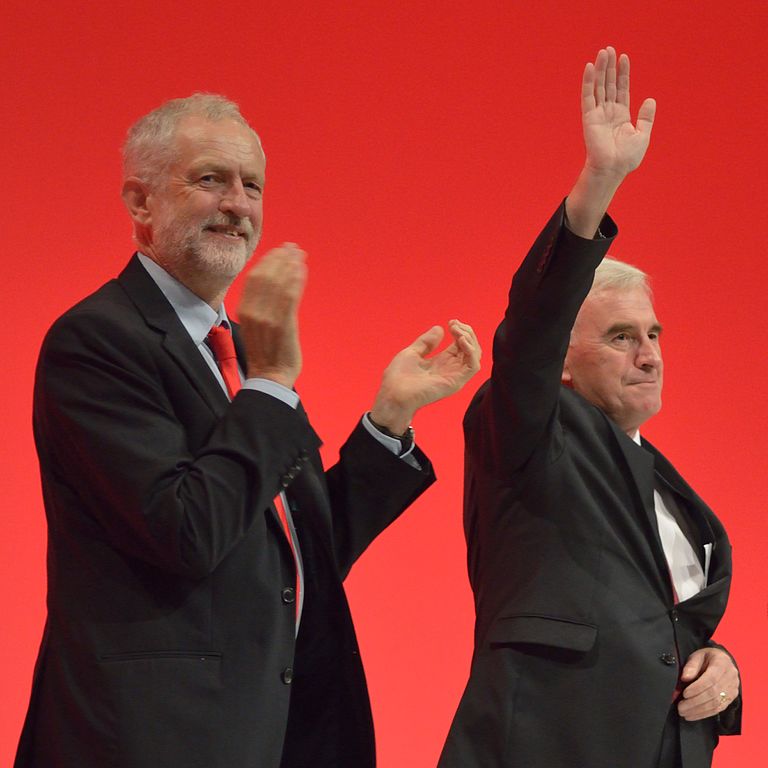
Recently, both Tony Blair and Gordon Brown, two of Labour’s most successful politicians, claimed that they were doubtful that the Labour party could ever be wrestled back from the left-wing extremists who have hijacked the party. And they are right. Corbyn has flooded the party with those who are a sympathetic to his views, and has quickly moved to diminish the influence those who he views as hostile to his policies.

The moderates have lost Labour party for a generation and is quickly becoming irrelevant. This is bad news for those in society who need a Labour government the most. 


Corbyn and his supporters who now control the party are ideologues, steadfastly committed to a radical programme of state intervention and unwilling to compromise whatever. This makes any prospect of electoral success incredibly bleak. Corbyn’s hard-line leftist supporters, who appear ferociously allergic to sensible thought, would argue that the 2017 general election and the ‘buzzing’ feeling that surrounded the 2018 Conference suggests that Labour are on the brink of power. Unfortunately, this is a deception that is almost akin to the delusion that his policies would be progressive. The reality is that Labour lost the 2017 general election, despite all of the Tory parties’ faults. The Tories failed to win in 2017, but they will not make the same mistakes twice. 

One of the reasons that the Conservative party has always been an election winning machine is because it embraces pragmatism, or at least appears to do so. The party understands the importance of sensing the public mood and developing policy fit for the modern day. Corbyn’s policies are quite the opposite. These are the same policies that he has been advocating since the 1980s, and  which have already been exposed as being regressive and deeply damaging. Therefore, as Corbyn’s army of followers increase their grip on the party, the prospect of a Labour government slips away. 

However, even if Jeremy Corbyn and his cronies could win a general election, it would be a deeply dangerous prospect for those in society who need a Labour government the most. Corbyn’s renationalisation programme and aggressive opposition to business would do tremendous damage to the UK economy, which would almost certainly hit working-class families the hardest. Spending billions on nationalising industries such as utilities, despite all the evidence of how damaging this would be, is utterly ludicrous. 

So strong is Corbyn’s dogmatic dislike of profit, that he would rather waste public money on nationalisation than embrace the future and invest in the skills needed for emerging technologies like robotics, artificial intelligence, 3D printing, and virtual reality. 

Renationalisation is not the only policy that would be terrible for working class people across Britain. So too would state subsidies for trade and industry, abolishing academy schools and ending Right-to-Buy. Corbyn’s domestic policies are the same as the old-left in the 1980s, and shows little understanding of the modern world. 

It is not just domestic politics in which Corbyn is a threat. His foreign policy, which in a nutshell is to defend every blood-thirsty dictatorship with a visceral anti-Western sentiment, is equally as dangerous.

Labour needs a leadership that will embrace the modern world, be pragmatic and forward-thinking when developing policies. Labour needs a leadership that want to build a country with a strong private enterprise sector alongside a state that is capable of helping people. As long as the dogmatic Corbyn and the unshakeable left-wing brigade that support him control the party, Labour will remain unfit to govern.

Is no deal better than a bad deal? – Toby Amiel

3 April 2019 | ANALYSIS

The current political crisis is one of the worst in the history of the Conservative Party. 

May is backed into a corner. Even the ultimate sacrifice of resigning as PM would prove insufficient. As one commentator remarked, she fell on her sword, missed, sacrificed her queen, but still lost. 

Why has she placed herself in this position? All for the sake of one Withdrawal Agreement which satisfies neither a majority of Leavers nor Remainers. And perhaps most importantly, she is not honouring the Conservative Manifesto on which she was elected. It stated that ‘we continue to believe that no deal is better than a bad deal for the UK.’ (P. 36). 

This was not a pledge forced upon the Prime Minister against her wishes. The manifesto was written up by May’s inner circle. The Conservatives heavily based their election campaign on leaving the EU preferably with, but if this is not possible, without a withdrawal agreement. May stated over 50 times that the UK would be leaving the EU on the 29th March 2019 no matter what.

Not only has Parliament voted down the deal 3 times, a recent Comres poll of Leave supporters found no-deal to be their preferred option. Pursuing it should be the next step of the process.  But it is more complicated than that. The three former Tory MPs Anna Soubry, Heidi Allan and Sarah Wollaston; numerous Conservative MPs like Dominic Grieve and even cabinet ministers such as Amber Rudd and David Gauke are all seemingly irreconcilable with the prospect of no deal. This begs the question, why were so many conservative MPs happy to stand on a manifesto with which they had such deep concerns? 

Perhaps with the passing of time MPs believe the public have forgotten the Conservative Party pledge or simply took the view at the time of no deal being ‘out of sight out of mind’. Except that it is still technically 9 day away. MPs from all sides are using whatever political tools at their disposal to prevent this, even if it means revocation of Article 50 and remaining in the EU.

Ignoring party manifesto’s has severe consequences. One need look only at what happened to the Liberal Democrats in the wake of the party compromising their core manifesto pledge of resisting any rise in tuition fees. They went from 57 seats in 2010 to 8 in 2015. This should give May a stark warning about what can happen when a party abandons its principles and core support.

Now I make no attempt to call judgement on the economic consequences of no-deal. Most likely they have been underplayed by Brexiteers, who argue it would liberate Britain. Nonetheless, what is concerning is the expedience to which such a core election pledge has been abandoned by the Conservatives simply because ‘Parliament won’t wear it’. 

Even if the Conservatives had won a majority in 2017 it is extremely unlikely that Parliament would have sanctioned no-deal due to its inevitable inbuilt majority of remain MPs. Instead the two main parties in Parliament are suffering collective amnesia from what they pledged to the country in 2017. 

Meanwhile, Theresa May is set to throw democracy under the bus for the sake of her deal by agreeing to a long extension with the EU and whatever Jeremy Corbyn wishes to extract from her.

————————————————-

Toby Amiel is a political commentator and postgraduate student at King’s College London. 

Follow him on Twitter @TrainSpotter747.

EU backs NGOs who boycott Israel – James Marlow

27 March 2019 | ANALYSIS

The European Union is giving more than 5 million euros a year to non-government organisations (NGOs) that openly call for a boycott of Israel. This is according to the Ministry of Strategic Affairs in Jerusalem. 

The EU has always denied that it backs a boycott of Israel but it does insist on the right to “free speech.” However the Jerusalem Ministry says it can prove that European tax payer’s money is paid directly to organisations that promote Boycott, Divestment and Sanctions, (BDS). 

The Strategic Affairs Ministry has now urged Brussels to make any financial aid to NGOs contingent on an explicit commitment to oppose boycotts of the Jewish State. 

The 34-page report entitled “The Money Trail: European Union Financing of Organisations Promoting Boycotts against the State of Israel,” accuses the EU of given more than €5 million to at least 10 NGOs that promote boycotts against Israel. It showed that two prominent pro-Palestinian NGOs, Al-Haq and Al-Mezan, were last year awarded a grant of over €750,000. 

Strategic Affairs Minister, Gilad Erdan said, “Instead of hiding behind empty statements, the European Union needs to implement its own declared policy and immediately cease funding organizations that promote boycotts against the State of Israel.”

Erdan insisted the EU is funding groups that support BDS, even if the actual money is designated for other purposes. The Minister argues that by giving these organizations money, it enhances their legitimacy which, in turn, helps them secure more grants for anti-Israel activity.

In response to the ministry’s accusations, a spokesperson for the EU’s delegation to Israel noted that the union’s selection of NGO-led projects “to be generally transparent” and in accordance with international transparency standards. 

The EU has “very strict rules to screen and vet the beneficiaries of EU funds,” the spokesperson went on, vowing to seriously investigate any allegation of misuse if it is presented with substantive evidence. 

Brussels’ opposition to the BDS movement has not changed, the spokesperson added. “While it upholds its policy of clearly distinguishing between the territory of the State of Israel and the territories occupied by it since 1967, the EU rejects any attempts to isolate Israel and does not support calls for a boycott,” she said. 

However, on its Twitter feed, the EU mission based in Ramat Gan, wrote that individuals or groups that are “related to the BDS movement” are not necessarily involved in incitement to commit illegal acts “and are not automatically ineligible for EU funding.”

The EU “stands firm in protecting freedom of expression” even if some ideas may offend or disturb some people,” the mission tweeted, adding: “Any action that has the effect of closing the space for civil society organisations should be avoided.” 

This is not the first time the ministry have clashed with the EU. In May 2018, during the first instalment of the “Money Trail” report, the ministry alleged the EU funded non-profit groups that not only campaign for boycotts of Israel, but in some cases even have ties to terror groups. 

At the time, EU foreign policy chief Federica Mogherini accused Erdan’s ministry of spreading disinformation saying “We are confident EU funding has not been used to support boycott of Israel or BDS activities and certainly not to finance terrorism.”

————————————————-

James J. Marlow is a journalist and international news contributor

E-mail: James@TheJewishWeekly.com 

Follow him on Twitter: @James_J_Marlow

Israel, Labour and the British voting system – James Marlow

27 February 2019|ANALYSIS

In 2004 Prime Minister Ariel Sharon headed a Likud-led coalition, and made it clear that any government minister who voted against the Gaza disengagement plan (the removal of 21 separate Jewish communities) would be instantly fired. 

Netanyahu was Finance Minister and although he and other ministers were deeply opposed to the move, he was advised by economists and others not to resign as this could jeopardise the positive moves already undertaken by his ministry in opening up the free market. 

Voting in the Knesset is conducted by the speaker who calls out each member alphabetically, and they respond either: for, against or abstain. Once the speaker goes through the entire list of MKs, he repeats it again from the start for the benefit of those members who were not present. In Israel, it is customarily if you oppose a bill, you are not present during the first call, but then suddenly appear on the second and final speaker call.

This is exactly what Netanyahu and other ministers did on that day and of course the bill passed into law and the following year, 21 settlements were evacuated from the Gaza buffer zone. 

The House of Commons has of course a completely different system of voting, but this week it was reported that up to 24 Conservative government ministers could resign if no deal was not taken off the table. If they cannot get behind government policy, just like Ariel Sharon threatened to fire his ministers, Theresa May should have immediately fired these individuals. 

The Conservative government will now hold their meaningful vote on 12th March, just over two weeks before Britain is scheduled to leave the EU. It will likely be rejected, so the government will hold another vote on a “no deal” Brexit, which is also not expected to pass. But Mrs May will rightly not take it off the table, because it may still strengthen her negotiating ability in Brussels as a no deal withdrawal agreement will hurt the Europeans much more than the British. On 14th March, Parliament will finally get to vote on extending article 50, which Mrs May says she is opposed to and will vote against. 

Over on the Labour benches, up to 30 more MPs are said to be planning to leave the party, which is probably why Corbyn is now moving towards a second referendum. But if you look at Labour seats won in the 2017 election, 61% of those voted to leave. 

In the seats that Labour won with a majority of less than 2000 votes, 72% of those seats voted to leave. Now look at the Tory seats that Labour need to gain in order to form the next government and you are looking at 78% of those who voted to leave. So the path to a future Labour government goes through Conservative leave seats. 

Let’s remember the words in the 2017 Labour manifesto: “Labour accepts the referendum result.” Labour must know this betrayal could have devastating consequences for them and so to get through the next few weeks and avoid losing dozens of Labour MPs, the leadership is “temporally” calling for another referendum.

Jeremy Corbyn was asked 23 times in the Parliamentary Labour Party meeting last Monday night if remain will be on the ballot paper. 23 times he refused to answer.  

A once in a lifetime referendum was not a mistake. It suggested parliament is listening to the people and parliament is engaging with the people. With 544 votes out of 650, MPs voted for you the people to decide and parliament would implement. 

The reason why we are in a Brexit mess is because MPs agreed to abide by the decision – but as the process dragged on and the EU showed their disrespect towards the British public, voters were worn down and MPs seized the opportunity to publicly change their minds and oppose the decision, whilst insisting “they hadn’t changed.”

Perhaps the time is coming to bring a breath of fresh air to the House of Commons, by calling for a general election before the end of 2019 (when Britain may still be in the EU by extending article 50 and would have fought the European election). 

This country has lost confidence in many MPs on all sides and a change of faces could bring back hope and encouragement to voters. 

The problem is would we believe what they say in their manifestos this time? Would there be a low turnout? And if we are still in the EU by the end of 2019 with British MEPs in Brussels and Strasbourg, would there be any incentive for government to call an election? 

My instinct tells me that many MPs including The Independent Group and several SNP members would be voted out and Conservatives could replace them, giving the government a majority.

————————————————-

James J. Marlow is a journalist and international news contributor

E-mail: James@TheJewishWeekly.com 

Follow him on Twitter: @James_J_Marlow

MPs rebel against their leadership – James Marlow

20 February 2019 | ANALYSIS

Guardian columnist Owen Jones last Monday tweeted that “seven Labour MPs won their seats on manifestos backing public ownership, higher taxes on the rich, ending austerity, and scrapping tuition fees.” Jones therefore insisted those who split from the party must stand in a by-election. 

But these seven MPs did NOT stand on a manifesto of intimidation, harassment, bullying, institutional racism, hatred or anti-Semitism. In addition they did not stand for a party which defends Russian aggression or the rounding up, torture and disappearance of starving demonstrators by a discredited and corrupt government of Venezuela. 

Moreover these original seven MPs did not stand on a manifesto which backs the murderous Syrian regime of Bashar al Assad or the Iranian expansion across the Middle East threatening many countries, especially Israel, who Iran has vowed to destroy without mercy.

Shadow Chancellor John McDonnell was understandably dismissive of the gang of seven, who managed to turn parliamentary attention away from Brexit and back on to the anti-Semitism issue for a short time. But he insisted they must all stand in a by-election, because they will all probably lose their seats. 

MPs Luciana Berger, Chris Leslie, Angela Smith, Gavin Shuker, Ann Coffey, Mike Gapes and Chuka Umunna – most of them definitely not household names – also cited in their decision to resign, that hard-left Labour alienation towards the business world was dangerous, and Jeremy Corbyn was unfit to become Prime Minister. 

As for McDonnell to speak about disloyalty to the party, he has spent most of his adult life voting against his own Labour leadership. From Wilson to Miliband and almost all Labour leaders in between, McDonnell is an expert which it comes to rebellion – because he has always been the Labour rebel and always supported divisiveness. 

Now that he sits at the helm of the party, John McDonnell insists the gang of seven MPs (who were bullied, cursed and hounded out of the party) must stand for re-election. But in the past when other party MPs crossed the floor to join Labour, without a by-election, he had no problem with it.  

Since last Monday, MP Joan Ryan has joined the gang, but six out of the original seven, have huge Labour majorities ranging from 13,925 to 31,647 votes, due to the high Labour momentum turn out in 2017. Only one MP, Angela Smith, received a majority of 1,322 and may have been able to stand as an independent in her right with a chance of winning the seat. Except for her very odd remark on BBC Politics just two hours after the launch, where she said, people of colour were of a “funny tinge.” One hour later, she was forced to make an apology insisting she was not a racist. 

In addition, the “Group” launch could have been better managed. Firstly the microphone was not working and then Luciana Berger accidentally introduced herself as the “Labour MP for Liverpool Wavertree,” when that was the whole point why there was a press conference.  

Furthermore, the MPs kept promoting their website, but if you got to see it before it crashed an hour later, it really did not have any real policies. 

Whilst all seven plus one (so far) should be praised for standing up against widespread antisemitism, which is clearly not being dwelt with in the Labour party and in fact, evidence suggests the anti-Jewish sentiment is growing, it is a disappointment that the group brought along their anti-Brexit platform, which goes against the referendum decision of 2016. 

They all insist on a “People’s Vote” without saying if this time, they would accept another leave result of say, just 50.1%. 

Of course they would not accept anything other than a “remain” result within the EU and in doing so, have turned off hundreds of thousands of Labour “leave” voters across the country, who are also anti Corbyn, anti-momentum, anti antisemitism and anti the looney left. 

Surveys overwhelmingly show the people do not want another general election or another referendum, and thisnarrow appeal from the gang of seven plus one (so far) have excluded Labour MPs such as Frank Field, who was also forced out of Labour and now sits as an independent (leave) MP. 

There are also other Labour MPs who voted to remain but accept the decision of the people in 2016 and voted to trigger article 50, in order to move forward with a withdrawal agreement.   

Chuka Umunna invited MPs from other parties who share “their political outlook” to join, and they will. At the time, it was seen as an invitation to Conservative MPs Anna Soubry and Dominic Grieve as well as Liberal Democrat MP Vince Cable. 

However with another important Brexit vote coming up in the House of Commons, several other Conservative MPs are considering their future, if a “no deal” scenario is not taken off the table and may also join. 

But this is NOT a new political party – rather, “The Independent Group” is a group of MPs sitting as independents in the House of Commons.

The good news so far is these well-meaning brave former Labour MPs, have taking a public stand against Labour anti-Semitism and it has shaken the Labour leadership and their momentum activists. It may have even weakened the party and for this, the magnificent seven or eight (and there will be more) must be saluted and supported.  

But the Corbyn brand name has not yet been dented and sadly, social media is once again rife with conspiracy theories that the Zionists, Israel and the Mossad are plotting to destroy Britain’s Labour party.

As if we haven’t got enough to do already. 

————————————————-

James J. Marlow is a journalist and international news contributor

E-mail: James@TheJewishWeekly.com 

Follow him on Twitter: @James_J_Marlow

Many do not believe the Holocaust took place – James Marlow

18 February 2019 | ANALYSIS

A poll commissioned by the Holocaust Memorial Day Trust found that one in twenty British adults do not believe the Holocaust occurred. Twelve percent believe the scale of the genocide has been hugely inflated. 

The poll found that nearly half of those questioned said they did not know how many Jews were murdered by the Nazis. According to the Guardian newspaper, one in five thought it was less than two million.

Olivia Marks-Woldman, from the Holocaust Memorial Day Trust, said in response to the findings, “Such widespread ignorance and even denial is shocking.” She went on to say, “Without a basic understanding of this recent history, we are in danger of failing to learn where a lack of respect for difference and hostility to others can ultimately lead.”

Those who were asked to participate in the survey were not believed to be anti-Semitic or Holocaust deniers. They are just people who do not understand basic facts. Some are heavily influenced by the mass dissemination of vile distortions of history and myths on social media whilst others receive their information from one sided political events and media outlets. 

Chief executive of the Holocaust Educational Trust, Karen Pollack, said the survey showed a need to increase Holocaust education as “one person questioning the truth of the genocide is one too many.” 

The survey was conducted by the Opinion Matters polling company on behalf of the Holocaust Memorial Day Trust and questioned 2000 people. Other recent surveys have shown a huge increase in statements such as “Jews have too much power” and “Jews exploit Holocaust victimhood for their own purposes.”

Since Jeremy Corbyn has been elected Leader of the Labour Party, Aliyah inquiries to immigrate to Israel have reached their highest number ever recorded.

————————————————-

James Marlow is a journalist and international news contributor. Contact him at James@TheJewishWeekly.com and follow him on Twitter @James_J_Marlow.

Thornberry backs Iran over Israel – James Marlow

29 January 2019 | ANALYSIS

The Shadow Foreign Secretary, Emily Thornberry, has raised serious concerns over “heavy Israeli bombardment of Iranian installations around Damascus,” in Syria. Just two days before International Holocaust Memorial Day, Thornberry sent a letter to the Foreign Secretary, Jeremy Hunt, expressing her alarm and “This is an open confrontation with Iran.”

Although Thornberry did criticise Iran for firing a missile into Israel last week, her strongest protest was was directed at Israel. The letter called for an arms embargo against the Jewish State, if Israel continues to be “breach of international law” and escalates “acts of aggression” against Iran or Iraq, where the Islamic Republic has declared it will also launch attacks into Israel.

In addition, Thornberry even asked for a withdrawal of an invitation for the Israeli Air Force to participate in joint exercises with the RAF later this year. “It would be utterly inappropriate for the RAF to be helping to train pilots who would then be using those lessons in a war of aggression against Iran, or in breach of Iraq’s sovereignty.”

Besides the fact that the RAF learn a great deal from the Israeli pilots during these exercises, questions were being asked as to whether Jeremy Corbyn had put Emily Thornberry up to this, or whether she really believed Israel is the aggressor against gigantic Iran, who use their positions in Syria to attack the Jewish State whilst threatening its destruction.

The conclusion was that Emily Thornberry has a track record of anti-Israel rhetoric and although she may not quite be in the same league as her leader Jeremy Corbyn when it comes to the hatred of Israel, her letter shows that Labour prefer to side with the murderous regime of Iran, over the democratic Jewish state of Israel.

Yet the Labour Party still wonder why they are being targeted for not doing enough about anti-Semitism within their own party. Moreover, Labour does not understand that an arms embargo against Israel is not going to halt the Iranian advancement across the Middle East and its attacks into the Jewish State.

Israel has insisted that it will not allow a build-up of Iranian troops on its borders or weapons to be used by its proxy, Hezbollah, and will do “what it has to do” to prevent this.

In the last three years Israel has admitted it does carry out air strikes against weapon installations in both Lebanon and Syria, and co-ordinates these actions with the Russians, who maintain a strong force, especially in the north east of Syria


James Marlow is a journalist and international news contributor. Follow him on Twitter @James_J_Marlow

YouthPolitics London – The Launch – Ted Jeffery

27 January 2019 | ANALYSIS

Grassroots organisations are a fundamental part in trying to ignite the fire and spirit that lurks inside every young activist. Groups such as Momentum, Young Conservatives and the Young Liberals will be responsible for producing the next generation of politicians, advisors and commentators. However, when looking for a non-partisan organisation which sole purpose is to focus on youth engagement, rather than seek to instill their own party’s norms and values it can be difficult to come across such a body. 

Back in 2016, a new youth organisation set out to change the way grassroots politics was conducted. They did so by being one of the first organisations to be solely set up and run by young adults, i.e. 16-25-year-olds. The only individuals who understand how the teenage mind works and what it is that frustrates youths more than anything is, in fact, other youths of a similar age. Alongside a team of other youth activists, Dan Lawes helped to create YouthPolitics UK. A simplistic grassroots organisation with four key aims. To engage, educate, debate and campaign. These four core principles have helped to establish the foundations as to what Dan and his team stand on. 

Influencing government policy can be an arduous task at the best of times, something which Mr Rees-Mogg and ERG have proved time and time again. However, one of the first campaigns set up by YouthPolitics UK aimed to do just that, while maintaining a non-partisan status. #OnMyMind is led by Amy Dunning, where the aim has been to push the Government for more funding to youth mental health services. The campaign team has been working hard to link young adults with campaigns that interest them, building on the idea that if you apply your mind to something, then anything is possible. Alistair Campbell has endorsed the campaign. 

Naturally, like all good grassroots organisations, growth has become a fundamental part in ensuring that they stay relevant as a body, but also allows them to focus on youth engagement in particular areas of the UK. Hence why next Wednesday, Sarmed Hyder and a group of other activists shall be launching YouthPolitics London. A new branch to the YouthPolitics UK organism. The aims and values will be similar to the national group. However, instead, the group shall be focusing on issues that concern London youths, on top of being able to engage them in the world of politics. 

The launch will see key figures from the political world attending such as:

Mete Coban – CEO of MyLifeMySay and a key figure on Sadiq Khan’s Mayoral Selection campaign

Kayleigh Wainright – Head of Membership & Policy at UK Youth

Lewis Addlington-Lee – Deputy Chair of the British Youth Council

Rachael Farrington – CEO & Founder of Voting Counts

Jason Arthur – Associate Director of Strategy at Step Up to Serve

In case you were wondering, the event isn’t an invite-only affair. You can register for free by following this link:

https://www.eventbrite.co.uk/e/youthpolitics-london-launch-event-tickets-55405421106?utm-medium=discovery&utm-campaign=social&utm-content=attendeeshare&aff=estw&utm-source=tw&utm-term=listing

The evening aims to celebrate and welcome the start of something new in London. It is an opportunity to help educate and inspire young Londoners on the issues that are critical to the well-being of society. It’s not a case of churning out the same issues linked to Brexit, but instead look at other factors such as knife crime, drugs, homelessness, education and even democracy. 

In a time when politics is so tribal and based on emotions rather than policy, it seems only fitting that an organisation such as YouthPolitics UK is helping to educate and remind youngsters that there are far more pressing issues out there than the constant party disunity that is being projected in our media outlets. In the past two years, politics has managed to immerse itself into the world of pop culture. It has been soaked up by sites such as Facebook and Twitter. Meme and parody pages have been created to satirise those on both the left and right. In many ways, you could argue that it’s almost becoming uncool not to know about politics — something which YouthPolitics UK shall continue to capitalise on.

————————————————-

Ted Jeffery is a journalist and podcaster. Follow him on Twitter @TedJourno

Japan seeks resolution with Russia over Kuril Island dispute – Patrick McGovern

22 January 2019 | ANALYSIS

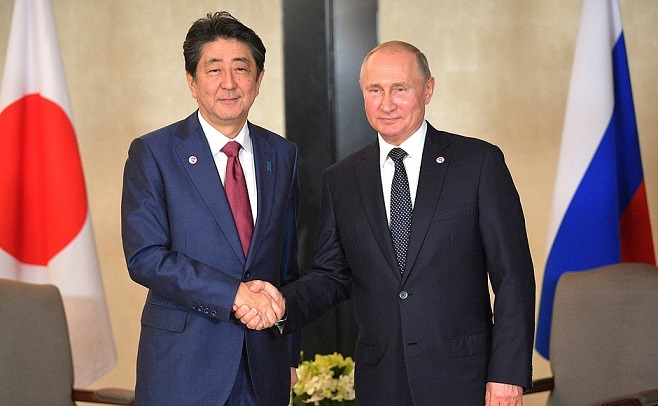
Japanese Prime Minister Shinzo Abe is heading to Moscow in an attempt to resolve the long-standing territorial dispute between Russia and Japan over the Kuril Islands. The islands are located to the North of Japan and to the East of the Russian island of Sakhalin. 

Abe is pursuing the transference of two of the islands, Etorfu and Kunashiri – which constitute the vast majority of their population and land mass. In return, he will accept a post war peace treaty with Russia, and also secure a foreign policy legacy by settling the enduring contestation between the two countries. 

Previously, Japan have demanded all four islands to be returned, in order to conclude the peace treaty. They currently appear to settling for the return of only two.

There have been protests in Russia, over the desire to maintain ownership of the islands. With a total population of 19,434, the question is why?

The modern dispute originates from Russian victory in World War II, after which, they seized the islands from the defeated Imperial Japan. Earlier in the month Russian Foreign Minister Sergei Lavrov indicated that Japanese acceptance of Russia’s victory in World War II was predicated upon Russian ownership of the islands. This suggests the conflict has as much to do with the symbolism of Russian victory in World War II, and its important place in the Russian collective memory, (the significance of which the Kremlin are keenly aware of) than any material interests that may occur from possession of the islands. 

However, as with all foreign policy endeavours –  material and strategic interests do play a significant role. Ownership of the islands maintain Russia’s hegemonic position in the Sea of Okhotsk, ensuring Russian territories encircle the entire sea.

This allows Russia to retain naval ports in the sea, and fishing rights many miles off its eastern border. More significantly, since 2011, there has reportedly been 29 zones of possible oil and gas reserves identified on the sea of Okhotsk shelf. There is also a fear that US troops may be deployed on the islands if they are handed over to an American ally in Japan.

A parallel can be drawn between Russia’s insistence of occupying the islands and the annexation of Crimea in 2014. Among the many motivations of a highly complex annexation, was the acquisition of ports in the Black Sea. In both cases, securitising Russian coasts is of Geo-Political strategic interests to Russia.

Maps demonstrating the position both territories occupy (Crimea and the Kuril islands) in relation to the Russian mainland.

Conversely, the Japanese have always considered the Islands within their remit and a natural part of their territory. For them, Russian occupation of the islands represents a ceding of sovereignty, as well as the loss of the material interests.

It has been said that it is highly unlikely that Russia will be willing to concede the Islands, despite Abe’s demands for only two of the islands – a Japanese senior official close to Abe has almost all but ruled out the possibility.

Nevertheless, the negotiations will remain of importance – and the outcome will tell us much about the future of Russo-Japanese relations, in which so much has revolved around these islands.

A victory for Abe would represent a loss for Putin, but a show of strength from the Kremlin will demonstrate Russia values its own interests far higher than conciliation with Japan.


Patrick McGovern is a postgraduate student. His interests include Anglo-Russian relations and the politics of the European Union.

More from this author

Don't miss...

Wolves of Westminster