



Home Blog Page 76

Parliament to take control and end Groundhog Day – Jimmy Coles

22 January 2019 | ANALYSIS

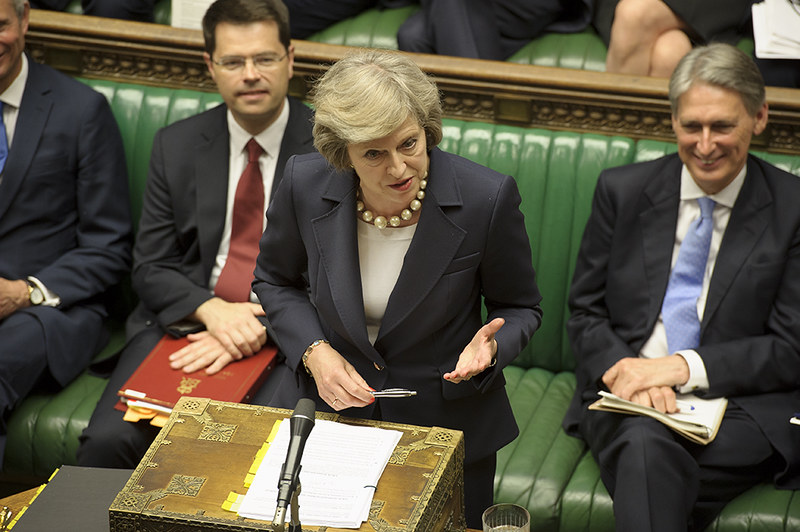
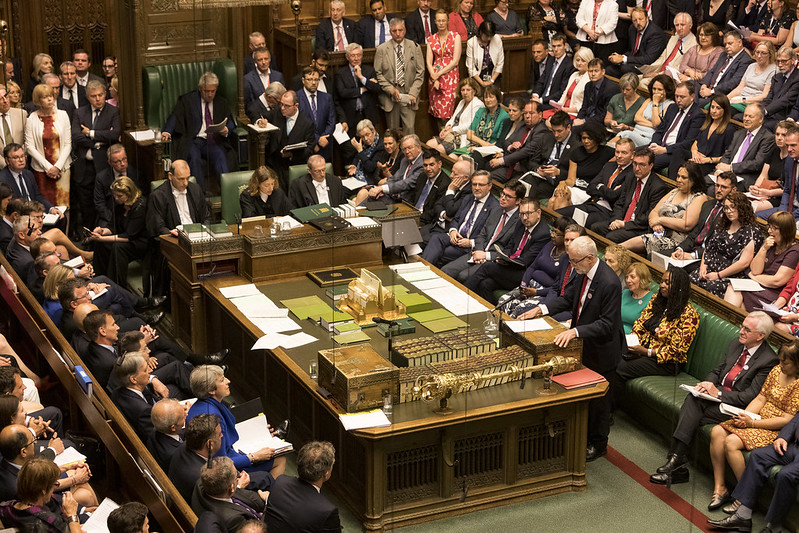
Yesterday, the Prime Minister returned to the House of Commons to update MPs on how the Government proposes to proceed with Brexit. Astonishingly, despite the historic defeat inflicted on Mrs May last week, nothing has changed. 

The Government’s Plan B is the same as Plan A, with a few minor tweaks such as the scrapping of the £65 registration fee for EU citizens registering to stay in the UK. The Prime Minister is sticking to the same line that “the only way to avoid no-deal is to leave with a deal”. It is quite literally, Groundhog Day. 

So, if it is the case that the Prime Minister and the Government is incapable of providing a proper Plan B which is not a carbon copy of Plan A, then the logical conclusion is that Parliament will have to assert its control and force the Government’s hand through a series of amendments. In the Commons yesterday, May ruled out a taking no-deal off the table, ruled out a second referendum, and ruled out extending Article 50. The reality is that one or more of these will be forced upon the Government.

It is likely that taking a no-deal Brexit off the table will be the first of these. Senior Labour and Conservative backbenchers, led by Yvette Cooper and Nick Boles, have tabled an amendment that would force the Government to give parliamentary time to debate Cooper’s new EU Withdrawal Bill. The Bill, if passed, would place a legal obligation on the Government to seek to delay Article 50 if it was unable to get a Brexit deal through the Commons by the deadline of the 26 February. This amendment would kill off May’s hope of avoiding an extension to Article 50 and diminish the possibility of a no-deal. 

All the signs are that this amendment is likely to pass, which would further restrict the Government’s ability to manoeuvre. Thirty MPs have already signed their names to the amendment, and Labour have said that they would back any amendments that “seek to rule out no deal”. Not only are backbenchers in favour of removing the prospect of no-deal, so too are cabinet ministers according to Amber Rudd. She has warned that at least 40 ministers would quit if Mrs May tried to stop them voting to block a no-deal Brexit. It is therefore likely that no-deal will be taken off the table, despite Mrs May insisting that it is an integral part of her negotiating strategy. 

Turning to a prospect of a second referendum, it is less likely that this would be forced on to the agenda by Parliament. As things stand, there simply isn’t a majority for a second vote in the Commons. 71 Labour MPs joined by 35 SNP and 10 Liberal Democrat MPs, with a sprinkling of remain Tory MPs – is not enough to command a majority in the House. 

Labour’s official position, once and if it becomes apparent, will be an essential ingredient in breaking the deadlock. If the Labour leadership were to support an amendment which would bring about a second referendum, then it would almost certainly have enough support in the Commons to become a reality. However, Jeremy Corbyn is sceptical to the idea of a second vote and has indicated that the Labour position is to pursue a “Norway-style arrangement”. It will remain to be seen whether Corbyn can be convinced to pivot and support a second vote. 

One thing for certain is that Parliament is asserting its control and taking away any remaining authority that the Prime Minister had left. Mrs May only has herself to blame. She has insisted that her deal is the only viable option, despite Parliament overwhelmingly telling her that it does not have its support. To come back and put the same deal on the table is an abject failure of leadership and totally void of reality. Parliament will now have to take over and identify a solution to this mess. 


Jimmy Coles is Opinion Editor and Founder at Wolves of Westminster and a political consultant. Follow him on Twitter @JimmyJColes
Nothing has changed: Theresa May wins vote of no confidence – Jimmy Coles

16 January 2019 | ANALYSIS

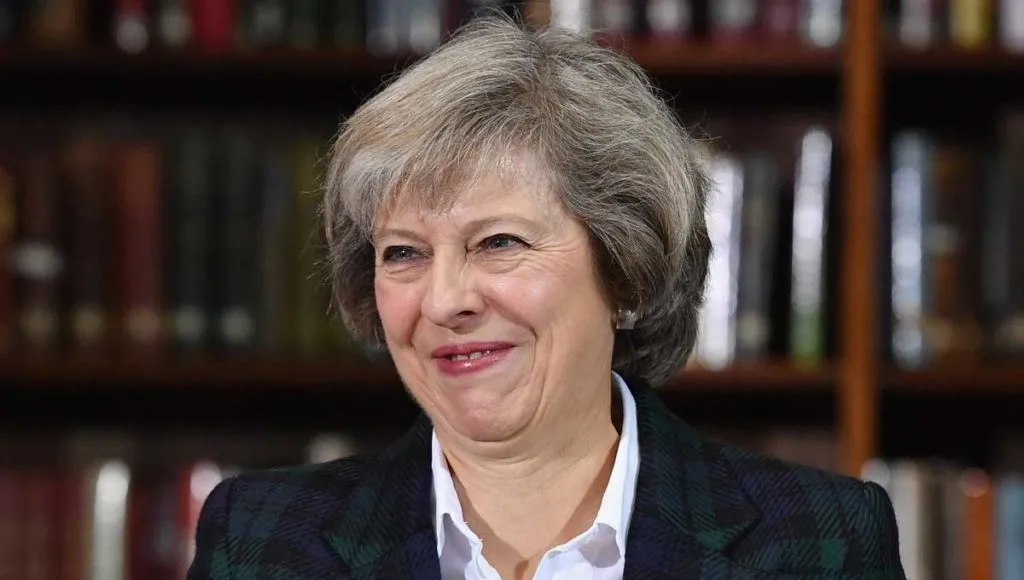
Theresa May has had a tough start to the new year – rebuffed by Europe and then confronted with a humiliating defeat on her deal in the House of Commons. Any authority she had left ebbed away as Parliament enforced its verdict on her two years of negotiations with the European Union. Yet, these are extraordinary times and normal political rules do not apply, the Prime Minister continues to solider on having survived a motion of no confidence tonight. Despite all that has happened in the last few days, we are no closer to a solving what has become a national crisis over Brexit – nothing has changed. 

Something is going to have to give in order to break the Brexit impasse. However, at this point there is no indication as to what  that would be– a no deal Brexit, a second referendum, an extension to Article 50 or a transition to a Norway or Canada agreement are still all possibilities. There is even the unfathomable prospect that May still might try to revive her doomed Withdrawal Agreement.  One thing that is looking increasingly less likely today is the prospect of a general election. The Leader of the Opposition’s Motion was beaten 306 to 325 – which reaffirmed the belief that neither Conservative backbenchers nor the DUP are willing to entertain the prospect of a Jeremy Corbyn led government. 

Though she survives, there are still very serious problems facing Mrs May as she tries to navigate her way through the Brexit crisis. Immediately after the defeat of her deal yesterday, Mrs May said that she wanted to deliver on the will of the people and insisted that she would not support a second referendum, whilst also refusing to rule out a no-deal scenario. Nevertheless, there were no indications as to what her Plan B would be, and the lack of clarity and cohesion on the government’s position is leading to further uncertainty and denying any form of progress. 

The Prime Minister has said that she will now meet with opposition party leaders to try and forge a consensus in the House of Commons and deliver a Brexit that she claims is the will of the people. However, the Prime Minister’s current position is not reconcilable with the demands of any of the opposition leaders in the house, perhaps with the exception of Nigel Dodds and the DUP. Unless Mrs May opens her eyes to the reality of the situation, rules out a no deal exit and changes her initial red lines – any hope for a cross party coalition to end the deadlock is totally unfeasible. 

Another key question will be the movements of the Labour party now that the prospect of a general election is slipping away. Over the last two years, Labour have provided woeful opposition on Brexit. The Labour leadership’s own position has been confused at best, and most of its time has been spent on internal infighting and the politics of de-selection. There is now an opportunity for the Labour party to step up to the plate, accept the will of its membership, and officially advocate for a second referendum. Reports tonight suggest that around 100 Labour MPs are ready to push Jeremy Corbyn to pivot towards a second referendum. Whilst Labour alone cannot bring about a second people’s vote – its endorsement would exert substantial pressure on an already powerless Prime Minister. 

And so nothing has changed. Until somebody blinks, it is clear that despite that there is no majority in the House of Commons to proceed with Brexit. Theresa May says she wants to be able to find a path to deliver on the will of the people, insisting that we will be leaving the EU on the 29 March. How that will happen is about as clear as mud.  


Jimmy Coles is Opinion Editor and Founder at Wolves of Westminster and a political consultant. Follow him on Twitter @JimmyJColes
Brexit: What will happen in 2019? – Jimmy Coles

8 January 2019 | ANALYSIS

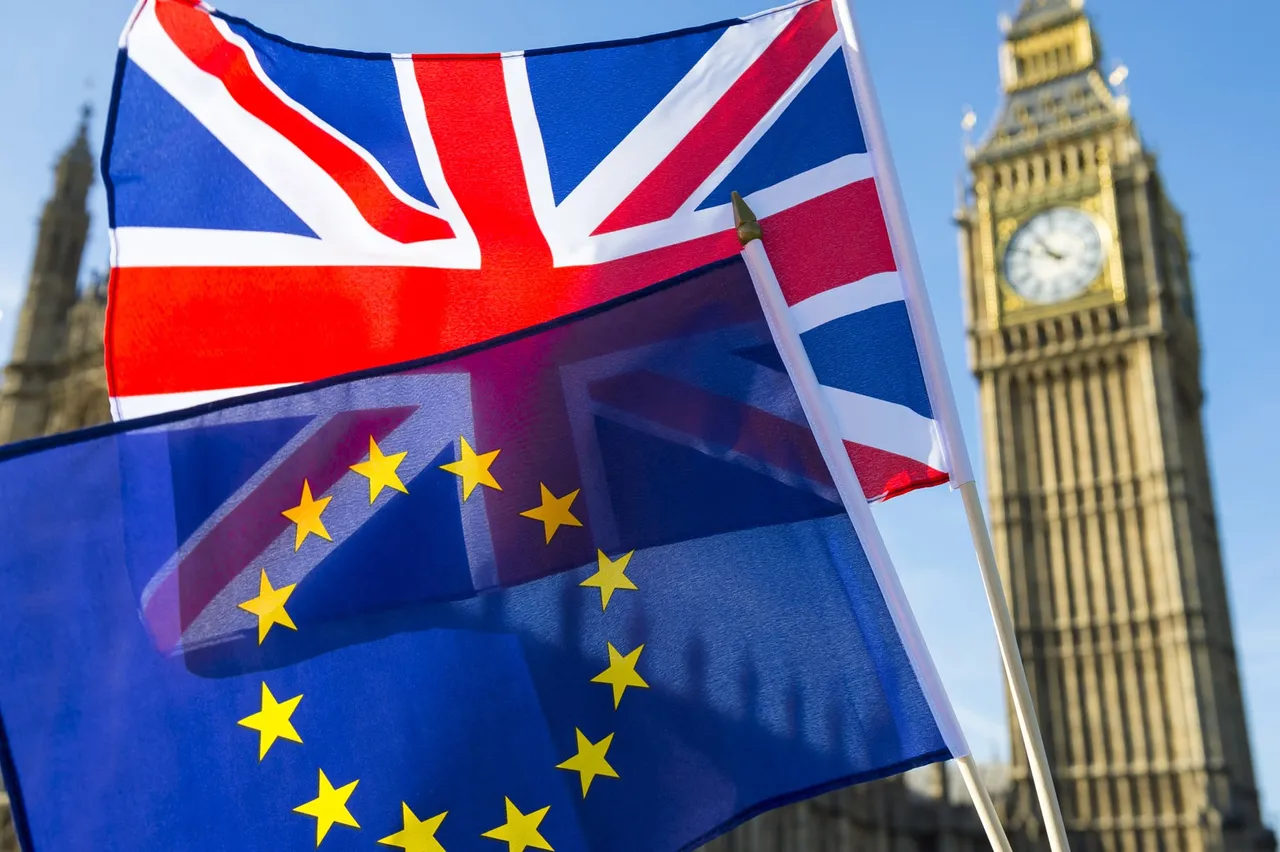
After a brief period of respite over the Christmas period in which there was a temporary ceasefire in the Brexit “Uncivil War”, Parliament returned yesterday to resume debate on the UK’s future relationship with the European Union. This week will see a bumper few days as MPs debate Mrs May’s Brexit deal ahead of the crucial meaningful vote on the week of 14 January. With Parliament completely divided over Brexit, the next few months promise to be unpredictable, exciting and tumultuous. So, what are the most likely outcomes and what can we expect from the year ahead? 

One thing that looks certain is that the rearranged meaningful vote will go ahead on the week of 14 January, despite widespread doubts that the government has much hope of carrying the day. Mrs May cannot afford to deny Parliament a say on the deal again, especially having claimed to have secured “legal assurances” from the EU on the current deal. 

Number 10 hopes that a commitment from the EU to quickly conclude trade talks with the UK once we have left would help persuade enough MPs to vote her deal through. Given that Parliament seem united against Mrs May’s deal, and the fact that the DUP have already said they will vote against, it is highly unlikely that the Prime Minister’s deal has much chance at all, despite so called legal clarifications being sought from the EU. 

So what happens next? The first thing we can safely assume is that if Mrs May is defeated then her deal as it currently stands would be dead in the water. There will be no going back to seek further assurances, having already exercised this option by delaying the first vote. That leaves a few viable options in play, which include transitioning to a Norway-style agreement, a no deal Brexit, a new government to hold fresh negotiations, or a second referendum.

We can safely rule out the prospect of a new government before the March deadline. Mrs May has already signalled her intention to see Brexit through, and her own party have already tried and failed to remove her internally. As for Labour, they will certainly call a vote of no confidence in the government and try to force a general election, but they will come unstuck when they find that the majority of Conservative MPs are not prepared to let Jeremy Corbyn in to Downing Street under any circumstances, including the prospect of a no deal Brexit. 

With Mrs May still in post, it is also plausible to rule out a second EU Referendum and an extension to Article 50, having consistently said she would not pursue this course of action, viewing it as “undemocratic”. 

Thus, the second prediction we can make with some accuracy is that Britain will be leaving the EU on the 29th of March 2019. The only question will be whether this will be with a negotiated deal that allows for a transition period and future trading arrangement or without a deal. This will largely depend on Mrs May’s plan B, however, given that the majority of Parliament object to a no deal scenario, she will be under pressure to produce a tangible alternative.  

There will be other significant moments in 2019 that will shape the future of British politics. One of these predictions is that Mrs May will step down as Prime Minister within the year. The Prime Minister’s position has been fragile ever seen she lost the Conservatives their majority in 2017, and it has weakened every passing week since. She is likely to remain Prime Minister until after the UK leaves in March, but her days in Downing Street thereafter are certainly numbered. 

The other significant event to take place this year will be the European Parliament elections in May. For the first time in four decades, the UK will not be participating. However, the elections will remain fundamentally important as it will decide the make-up of the union we will be negotiating with. 

It is more than plausible that the European elections could present Britain with fresh opportunities regarding its future trading relationship with the EU. The established EPP and Socialist club that currently dominate the EU parliament could head for defeats, breaking up their established control. 

Populism is still very much alive on the European continent. In Germany, the CDU/CSU coalition is losing ground and in France many have turned against President Macron’s En Marche. If this decline translates in to votes for parties who take a more sceptical view of the European Union, it could fundamentally shift the EU’s position on the key issues yet to be agreed. 

If we can predict one thing about British politics these days, it is that it is totally unpredictable. One thing is for certain – 2019 promises to be interesting. 


Jimmy Coles is a public affairs consultant and Head of Opinion at Wolves of Westminster. Follow him on Twitter @JimmyJColes
The latest power politics from the Kremlin – Patrick McGovern

6 January 2019 | ANALYSIS

‘Roskomnadzor’, which translates from Russian to ‘Federal Service for Supervision of Communications, Information Technology and Mass Media’ is allegedly preparing to spend up to 20 billion rubles in an attempt to block the social media messaging site ‘Telegram’, the censorship could be in place in early  2019.

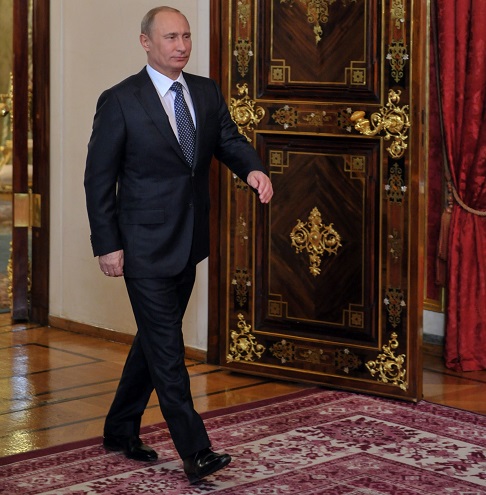
This is the latest in an ongoing feud between the Kremlin and the site, and it is an important development which highlights the increasing sceptisim the Kremlin has of the internet in Russia.  

The Kremlin’s wariness of the internet, had a step change in 2011 with the Bolotnaya protests, an event which was organised through social media sites and was the biggest visible protest against the Putin regime since he came to power. 

Another reason for the Kremlin’s increasing skepticism of the internet is due to the influence of Western dissemination of information which has been largely overstated by elites in Moscow as the cause of the internal revolutions in neighbouring Ukraine and Georgia (Coloured Revolutions), culminating in the violent annexation of Crimea. 

Since then, a free internet has presented itself as threat to the Kremlin. More recently young people in Russia have been imprisoned for sharing inappropriate memes, a crime unimaginable in the West, or any country with a commitment to freedom of speech and expression.

There have also been the comments made after the recent school shooting in Kerch, in which Putin blamed the influence of globalisation – specifically the role of American media and the promotion of American culture as the source of this ‘American style school shooting’. The implicit threat here, presumably, being that Russians should no longer have access to news sources and information from the outside world.

Such comments from the Kremlin are always worth considering, and do not represent the empty rhetoric so often criticised in Western politics, as they are regularly substantiated by action. A notable example of this would be Putin’s declaration that all traitors will ‘kick the bucket’, just two weeks before the Salisbury poisonings.

However, the question is, should this be viewed as the Kremlin strengthening its grip on authoritarian power in an attempt to establish a China-style private/domestic/protected internet? Or, rather, does this demonstrate the inherent weakness of the regime?

One of Putin’s main strengths has always been his ability to create the illusion of a democracy for his electorate – the farce of the elections (his ritual inauguration), allowing political opposition to stand against him, or, pretending to uphold the constitution by letting Medvedev ‘serve’ between 2008 and 2012. 

Key to this fake democracy, has been the lack of internet censorship, giving Russians the impression that they are making informed decisions and have access to multiple sources of information, thus making Putin appear as genuinely popular and legitimising his position in office. (The reality is 90% of Russians receive their information from the largely state owned television sources).

It seems, such efforts to build the façade of democracy would be undermined by this blatant attack on freedom of expression. If people start to see clearly through the illusion, then the regime’s legitimacy, being derived from a genuine popularity in the country, may well get lost too.

This drive for increased control over the internet and social media demonstrates the Kremlin’s inability to coerce or persuade its population on any level – it is no longer confident that it can maintain authority without control over all forms of public discourse.

Previously it had been able to let public support organically develop for the regime, often independent of direct state intervention, but through actions such as the annexation of Crimea and the domineering role played in Syria. Arguably this is a much stronger form of support as it can be construed as authentic, as opposed to the mechanical shutting down of social media sites.

The developments will continue, and this is only one stage of the complicated relationship between the Kremlin and the internet, however throughout it will be worth considering whether what ostensibly appears like the strengthening of the Kremlin’s position (increased censorship of the internet), could, in fact, represent its weakening.


Patrick McGovern is a postgraduate student. His interests include Anglo-Russian relations and the politics of the European Union.

I was there but I did not actually participate – James Marlow

21 December 2018 | ANALYSIS

Absolute chaos broke out in the House of Commons after Wednesday’s Prime Minister’s Questions, when dozens of points of order were shouted out from Conservative benches. A point of order is when a member is not happy with the proceedings and can raise their objection. But the Speaker, John Bercow, insisted that points of order take place after a statement. This was greeted by shouts of “rubbish” from Tory backbenchers, who said that objections are raised every week before statements. 

The issue at hand was during the exchange, between Theresa May and Jeremy Corbyn when the opposition leader sat down and clearly said the words “stupid woman,” after being verbally beaten up by the Prime Minister for not having any plan to leave the EU. 

Coming under extraordinary pressure from conservative members, leader of the house, Andrea Leadson was eventually allowed to make the point that, when she was called a stupid woman by the speaker himself earlier this year, Bercow did not even apologise. 

Tory staunch remainer Anna Soubry, who has threatened to leave the party, told the speaker that video of Jeremy Corbyn stating “stupid woman” was already circulating on social media and that the speaker needed to watch the recording. 

Other conservative members also stood up for the Prime Minister whilst she remained in her seat, although Corbyn immediately left the commons after PMQs and it was clear Bercow was under immense pressure. But the speaker kept repeating he did not see the incident and therefore could not rule on the matter. 

Labour later denied that Corbyn used misogynistic language so I guess just like appearing at the terrorist graves of the Popular Front for the Liberation of Palestine, it was another case of “I was there but I did not actually participate.” 

The incident comes after Labour said it would put forward a vote of no confidence in the government this week but then changed its mind, then changed it back again but still did not go through with it. Then without informing his MPs, Corbyn suddenly tabled a no confidence vote in the Prime Minister. 

The problem was he did not understand parliamentary procedure which says that because the Labour party had used up all their time for 2018 to table a motion, the Conservatives refused to give him some of their time. 

Mrs May’s performance in the House this week was raised to yet another new level after she gently refused another so called “people’s vote” from all sides of the house. She stated it is her deal (which may receive some tweaking in January) or hinted that no deal was a possibility. 

In doing so she is clearly loading the pressure upon Labour to vote with the government next month or it will be their fault that Britain would leave the EU on March 29 without a trade deal. 

Minister for Trade, Dr Liam Fox eloquently explained why another referendum on practical, constitutional and democratic grounds would be wrong. 

Speaking to the BBCs Andrew Marr last Sunday, he said on practical grounds, “We would have to pass primary legislation which will take time. The electoral commission would then take about 10 weeks to determine the question and then require another 12 weeks or so before any referendum could be held.” 

According to this scenario, an extension of article 50 would be needed but would not heal the divisions in the country – in fact it would perpetuate the division. 

Second is constitutional and Dr Fox asked, “How would we tell Nicola Sturgeon and the SNP that they cannot have another referendum on Scottish independence because they did not like the result when remainers are allowed another one on Europe?” 

Finally on democratic grounds – the Minister said “Parliament said to the public we can’t make a decision on this, so you make a decision and we will take an instruction from that.” 

This he said was reinforced by the 2017 general election when the two main parties said they would honour that referendum result and received 80% of the vote. 

However the Secretary of State correctly asked, “What would happen if we had another referendum and remain won by 52 to 48 but on a lower turnout? People like myself, would demand the best of three,” Dr Fox said.

As Parliament now breaks for the holidays, January is clearly going to be a month of poker between Mrs May and Labour. And it is anyone’s guess who will blink first and what type of a deal if any will the EU give Britain. 

————————————————-

James Marlow is a journalist and international news contributor. Follow him on Twitter @James_J_Marlow

Sturgeon backing no confidence against May – Ted Jeffery

20 December 2018 | ANALYSIS

Overview:

– If May’s withdrawal agreement fails to pass Parliament, the default position is that the UK will leave with a ‘no deal’. 

– Under both EU law and the UK’s Withdrawal Act, Brexit day is in the diary for 11 pm on 29 March 2019.

– Time for the Prime Minister is running out, even with 200 loyal Tory MPs to rely on when it comes to the vote, it won’t be enough to get her bill through Parliament.

Analysis: 

Nicola Sturgeon has urged Jeremy Corbyn to push for a ‘No Confidence’ motion to topple May.

This week Sturgeon met with other devolved government ministers at Downing Street to discuss May’s Brexit deal. She left the summit saying SNP MPs will be voting against the PM’s deal. 

Multiple opposition parties have been trying to push for a ‘No Confidence’ motion in May. However, Labour leader Jeremy Corbyn has so far failed to support this. The lack of certainty has angered Labour Whips as well as Scotland’s First Minister. Sturgeon has been vocal about how Corbyn’s inability to call for the motion is just an excuse to avoid having to clarify his own position on Brexit. 

Sturgeon said: “It looks to me right now as if he is trying to run the clock down and avoid difficult decisions just as much as the Prime Minister is.” She added: “We don’t have time to waste, so I hope Labour come behind this motion of no confidence and we can try to bring this Government down, but if we can’t do that then at least we can pave the way to a second referendum that offers a way out of this mess.”

The First Minister has also slammed Tory MPs for attacking Jeremy Corbyn over the alleged ‘stupid woman’ remark.  She has decided to make a second EU vote her top Brexit target, saying she is looking for an ‘alternative way forward’ to break the Brexit impasse.

May’s game of brinkmanship – Jimmy Coles

17 December 2018 | ANALYSIS

Another Monday, and yet another statement in the House of Commons from the Prime Minister, in what is becoming an all too common occurrence in recent weeks. 

Theresa May returned from Brussels with what she argued were concessions on her Withdrawal Agreement. In a bid to win over her critics, Mrs May claimed that the backstop agreement was not a favourable solution to the European Union, and that she had been reassured that it was therefore unlikely to ever come into force. 

The statement from the PM was followed by another barrage of criticism from MPs, the majority of whom argued that the deal was dead and that new solutions needed to be found to break the Brexit impasse. Despite their insistence, Mrs May remains resolute. 

She says that the “Meaningful Vote” will now take place the week commencing the 14th January.  Yet, that was not enough to satisfy MPs of all political stripes and from both the remain and leave camps – who want to have a say on a deal before the house rises on Thursday. Theresa May claimed defiantly that she also wanted parliament to have a say on her deal, but screams of “when” from members clearly indicated that her January date is not satisfactory. 

The Prime Minister is undoubtedly trying to play the long game – or “brinkmanship” as SNP Common’s Leader Ian Blackford called it. Her tactics are clear, hold off for as long as possible on the vote, and inform leave supporting MPs that if they do not back the deal then they get no Brexit, but telling the remain camp that failure to back the deal will result in a no deal Brexit. She hopes that by running down the clock she will force her deal through Parliament when her colleagues are faced with the prospect of no deal.  

It is a risky move from a Prime Minister who has only recently survived a confidence vote from members of her own party, and whose position is increasingly unstable. The Labour Party moved this evening to table a no-confidence vote in the Prime Minister, in the hope that it will force her to bring forward the date of the vote. 

Number 10 have said they will not allocate any time for Labour’s no confidence motion in the Prime Minister, labelling it “silly little games”. All the indications suggest that Labour will now escalate this, and table a motion of no confidence in the Government. This would mean time would have to be allowed for debate under the Fixed Term Parliaments Act. The Prime Minister will be further dismayed, as since that motion was tabled, a cross-party coalition of the SNP, the Lib Dems, the Greens and Plaid Cymru have tabled an amendment calling for a no confidence vote in the Government. 

It’s evident that this will be another busy and demanding week for the Prime Minister. Mrs May will be somewhat more confident after Eurosceptics from her own party and the DUP have pledged to vote against the a no confidence motion. Nevertheless, it is abundantly clear that Parliament are not willing to let the government kick the can down the road, and the threat of a second referendum continues to loom over Theresa May.

Labour split

18 February 2019 | UK NEWS

7 MPs have left the Labour Party. They will sit in Parliament as an independent grouping and will not form a new party. The MPs are Chuka Umunna, Luciana Berger, Chris Leslie, Angela Smith, Mike Gapes, Gavin Shuker and Ann Coffey. They have resigned over Corbyn’s leadership – in particular, his perceived inability to tackle anti-Semitism. 

Trade Secretary Liam Fox is arguing for zero tariffs in many sectors in the event of a no deal Brexit. Others in Government oppose this under the belief it would damage British producers. The Government will publish a report on what no deal tariffs it will support next week. 

Speculation is mounting that Article 50 will be extended in March.

Manoeuvres:

– Brexit Secretary Stephen Barclay to meet EU negotiator Michel Barnier today.

– Defence Secretary Gavin Williamson to face the House of Commons this afternoon. 

What we’re reading on the Internet:

– Anti-Brexit independent group is run from above a Weatherspoons – Guido

– UK Household sentiment falls to 11 month low on slowing economy and Brexit fears – City AM

– What Britain should do after a no-deal Brexit – FT

Parliament slaps down No Deal

15 February 2019 | UK NEWS

The prospect of a no deal Brexit looks less likely after Parliament voted 303 to 258 to oppose leaving the EU with no deal last night. Brexit Secretary Stephen Barclay will now face the EU 27 to detail whether May can persuade Parliament to support a revised version of her Brexit deal. Earlier this week Mr Barclay suggested to EU Negotiator Michel Barnier the UK could accept legal guarantees on certain issues without having to renegotiate the entire agreement.  

A report from the Local Government Authority suggests renters could have saved £1.8bn over the last 20 years if government built more social housing. 

In economic news, the Royal Bank of Scotland has registered profits of £1.62bn for 2018. More than double the profit it made for 2017. RBS continues to warn of Brexit damage.

Manoeuvres:

– The House of Commons and the House of Lords return on Monday. 

– UK Defence Secretary Gavin Williamson will speak at a security conference in Munich. Other speakers include Angela Merkel and Mike Pence. 

What we’re reading on the internet:

LGA urges building for social rent – Local Government Chronicle

Improving employment rates helps tackle inequality – FT 

January sales defy retail fears as discounts lure in shoppers – City AM

Careless whispers damage May

13 February 2019 | UK NEWS

Theresa May’s Chief Brexit Negotiator, Olly Robbins, has (apparently) unintentionally revealed that MPs will have to either support the Prime Minister’s deal or vote to extend Brexit negotiations. May played down the leak, telling MPs not to listen to what someone overheard in a bar. 

The Department for International trade is a long way off rolling over the 40 current EU trade deals. These deals won’t stand post-Brexit unless this is resolved. International Trade Secretary Liam Fox has yet to comment on the matter. The British Chamber of Commerce has demanded more clarity from May on the likely future economic relationship with Europe to allow business time to prepare. 

In economic news, Ford has warned that a no-deal Brexit would be catastrophic for its manufacturing operation in the UK whilst UK inflation fell to a 2 year low at the beginning of the year. 

What’s going on in and around Westminster:

– Theresa May faced PMQs today. Both she and Corbyn performed well. 

– Tory MP Bernard Jenkin and Labour MP Kate Hoey spoke at a Bruges Group event this afternoon. The event focused on Britain leaving the EU on time.

What we’re reading on the internet:

– The libertarian fantasies of cryptocurrencies – FT

– NATO will be key to global Britain – Telegraph

– Dark money is pushing for no-deal. Who is behind it? – The Guardian

Song of the day:

George Michael – Careless Whisper

More from this author

Don't miss...

Wolves of Westminster