



9 DECEMBER 2025 | OPINION
Black Hole of Honesty
November was the month when the numbers stopped adding up – not in the spreadsheets, but in the story being told about them.
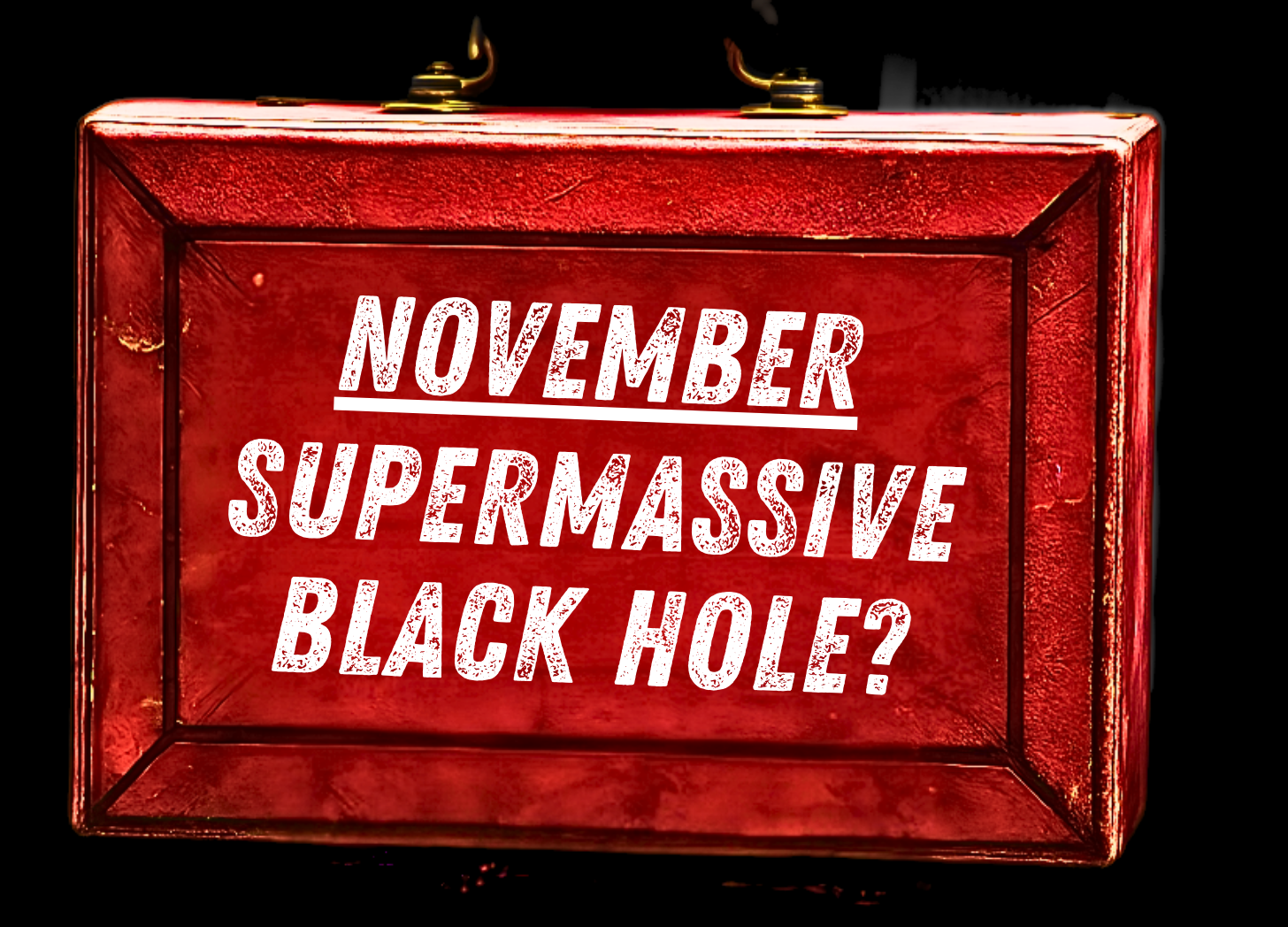
Rachel Reeves came to the Dispatch Dox insisting there was a £22 billion “black hole” that demanded one of the biggest stealth tax grabs in modern British history. Within days, it emerged that the hole was, in fact, a surplus – and that the Treasury knew. The figures had been ‘presented’ in a way that justified raiding people’s pay packets to compensate for a flatlining economy, all while claiming Labour was doing the responsible thing.
That is not just a bad look; it is a fundamental breach of trust. The Chancellor – and by extension the First Lord of the Treasury, the Prime Minister – is supposed to be the person who tells the country the truth about the economy, even when it hurts. Instead, money trees – sorry, taxpayers – watched the numbers bent to fit the politics. For a government elected on the promise of honesty after chaos, this is not an accounting error; it is a choice.
Folded into this was the scrapping of the two‑child benefit cap. From the Labour benches, it was sold as a moral crusade that would “lift children out of poverty” and prove the party’s heart was still in the right place. In reality, it was throwing a bone to backbenchers baying for blood. You are paying more because Starmer wants to be Prime Minister a little longer.
Scrubbing the cap is economically illiterate. Labour has chosen to fund its great act of supposed compassion not by bringing an out‑of‑control welfare budget to heel or boosting productivity, but by taxing low and middle earners harder for at least a decade. That does not ‘lift’ anyone out of poverty; it shuffles poverty around. Families who never claimed a penny now face higher tax bills, just as living standards are forecast to fall because of government policy. You do not get to call that a moral good.
At the same time, Labour quietly diluted its flagship Workers’ Rights Bill. The Manifesto promise of unfair dismissal protection from day one was watered down to six months, hailed by Ministers as pragmatic and by unions and Labour MPs as a straight breach of faith. And because Starmer boxed himself in with a ‘no rise in income tax rates’ pledge, the chaos around the Budget exposed the truth: the real squeeze will come from frozen thresholds and stealthy grabs elsewhere, not from the honest, up‑front argument the country was told to expect.
Hovering above all this was the OBR fiasco. Richard Hughes, the watchdog’s chair, presided over the premature release of key Budget documents – a basic failure in an institution that can move markets with a PDF upload. He resigned; in truth, he should have been fired. But even that serious lapse is now being used as political cover, while the much bigger sin – a Chancellor massaging the national narrative with a fictional black hole to justify a historic tax grab – drifts quietly into the background.
If November had a motto, it was this: the country will be held accountable for every penny; the people writing the budgets, almost not at all. What does it say when the people dictating the nation’s finances seem insulated from the pain they are inflicting on everyone else? Put bluntly: the people who broke the rules on their own properties now want to send you the invoice for cleaning up the mess.
Crime and Punishment?
The justice system did not escape the November purge of accountability; it just redirected it downwards.
On the railways, we saw the now‑familiar horror of a mass stabbing on an inter‑city trail;, passengers trapped in a carriage, while a man with a knife turned an LNER service into a crime scene. Terrorism was quickly ruled out, but that barely mattered to the public. The message was simple: we cannot guarantee your safety on basic national infrastructure anymore. The same man had been involved in another incident with a knife the night before, and the police let him go. No-one has been held accountable for that, either.
At the same time, the Government was forced into a series of excruciating statements admitting that prisoners had been mistakenly released from custody. Not one isolated blunder, but a pattern – a systemic problem that has been rumbling away for years, now spiking into a wave of ‘accidental releases’ that has got noticeably worse on Labour’s watch.
Yes, the mess was inherited. No, they have not fixed it. In fact, they have made it worse. For a party that campaigned hard on crime, protection and public safety, it raises an obvious question: was that yet another lie?
Layer onto that the ever‑ongoing migrant hotel saga. Voters were told, repeatedly, that the hotel era was coming to an end. Sites would be shut down, people would be moved on, order and normality would return. Yet November’s Budget quietly pumped even more money into the very hotel contracts that were supposed to be winding down. Incidents in and around those sites continue to mount, fuelling local anger and feeding the sense that both border control and basic law and order are non-existent. Ask the people of Crowborough, who were told their area would not be turned into an overflow holding pen, then watched the money and the coaches arrive anyway.
Accountability looked equally optional in Birmingham. West Midlands Police advised that Maccabi Tel Aviv fans be banned from attending their Europa League tie at Villa Park, citing alarming foreign intelligence about supposed “ultras”. The match went ahead behind a ring of protests, arrests and empty away seats – and by the end of the month, Dutch police were disputing key claims and MPs were accusing the force of ‘fitting’ the evidence to justify an easier policing job. Nobody who signed off the ban has yet paid a price for shutting out an entire set of travelling fans based on information that now appears, at best, badly mishandled.
How do you give something more money if you are supposedly closing it? You do it when the announcement mattered more than the reality. Once again, Labour looks like a party that will say whatever it needs to say in the moment and hope no one reads the Budget tables that follow.
Institutions on Trial
Britain’s institutions spent November going through the motions of accountability without ever quite committing to it.
The Covid inquiry finally produced more volumes of carefully lawyered prose. We learned, at great public expense, that ministers were disorganised, that WhatsApp groups were messy, and that Dominic Cummings swore a lot. What we did not meaningfully confront were the real questions: were lockdowns the right tool at all, in those forms and for those durations? Were we even remotely prepared for a pandemic of this scale? What should be fundamentally different next time?
Instead, the inquiry largely asked whether we should have locked down earlier and harder, not whether the entire approach was structurally sound. It turned into a blame pageant: Ministers sniping at each other, advisers settling scores, a national exercise in reputational laundering on the taxpayer’s dime. Most of the public, after years of delay, shrugged and moved on.
November also brought a devastating reminder of what institutional failure really looks like. The independent review into the murder of ten‑year‑old Sara Sharif concluded that “the system failed to keep her safe”, cataloguing missed warnings, confused responsibilities and professionals talking past each other while a child was being tortured in plain sight of the state. Taken alongside the still‑unresolved grooming gangs scandal – where inquiries drag on, prosecutions falter and politicians tiptoe around the ugliest truths for fear of giving offence – it exposes something darker than mere incompetence. We have built a society that is terrified of offending the right people, and it is children – again – who pay the price. It is hard to read any of this and still believe the usual reassurances that lessons have been learned and processes improved.
One television moment cut through more sharply than hapless breakfast TV presenters were counting on. A 100‑year‑old veteran calmly said that, looking at the state of the country, losing his friends on the battlefield in the Second World War “wasn’t worth it”. That one sentence prolonged the two‑minute Remembrance Sunday silence longer than many would have wished – and it was not just an indictment of Covid policy, but of the political class and the nation they have built.
Over at the BBC, the collapse was more specific. Tim Davie and Deborah Turness walked away after the Trump documentary scandal – a programme that, through editing choices, left viewers with a misleading impression of the current US President’s actions around the Capitol riot. The corporation insists it was an “accident”. It was not. On paper, this is accountability: two senior figures step down, reviews are launched, statements are made about “learning lessons”. In practice, it looks a lot like choreography.
Even the security state joined November’s dance. MI5 took the unusual step of issuing a formal espionage alert to every MP and peer over a “covert and calculated” Chinese attempt to penetrate Westminster, while Ministers promised fresh laws and tougher powers. Necessary, yes – but it also raised a quieter question in the background: how long had these efforts been going on, and who, if anyone, will ever be held responsible for missing them sooner?
If you can misrepresent the words of a sitting President in a flagship documentary and still be treated as an unfortunate victim of events, rather than the author of them, then what ‘accountability’ really means in modern Britain is the appearance of consequence, not the reality of it.
Politics Without Consequences
Inside No. 10, November felt less like a government in control and more like a party slowly realising that power has exposed its contradictions faster than expected.
Between No. 10 and No. 11, the neighbours descended into briefing wars. Stories about “chaotic” operations, mixed lines, and backbenchers panicking about a decade of tax rises became a constant drumbeat. Leadership challenge gossip, once confined to bored lobby hacks on slow days, started to feel less fanciful – especially when Labour MP Clive Lewis openly offered his seat to Greater Manchester Mayor Andy Burnham. This was no longer palace intrigue; the first shot of the impending civil war had been fired.
Hovering over it all is Morgan McSweeney, Labour’s Rasputin‑like strategist – the strategist whose fingerprints are on everything from the tax raid to the attack lines, and whose presence in the shadows fuels the sense that this is a project run by a tiny, unaccountable court rather than a serious Cabinet.
Labour’s left flank, meanwhile, is eroding. For years, progressive voters were told the only adult thing to do was hold their nose and back Labour. Now, month by month, the Green Party is quietly eating into that vote. The polls show Greens edging into double digits and, in some snapshots, nipping at Labour’s heels among younger and more urban voters. The Greens do not need to form a government; they simply need to split the vote on the left enough to turn Labour majorities into marginals and marginals into losses.
And on the opposition benches, accountability came with its own twist. Reform UK’s former leader in Wales, Nathan Gill, was jailed for more than ten years for taking bribes to push pro‑Russia lines – a brutal reminder that some politicians do, eventually, face real punishment. Yet, even as Reform found itself under that cloud, the stench of Russia around the party is starting to linger and people are noticing. Its polling surge has stalled, and Kemi Badenoch, now Leader of the Opposition, has begun to find a sharper footing – using the Budget chaos and the watering‑down of the Workers’ Rights Bill to argue that Labour breaks its word on both tax and jobs, and that there is still a Conservative route back if her party can start telling the truth.
That is the real danger of November’s Budget moment for Starmer. It is not just that people dislike being taxed more; it is that they feel they were misled about why, and they do not see any real contrition when the numbers are exposed. Once voters conclude that ‘they all lie’ again, the ground opens up for anyone who can plausibly claim to be telling the uncomfortable truth – whether that is the Greens, independents, Your Party, or a yet‑to‑be‑invented vehicle.
November’s Rain
Thread these stories together and November stops looking like a random scatter of crises and starts to resemble something more coherent and more disturbing.
A Chancellor sells a historic tax grab on the back of a fictional “black hole”. A welfare change marketed as a moral triumph risks pushing more families into relative poverty. A flagship workers’ rights promise is diluted while Ministers swear blind that no manifesto pledges have been broken and that income tax will somehow never rise.
A justice system that cannot keep trains safe, cannot keep dangerous offenders behind bars and cannot get a grip on the migrant hotel system continues to insist the real problem is you, not them. A policing decision in Birmingham shuts out an entire set of football fans on the basis of intelligence that now looks, at best, badly mishandled.
A safeguarding system is told, in black and white, that it failed to protect a ten‑year‑old girl from torture and murder. A Covid inquiry that should have been a reckoning becomes an exercise in asking the wrong questions. A national broadcaster treats a serious editorial failure as an ‘accident’, allows its leadership to walk away comfortably, and carries on.
The security services issue stark warnings about Chinese espionage in Westminster, while nobody is quite sure who, if anyone, will be held responsible for the years it went unnoticed. A rising vote to Labour’s left quietly signals that voters are already shopping around for someone – anyone – who might mean what they say, just as Reform’s Russia‑tainted brand collides with a Conservative leader who finally sounds as if she has spotted the open goal.
In some of these stories, nobody has taken the fall. In others, people have walked away tidily. A handful have ended in real prison sentences. And a few more now carry the unmistakable smell of a reckoning postponed, not avoided.
This is not just about competence. It is about consequence. Modern Britain is becoming a country where accountability is something imposed on the powerless, not practised by the powerful. November 2025 will not be remembered for one single headline.
It may, however, be remembered as the month a lot of people quietly decided that if the institutions will not hold themselves to account, they will eventually find somebody else who will.