



Home Blog Page 66

Chancellor commits to blocking No Deal, Grimes wins EC fine appeal

19 July 2019 | UK NEWS

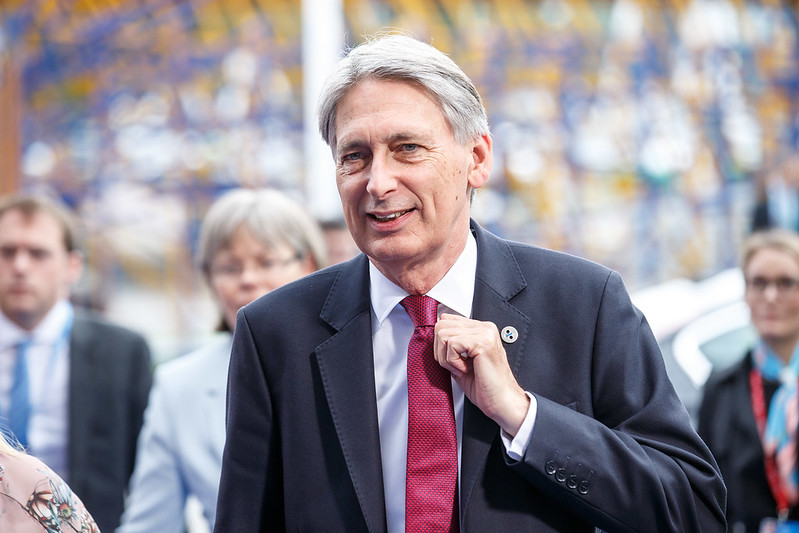
The Chancellor, Philip Hammond, has today said that he would do “everything in [his] power” to block a No Deal departure from the European Union in an interview with Le Monde and Süddeutsche Zeitung. Having said he did not believe it would be possible to renegotiate a deal with the EU prior to the scheduled Brexit date of Halloween, Mr Hammond added: “I will take steps to avoid an exit without agreement apart from an explicit parliamentary approval. There should be a new and sincere attempt to reach a consensus.”

The Chancellor also appeared not to rule out voting against the Government in a Confidence motion, saying: “I do not exclude anything for the moment.” Indeed, he did not appear to exclude the possibility of voting for another referendum on Britain’s EU membership, saying: “If we do not find a solution with the Members, we may have to ask the British [people] to give their opinion again, in one form or another.”

Mr Hammond’s comments have been interpreted as a sign of the difficulty that the next Prime Minister will face if he wishes to secure a No Deal exit from the EU, in the event that his renewed negotiations bear no fruit. They come following a rebellion among 17 Conservative MPs in the Commons yesterday, voting to back an amendment put down by Dominic Grieve designed to prevent the next PM from proroguing Parliament in the run-up to the end of October. Dozens more abstained instead, with Culture Minister Margot James even resigning from the Government in order to vote for the amendment.

This amendment means that regular updates must be made to Parliament on the progress of restoring the Northern Ireland assembly, which means it must be sitting. It attempts to use a technicality in order to ensure that Parliament must be sitting as Britain’s departure from the European Union approaches. It highlights once again that the Parliamentary situation facing the next Prime Minister will not be substantially different from that faced by the current incumbent.

Elsewhere on the Westminster scene today, a young pro-Brexit campaigner, Darren Grimes, has won his appeal against the Electoral Commission, which had fined him its maximum penalty of £20,000 for allegedly misreporting an expenses return during the 2016 EU referendum campaign. Mr Grimes, 25, who founded BeLeave – a pro-Brexit campaigning organisation targeting younger voters – was alleged to have reported his campaign’s spending improperly after receiving a sizeable donation from the official Vote Leave campaign.

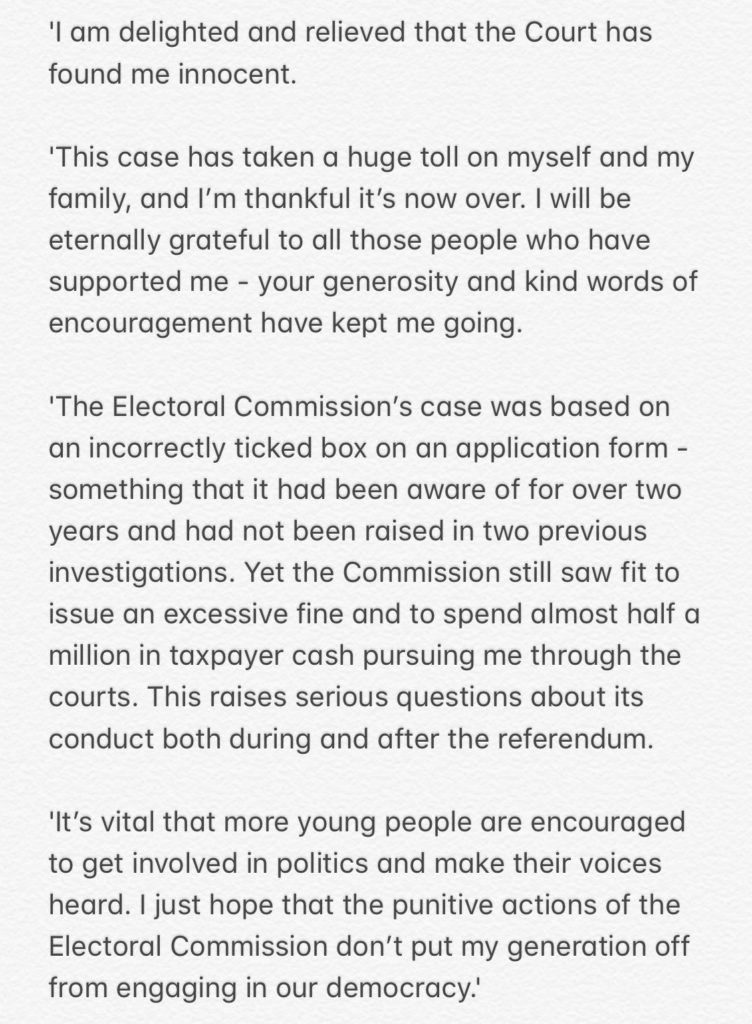
Having been previously cleared of electoral fraud, Mr Grimes was subsequently re-investigated and hit with the substantial fine. His appeal was heard this week, and the judge today overturned the penalty in a ruling that lasted over two hours. Mr Grimes gave the following statement following the judgement:
In the newspapers today, we read in The Telegraph an opinion piece on how a Boris Johnson premiership could be irreparably damaged within 36 hours.

The Guardian also carries a story today commenting on the aftermath of a leaked draft of a disciplinary process, which has caused Jewish leaders to accuse the Labour Party of “letting off” anti-Semites.


How the Tories should tackle the menace of gambling – Shradha Badiani

19 July 2019 | OPINION

Compassionate Conservatism is one very powerful strand of Conservatism that the party must adhere to in order to move forward. There has been a recent pledge of £60m by gambling firms to help addicts of gambling due to increased pressures on the sector. There has been widespread criticism of the industry, as before this pledge, the voluntary levy placed by the biggest gambling firms to contribute to treatment for addicted gamblers was a miniscule 0.1%. This levy will go up to 1%, still a tiny fraction of the billions of pounds worth of profit they make. For example, Ladbrokes-Coral Group (the largest betting company) generates a staggering £2.5 billion a year.

Considering these profits, gambling companies should be accountable for the effects that the industry has on people. Health Survey England found, that in 2016, 56% of people in England have gambled previously, thus showing the potential risk and accessibility of the vice. The Conservative Party has so far been promoting responsible gambling to safeguard individuals and communities, and if the party follows this trend, and strengthening their position further, corporate responsibility will be increased and the Party will be sticking firm to its values of responsibility and compassion.

Not only should gambling companies offer a section of their profits to help especially the young and vulnerable, I would call for stricter regulations regarding promotion. Many people have no idea what they’re getting into when they place that seemingly innocent first bet. Many users start through betting on sports, some start through offers of “free” bets which can then spiral quickly, leading to tens of thousands of pounds of debt.  Kelly Field recently shared her personal story, explaining that the reason that she gambled was to “escape reality”. For many others, this is also the case.

Having seen the incredibly distressing and damaging effects of gambling addiction, not only for the victims affected, but also for their family and friends, I am calling for much stricter regulations in the industry. Recently, Lord Archer has called on the Tories to adopt tougher stances due to the gambling epidemic. For the Party to stop this in its tracks and help the vulnerable in our society, it must show the country clearly that it can stick to its roots of passing responsible legislation.

Currently, the gambling industry is highly glamorised and commercialised, with constant advertising on TV along with adverts on social media sites such as Instagram, to entice people to make that first bet. Clearly, there is an issue at hand that must be solved. In 2018, the UK saw a 30% increase in calls to helplines regarding gambling addiction, highlighting the seriousness of the issue. The gambling industry also does not have any adequate safeguards or warnings in place. With smoking cigarettes, the consumer is aware of the harm that is caused – it literally states it on the packet. With gambling, nowhere does it say, “you could lose your family and all of your money, and end up in thousands of pounds of debt”.

recent report in 2017 highlighted that up to 25,000 11-16-year olds are problem gamblers, with many learning betting via computer games and social media. This is clearly a huge warning that younger people are much more likely to be influenced by these gambling companies. Education around gambling is also insufficient. The think tank Demos recently devised a series of lessons for students which encouraged them to weigh up risks, identify manipulative behaviour by gambling companies and learn how to manage possible impulses. In school, we learn about the dangers of addictive substances such as drugs, alcohol and cigarettes, so why do we not learn about addictive behaviour of gambling, which could have equally life-changing ramifications?

Gambling gives the user a false sense of hope, enticing them into betting money they do not have, giving them the idea that they will always be a winner. In 2018, the Gambling Commission highlighted that although we can understand roughly the amount of people affected by the addiction, we cannot understand how many family members, friends, and communities are affected. The industry must take a significant if not total amount of responsibility for safeguarding the consumers, who should be well informed of potential risks and dangers to protect consumer welfare, just as much as any other industry should.

Although a website called Gamcare is in place to help those addicted and their families, many aren’t aware this exists, unless they seek out the help individually. The government should do more to advertise what help can be accessed, whilst simultaneously making sure that victims of the addiction do not have to wait unacceptable waiting times for support with their mental health through counselling. However, these are not adequate precautionary measures, but rather reactionary. The only way this issue can be solved, and any negative consequences curtailed, is through strict regulatory bodies exerting much-needed pressure on the big players in the industry.

The Conservative Party has been involved in cross-party lobbying, and has “made the right decision to cut the maximum stake on fixed-odds betting terminals” – as stated by Nicky Morgan MP. This is a step in the right direction for the Party, showing that compromise can be achieved across party lines if it is for the betterment of communities all around the country. The Party is rightly known for economic management, and this decision will pave the way to showing voters that they can trust the Government not only to be fiscally responsible on a macro-scale, but also to show that this is the Party of inclusion for all in society.

Rudd tells PM candidates to compromise, Labour peer says Corbyn not “cut out” to be Leader

16 July 2019 | UK NEWS

Work and Pensions Secretary Amber Rudd has told Politico that both candidates for the Conservative Party leadership and Premiership will “find they have to compromise”. She added: “I was surprised by what they both said and I think their views will collide with the reality when whichever one wins, starts negotiating and starts dealing with a Parliament which may be more difficult than they think to engage with.”

It comes amid reports that Mr Johnson’s team is looking to schedule a Queen’s Speech for early November, which would involve proroguing Parliament in the final half of October in order to deliver a No Deal Brexit. Dominic Grieve also stated on the Today programme that he believed it would now be “quite difficult” to block No Deal by Parliamentary means.

Separately, it was reported in The Times today that the Brexit Secretary, Stephen Barclay, left the EU’s chief Brexit negotiator, “astonished and dismayed” during a meeting last week, when he informed him five times that the Withdrawal Agreement as previously negotiated by Theresa May was now “dead”.

Meanwhile, Lord Harris of Haringey, a Labour peer, has reportedly said that Jeremy Corbyn was not “cut out” to be the party leader. He made the comments on Radio 4, adding: “There’s no question that in any organisation the moral tone that it sets, the style that it operates in is set from the top – that’s what leadership is all about.”

Referring to Mr Corbyn’s inner sanctum, Lord Harris also suggested that Mr Corbyn might have “reined back” his “more idiotic supporters”, who have been accused of intimidation and discrimination against party members.

Elsewhere, we read in The Telegraph today that the incoming President of the European Commission (and its first female incumbent), Ursula von der Leyen, has insisted that the UK-EU Withdrawal Agreement cannot be renegotiated.

The Guardian also carries a story reporting that over 60 Labour peers have told Jeremy Corbyn he has “failed the test of leadership” in respect of his handling of anti-Semitism within the party.

How would young Leavers and Remainers reform the EU?

15 July 2019 | PROJECT

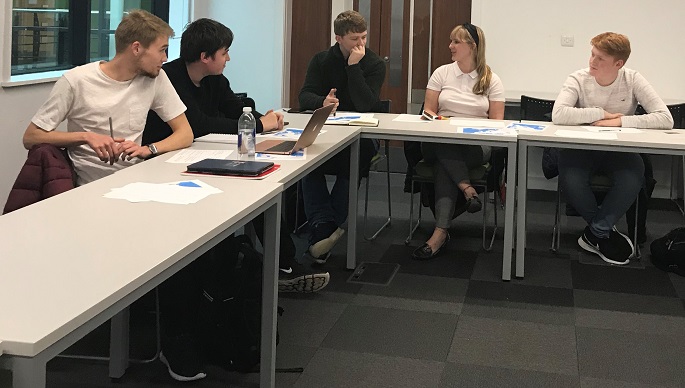
Deputy Editor Patrick Timms visited the University of Liverpool shortly before the end of term to ask young Leavers and Remainers how they thought the European Union should be reformed, by kind permission of Politics lecturer David Jeffery.

(They are pictured debating above, with their permission.)

During the 2016 referendum campaign, many voices on both sides of the debate had called for reform. On the Remain side, it was argued that Britain should stay in the European Union in order to help change it from within. The Leave camp argued that the EU was fundamentally unreformable and that therefore Britain should depart – although, interestingly, many of these people also said that they would have voted Remain if they thought that genuine change was possible.

Neither side, however, was particularly good at articulating how they thought the EU should reform. In this project, Wolves asked a number of Liverpool Uni students to set out exactly how they would have liked to reform the European Union. We felt that our youngest generation of adults was the most appropriate to ask this question.

This project was a chance for young Leavers to come along and answer the question: ‘What sort of European project would you have voted to Remain in?’

For young, perhaps ‘cautious’ Remainers, it was a chance to explain what kind of reforms they would have liked to see Britain help engineer, had we voted to stay.

For everyone, the challenge was: ‘Paint us a picture of a Europe that works, with us in it’. Whatever ultimately happens with Brexit, it is clear the debate will not be over.

(Are you a student at another university? Would you like Wolves to come along and run this project there too? Then do get in touch and let us know. This is a chance for you to have your say – and not just by putting a cross in a box! If you are an aspiring political writer or blogger, take note that Wolves author Chris Bradford was recruited via this project!)

The findings from both groups of students have been summarised below. Patrick notes that, in both cases, the overlap is a desire for greater democracy in the EU. While the two visions articulated are clearly very different, they are both shot through with the occasional common element – such as disapproval of an EU army. While by no means unexpected, this was certainly interesting to note…

Comments are, as ever, always welcome!

Leave: A Europe of Equals

Our idealist European project is premised around the idea of a regional free trading arrangement with European states. It prioritises economic integration, as opposed to deep political integration.

Our model would be similar to the framework of the Association of Southeast Nations (ASEAN). An advanced free trade agreement for goods with standardisation would be the minimum level of economic integration. This economic union is based on fair and free trade in an era where protectionism is rife. Rather than being isolationist, the economic might of the union will be maximised as states with similar, if not the same interests, would be acting collectively. It is perfectly feasible to envisage two distinct regional trading blocs for the respective industrial and agricultural economies with the UK featuring in a northern European alliance.

The current direction of travel within the EU institutions is towards a federalist superstate, further seeking to undermine the role of the nation-state within the international order. If there is a disagreement between the Union and a member state, then supranational law takes precedence. Brexit was synonymous with ‘taking back control’, inferring that national Parliaments were not sovereign. This economic union would address legitimate concerns regarding sovereignty. This institution is intergovernmental, as opposed to supranational. There will not be an arbitrary mechanism to ‘punish’ a member state, but there would be a constitution/code of conduct which would be ratified by each member state and any prospective state would have to adhere to if they wish to seek accession to the bloc. A constitution would seek to restrict the power of individual states which may threaten the integrity of the trading bloc.

Freedom of movement would be reformed. Within the economic unions, there would be visa-free travel for business and leisure purposes. European citizenship would be non-existent and migrants do not have an automatic right to reside in a country. Migration policy would be premised around skilled labour and not discriminatory based on origin.

In order to ensure frictionless trade within the bloc, mutual recognition agreements will be signed in order to secure the free movement of professionals within the bloc. The agreements will be enshrined within domestic law; the relevant sectors include: engineering, finance, health and tourism to name a few. Employment would be an essential condition upon entry and the state would reserve the right to prohibit entry if employment could not be guaranteed. It will be enshrined into domestic law that resident workers who have not being domiciled would not be entitled to social security entitlements until they can provide evidence of national insurance contributions. This would lessen the concern of the pressure of migration on institutions such as the NHS and underfunded communities.

Member states would voluntarily be able to deepen integration – opt-outs are available for any member state who would seek to take advantage. A prospective currency union could form if member states deemed it appropriate. Any currency union would have to consist of solely industrial or agricultural economies, perhaps with two distinct blocs. The euro would not be retained in its current form as it is illogical to have the economies of Greece and Germany in the same bloc since there is disparity between the respective economies. Interest rates determined by unelected bankers in Frankfurt, an institution which symbolises Germany’s political clout, are not beneficial to the economies of Athens, Rome and Lisbon.

This type of union would correspond with former Belgian Prime Minister, Mark Eyskens’ (1991) infamous assertion that the EU was an ‘economic giant, political dwarf and a military worm’. This union would respect the various approaches to foreign policy adopted by member states and there would be no military integration. The EU was not united with regards to the Iraq War as the foreign policy of Berlin and Paris differed from the approach London and Washington adopted. NATO would be the sole Western military alliance.

Remain: A Europe of Democracy

This vision of Europe would seek to address the democratic deficit that, in part, influenced the Brexit vote in June 2016. Instead of being appointed by the member states, the President of the European Commission would be directly elected by the peoples of Europe and receive a popular mandate. Candidates would be selected by the party affiliations within the EU Parliament and the respective lead candidates would participate in televised election debates. These would be broadcasted by national television companies.

There would be four debates in Berlin ahead of the ballot, with questions being live streamed and the participants being scientifically selected by a polling organisation. The results would not be announced until all member states have voted. Voters would be required to rank the candidates according to their preference. In order to maximise turnout and reduce potential voter apathy, the elections would be held simultaneously alongside the EU Parliamentary elections every five years.

It would be the duty of the Commission, Council and Parliament to take a greater duty in championing European values. There needs to be a wider conversation on what it means to be ‘European’, but there doesn’t need to be a conflict between the two identities. A European identity should not subvert the respective different nationalities within the Union; it is the threat to social cohesion within the EU which contributed to the rise in left and right-wing populism, accentuated by the 2008 global financial crisis. Collaboration with our European partners is in both the UK’s and EU’s interests, especially with the pressing challenges of climate change, EU-Russia tensions, human trafficking and terrorism.

The idea of a ‘global Britain’ referred to the ability to forge trade deals with Commonwealth partners, emerging economies such as Brazil, Mexico and Singapore, whilst entrenching the special relationship with the United States. As a bloc of 28, the EU has prided itself on negotiating ambitious free trade arrangements with Canada, Japan and Singapore.  Leverage in international negotiations is determined by the size or clout of a particular organisation or country; it will take several years for the UK to negotiate trade deals that already exist, a result of EU membership.

It took four years for the EU to negotiate the free trade deal with Japan; it took seven years to negotiate the well-documented Canadian-EU trade agreement (CETA) and a bilateral Singapore agreement. Globalisation is an inevitable consequence of an integrated political society; however, there is no shame in admitting that the process has not benefitted all. Regional inequalities can be tackled on a national level through a government willing to rebalance wealth from London and South-East to the so-called forgotten regions in the country.

Despite perceiving that the UK’s best interests are as part of a collective union, the EU is not perfect, but in reality, it is extremely unlikely to find a perfect institution. The desire for a European army, as Chancellor Merkel alluded to, is unrealistic and federalist aspirations will alienate people away from the European project. Not to mention the treaty change required so any prospective policy does not contravene the historic policy on Irish neutrality. There will never be unanimity on a supranational level, primarily due to the different interests of the prospective member states. Whilst Britain sided with the United States, France and Germany opposed the Iraq War. In order to prevent further alienation, supranational and national responsibilities must be clearly defined: a supranational organisation should not decide defence policy for the respective member states.

Europe must react and reform amid the occurrence of the Brexit vote. It was a necessary warning sign if a supranational project can continue to exist. Brexit emphasised that the current project was not suitable for purpose in this political climate. There must be an affiliation with the European project; it is not our enemy or a rival, but a partner. Greater democracy lies at the heart of a reformed Europe.


Patrick has also put together his own Vision for Europe here (two pages):

A-Vision-for-Europe

Corbyn, Boris, Hunt – British politics has never had it so good…

9 July 2019 | OPINION

The Labour Party have today confirmed their position on Brexit, which is to back Remain and call for a new EU referendum. This decision comes after the party’s affiliated trade unions confirmed their standpoint yesterday, stating that the Labour Party should campaign for the Remain cause.

However, despite this, members of the electorate will still be sceptical over Jeremy Corbyn’s position on the matter. Everybody knows about his Eurosceptic tendencies, but the question is: will he put the same amount of effort into campaigning for it as he did the first time round…? (Let’s not forget Mr Corbyn’s less-than-impressive turnout during the EU referendum…)

Britain’s Next Prime Minister… no, not another tired-out ITV reality show format, but the final televised debate between Jeremy Hunt and Boris Johnson to see who will end up with the arduous task of dealing with Brexit. The concerns of a No-Deal Brexit were at the forefront of the debate, with Mr Hunt raising concerns over tariffs impacting business owners, while Mr Johnson believed the opposite.

It was a heated debate, where both Boris and Jeremy seemed to turn things into a good old-fashioned testosterone match. At times, things turned into an incoherent squabble, with Boris seeming to act like both the Chair and interrogator at once. Sorry, Julie…

Meanwhile, in Parliament this evening, MPs voted by 383 votes to 73 to approve an amendment from Labour’s Conor McGinn to require Westminster to legalise same-sex marriage in Northern Ireland if a new Stormont Executive is not formed by 21st October.

Furthermore, Dominic Grieve’s attempt to block the suspension of Parliament was not selected for a vote today. The pro-Remain Tory MP had been looking to amend the Northern Ireland bill in order to prevent the new Prime Minister from proroguing Parliament and enacting a No-Deal Brexit.

However, a further amendment tabled by Grieve, requiring Parliament to report on the status of restoring the Stormont Executive every two weeks from the end of the Conference Season recess until shortly before Christmas, was passed in the House by the slimmest possible majority: 293-294. This amendment has been widely seen as a further attempt to avoid a No-Deal Brexit – by requiring Parliament to be sitting in the fourth quarter of this year, any attempt to prorogue it could potentially be stymied. It is a further sign that any future Prime Minister would continue to face significant challenges in the House if they wished to take Britain out of the European Union without a deal.

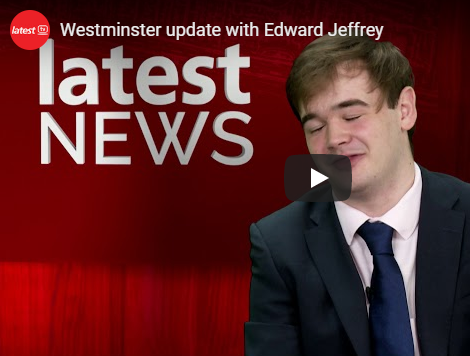
Finally, with the announcement a few weeks ago about the BBC scrapping free TV licences for the over-75s, our Deputy Editor Ted Jeffery gave his view on the matter on Latest TV in Brighton:

Trump criticises May over Brexit, Labour trade unions agree to back second referendum and Remain

8 July 2019 | UK NEWS

The US President has hit out against Theresa May’s administration today, saying that it has made a “mess” of Brexit. It comes amid a leak of private communications from the office of the British Ambassador to the United States (Sir Kim Darroch) over the weekend, which described Donald Trump’s government as “inept”.

Mr Trump tweeted the following:

https://twitter.com/realDonaldTrump/status/1148298497189392384

The condemnation of a UK administration by a US President – said to be the worst in decades – is likely to be met with sorrow in Downing Street as the outgoing Prime Minister prepares to resign from office in a little over two weeks. Earlier today, the Prime Minister’s official spokesman said:

“Our ambassadors provide honest, unvarnished assessments of politics in their country, those views are not necessarily the views of ministers or indeed of the Government. This leak is not acceptable. We would expect such advice to be handled in the correct way and a leak inquiry has been launched.”

The International Trade Secretary, Liam Fox, described the state of affairs as a “potentially damaging event”, adding that he hoped “the full force of our internal discipline, or even the law” would come down on whoever was responsible.

One quote from the leaked diplomatic advice was reported to be: “We don’t really believe this administration is going to become substantially more normal; less dysfunctional; less unpredictable; less faction-riven; less diplomatically clumsy and inept.”

Meanwhile, the Labour Party’s affiliated trade unions have confirmed their standpoint on Brexit today, having previously asked Jeremy Corbyn for more time to decide upon an agreed collective position. It is reported in Westminster that this position is as follows:

  • Any new deal negotiated by the next Conservative Prime Minister should be put to a referendum;
  • Any date for Brexit that is to take place without a comprehensive negotiated deal in place with the EU should be included in any such referendum;
  • The ballot should consist of a choice between these negotiated settlements and the United Kingdom remaining a member of the European Union;
  • The Labour Party should campaign for the Remain cause.

It is also understood that, should a General Election take place in the short term and be won by Labour, then the party would seek to renegotiate a deal on its own terms and then put this deal to the country in a new referendum, which would be set against the Remain option.

While it has been reported that this means the Labour Party’s position is now firmly in favour of Remain, it should be stressed that this is merely the stance of its affiliated trade unions. Having now agreed a collective position, the news means that the unions will now pressure Labour to adopt this policy officially itself. Nonetheless, the development has been welcomed as a sign of significant progress by the Remain movement and the People’s Vote cause.

In the newspapers today, we read in The Guardian that the veteran Labour MP for Vauxhall, Kate Hoey, has announced that she will step down at the next General Election.

The Telegraph also carries a story today that speculates on what might happen if there were to be a change in the Labour Party leadership.

The Great Council House Revival – Paul Maginnis

8 July 2019 | OPINION

100 years ago, Lloyd George pledged ‘to make Britain a fit country for heroes to live in’. The Addison Act of 1919 meant that for the first time, local authorities had a duty to ‘consider the needs of their area with respect to the provision of houses for the working classes’. Although the centenary of the first council houses will not have the same fanfare as the NHS turning 70, it has been a noble endeavour nonetheless. If the Conservative Party are to fulfil the aspiration of building 300,000 homes a year by the mid-2020s, we need to once again reclaim this mantle.

Contrary to popular belief, the Conservatives have a proud history of council house building. Harold Macmillan’s Government in the late 1950s and early 60s routinely built 300,000 homes a year. Half of these homes were built by councils and it proved to be the peak of social housing. Fast-forward to the early 2000s, and these numbers had dipped to a record low, when councils were building an average of just 224 houses per year. Whilst this rate has improved in recent years, with a population that has now increased by 12 million since the early 60s, we need to be building just as many as Macmillan’s Government.

We all know the reason why there has been such a dramatic decline in council housing – the Right to Buy Policy brought in under Margaret Thatcher. This was a fundamentally fantastic policy for hundreds of thousands of working-class families, as they were given the chance to own their own home. Ironically, it was the biggest redistribution of wealth from the government to the people (although there weren’t many plaudits on the Left at the time).

During the 1980s, home ownership and therefore social mobility dramatically increased, but there was a fundamental flaw in the Right to Buy Scheme: there should have been a second part to this policy. For every one home sold, councils should have been allowed to keep 100% of the sale to build a replacement. There is no doubt this lack of forward thinking has had a part to play in the current housing crisis.

We have 1.2 million households on social housing waiting lists, the housing benefit bill has now reached £22 billion (nearly twice the size of the budget for policing) and there are thousands of rough sleepers partly due to a lack of supply. The lack of investment in housing is costing us dearly and is the definition of a false economy.

There is hope on the horizon though. The borrowing cap for councils is now being lifted and this could be the beginning of a new generation of social housing. An LGA survey published earlier this year found that 94% of stock-owning councils said they would use their new powers to accelerate their house building programmes. As we elect a new leader of our party, they should commit to leading the way on building a new generation of council housing. There should be no tension in doing so. Although we want to support the vast majority of people to own their house, there will always be a significant minority who are not able to do so.

We need to remember that investing in decent housing means so many other of society’s ills can be improved. The housing benefit bill will fall, social care pressures will ease and families will be strengthened as they have a secure home for their children. Let us channel the spirit of Conservative Governments of yesteryear and make council house building a top priority for the 2020s.


Paul Maginnis is a Conservative Party Councillor for Sawley in Erewash, and author of The Return of Meritocracy: Conservative Ideas for Unlocking Social Mobility. Follow him on Twitter @paulmaginnis1.

EXCLUSIVE: Young Brexiteers to be official youth wing of the Brexit Party

5 July 2019 | ANALYSIS

After successfully gaining 29 seats in the European Parliament and 4 seats in the Welsh Assembly, the Brexit Party are now turning their attention to Westminster.

Last Sunday saw the Brexit Party unveil their first 100 Parliamentary candidates who will be standing in the next General Election. The revelation took place at the Brexit Party’s Big Vision rally. The agenda for the event was listed as:

  • Hear first-hand the Brexit Party’s first big policy announcements
  • Take part in a conversation about other policy options
  • See our first group of candidates to be Brexit Party MPs
  • Find out about our plans for the General Election – and how you can be involved
  • Meet our new Brexit Party MEPs

Courtesy of The Brexit Party website

It was an event that announced the launch of the party’s first policy platform, the publication of its first official publication (The Brexiteer), and entertained speeches from the likes of Annunziata Rees-Mogg and Tim Martin (the founder of the Wetherspoons chain), Party Chairman Richard Tice and, of course, its Leader, Nigel Farage. Furthermore, the Brexit Party’s digital team had clearly decided to add in a WWE-style theatrical entrance. This confused us a little at Wolves – we weren’t too sure if John Cena was scheduled to make a tag-team appearance with Ann Widdecombe…

However, it isn’t just the senior Brexiteers who will be getting airtime now. Wolves sources suggest that a new official youth wing of the Brexit Party has been formed. They are called the Young Brexiteers and their Leader/Founder is 19-year-old Owen Reed, who if you aren’t aware has often been seen hanging around with a man called Nigel Farage.

An e-mail was sent out earlier this week from Owen to fellow young Leavers asking if they’d join him in coming on board for this new movement. This new Brexit movement isn’t the only grass-roots organisation that has been formed over the past year. Turning Point UK have also been making themselves heard as a small-C conservative organisation sharing similar values to Richard Tice and Nigel Farage. We at Wolves wonder whether there could be any overlap with the Young Brexiteers…

Our sources confirm that only one e-mail has been sent out thus far and, at this stage, Owen and the team are merely trying to get things off the ground.

May advises successor to act in “UK’s best interest”, Corbyn demands enquiry into Civil Service indiscretion

3 July 2019 | UK NEWS

Outgoing Prime Minister Theresa May has advised her successor to act always within the UK’s “best interests”, speaking in the House of Commons today. She was responding to a question at PMQs from Sir Edward Leigh, a former Tory Minister, who asked her to offer advice to her successor in dealing with the European Union.

Mrs May said that she continued to believe it was in the “best interests” of the country to leave the EU “with a good deal”, and said that her successor should “act at all times in the best interests” of the UK. She added: “I have always believed that no deal was better than a bad deal, but I believed we negotiated a good deal. The advice I would give to my successor is to act at all times in the best interests of this country. I believe it’s in our best interests to be able to leave the European Union with a good deal but it is up to my successor to find a majority in this House to enable us to leave the European Union.”

The exchange in the Commons earlier today preceded a heavy defeat for the Government tonight in the Lords, over a vote on whether or not there should be an enquiry into the ramifications of a no-deal Brexit. The Opposition motion was approved in the Upper House by 245 votes to 99 – a majority of 146 – and aimed to set up a joint committee between both Houses to investigate the full implications, along with the costs, of the UK leaving the EU without a deal. However, the Government is not obliged to act upon the vote.

The Labour Leader in the Lords, Baroness Smith of Basildon, described such a scenario as the “worst of all outcomes”, which now “looms as a real possibility” as opposed to “a mere bargaining chip” previously, adding that “we cannot accept marching towards the cliff-edge without having an up-to-date assessment of what lurks beyond. With or without Government support, I urge the House to support this proposal to provide the Commons an opportunity to consider its merits and continue working to avoid the worst of all outcomes – a chaotic, damaging no-deal Brexit.”

However, Lord Callanan, a Government Brexit Minister, objected to the motion, saying: “The possibility of the UK exiting the EU without a deal has been effectively on the table ever since Parliament voted to support the triggering of Article 50. While the Government continues to believe leaving the EU with a deal is the best outcome it is a fact that the Commons has rejected leaving on the terms we have negotiated three times. Without a withdrawal agreement having been agreed, leaving without a deal remains the legal default at the end of October 31.”

Meanwhile, Jeremy Corbyn has met with Mark Sedwill, the Cabinet Secretary, to demand an independent enquiry into reports that senior Civil Service officials had briefed that he was not “physically or mentally” up to the role of Prime Minister, in a story that broke in The Times over the weekend. He was accompanied by Jon Trickett, the Shadow Minister for the Cabinet Office.

The discussion, which took place in the Labour leader’s Westminster office, was described by a party spokesman as “frank and detailed, with a full exchange of views”, adding that “the seriousness of the Civil Service breach and the evident malicious intent behind it was acknowledged by all participants in the meeting.” He further described the incident as “entirely unacceptable” and “unprecedented in recent times”.

It was later confirmed that Downing Street had commented that a Civil Service investigation was the correct way to proceed, while Labour Party sources also indicated that there would be “an independent element” to the enquiry and it would report as soon as possible.

The Prime Minister’s official spokesman said: “The Civil Service is responsible for looking into any potential breaches of the Civil Service Code and this is no different. If we are able to identify any individual responsible we will take appropriate disciplinary action.”

In the newspapers today, we read in The Express that SNP MEPs refused to stand while the Ode to Joy was played in the European Parliament yesterday. They reportedly did so in solidarity with Catalan MEPs who were unable to take up their seats. The news comes as Brexit Party MEPs were also criticised for standing but turning their backs during the performance.

The Mirror also carries a story reporting that the Chancellor, Philip Hammond, has decried the two leadership contenders’ commitments to a no-deal Brexit if necessary, saying that this would lead to a £90 billion hit to the UK economy and leave “no money available” for the next Prime Minister’s Government.

More from this author

Don't miss...

Wolves of Westminster