




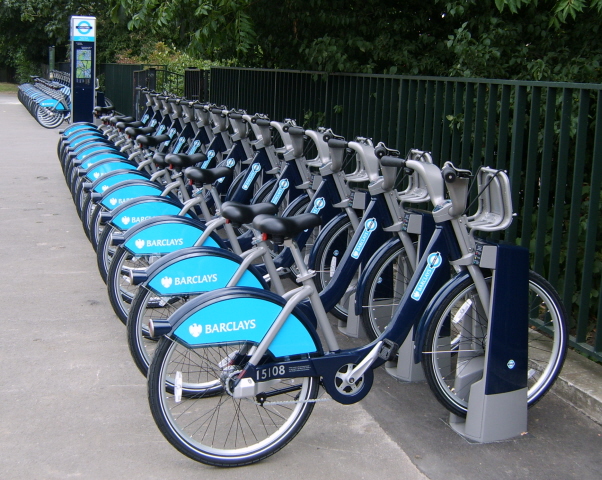
Boris bikes, Boris buses… Boris Brexit? – Ben Fisher
1 July 2019 | OPINION
Brexit. Gets boring, doesn’t it? We could be talking about healthcare, schools, infrastructure, the climate, homelessness or just about any other subject we expect our political class to be fixing while the working people who dig our roads, maintain our railways, staff our hospitals and enrich our country’s economy carry on. But no, for the last 3 years they’ve had to endure watching our political establishment argue amongst themselves, fight, throw milkshake and jab at their colleagues with their harsh comments on social media, because since 2016 a large group of politicians and their lobbyists have been throwing tantrums over Brexit.
Meanwhile, in Sadiq Khan’s Labour London we have a knife crime epidemic, acid being thrown over people and an ineffective Metropolitan Police Service under Cressida Dick, unable to control the streets at night. Instead of cracking on and getting the job done, Khan is far too busy worrying about the President of the United States and trying to stop Brexit.
The latest target for the Remain establishment is Boris Johnson: the biggest threat to their gravy train since Farage announced he was back. It was all going well until Theresa May couldn’t pass her Appeasement Bill and hand her (and our) £39 billion over for upsetting Brussels with our outspoken British democracy. It’s now ‘all weapons fire’ on Boris.
But does that not tell you something? He’s a threat. A threat to their control and a threat to their power. Underneath the mumbling, bumbling Boris is a finely-tuned machine who saw two terms as Mayor of London, bringing the city to much of the success it has seen this century.
The Remain establishment is furious with Boris and his commitment to remove Britain from the failing EU. If the Remain MPs try to thwart Boris’ Brexit plans, they will inevitably welcome the Brexit Party into the Houses of Parliament, which is likely why they’re less worried about Jeremy Hunt. Jeremy is Theresa May 2.0 and will happily sign Britain into being a Vassal State under the authority of the EU. If you support becoming part of a federal Europe, you should vote for him.
For Brexiteers across the nation, Boris is a crucial part of the broader Brexit process. This is not a General Election and it’s essential to get a Brexiteer into Number 10. Along with Farage and Widdecombe, two prominent characters expected to take the stage in the European Parliament soon, getting Boris Johnson from Vote Leave into Number 10 puts Britain in a secure and capable Brexit position.
The choice is clear: we either have Jeremy Hunt continue the work of Theresa May and Olly Robbins to derail the Brexit process and drag it on into 2020, or we take a Boris bus on the route to free trade with the whole world, investment in our infrastructure and positioning Britain to become a world leader in the Digital Age.
Robbins jumps before being pushed
30 June 2019 | UK NEWS
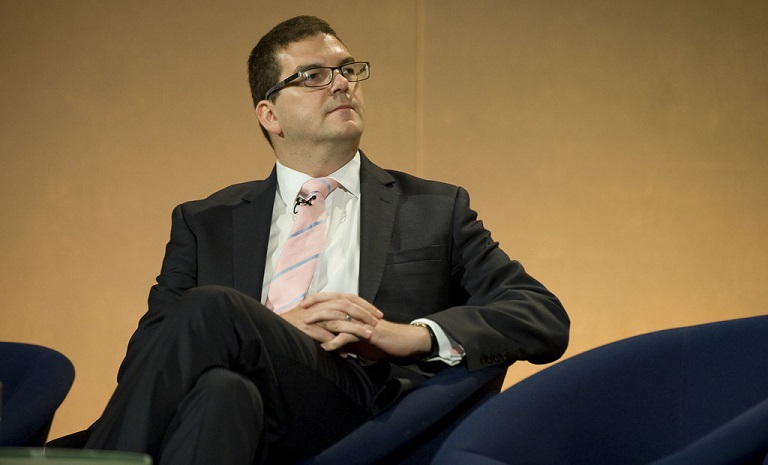
Oliver Robbins, the Prime Minister’s Europe Adviser and Chief Negotiator for the Brexit process, is to step down from his post shortly after the next Leader of the Conservative Party becomes Prime Minister in late July, it is understood in Westminster. There are rumours that he may move on to take up a job in the City. The next Prime Minister will take up his post after Theresa May steps down following her final Prime Minister’s Questions on 25th July.
The news broke during the Tory leadership hustings yesterday, with contender Jeremy Hunt noting that it was “a good moment to change our approach”. This announcement was met with cheers from the Conservative Party members present at the event, with Mr Hunt adding that he “didn’t agree with the approach that we took in a number of areas” in respect of Britain’s negotiations to depart from the European Union.
He added, however: “I’m not going to say something about a civil servant who I know works incredibly hard, even though there are issues I disagree with him on. But I do think now is a moment that we have to get this right, deliver a different deal and one that can actually get through Parliament.”
The news comes amid reports that other senior Civil Service officials are also planning to step down from their roles, with Tom Shinner (Director of Policy and Delivery Co-ordination at DExEU) and Karen Wheeler (Director General of HMRC’s Brexit Border Delivery Group) both announcing their intention to quit recently.
This series of resignations appears to underscore a feeling within top Civil Service staffers that delivering Brexit in a manner envisioned by either Mr Johnson or Mr Hunt is not something they wish to be associated with. Indeed, both contenders are reported to be assembling new negotiating teams, with Mr Hunt having reportedly recruited former Canadian Prime Minister Stephen Harper to assist with future trade negotiations, while Mr Johnson is said to be in talks with Sir Edward Lister.
It comes as Mr Johnson, who is the current favourite to win the Tory leadership contest, is reported in The Telegraph to be planning to sack around a third of the current Cabinet in order to build a new team of top Government Ministers who will support his Brexit ambitions. This approach would not be dissimilar to his previous style of leadership while Mayor of London.
Across the Parliamentary benches, the Shadow Chancellor, John McDonnell, has told Sky that it is taking longer than he expected to shift the Labour Party’s stance towards Remain, and to support a second referendum to confirm this. He confirmed that a meeting had taken place between Jeremy Corbyn and senior trade union officials about the “attitude” that Labour should take, at which point the unions had asked for more time to decide.
Mr McDonnell added: “[Jeremy] had a meeting on the Monday before the last shadow cabinet and I thought the next day we were going to move forward. The unions asked for a bit more time and I don’t mind that – that’s the type of leader Jeremy is, he is a consensus builder.”
In the same context, Len McCluskey, the head of the Unite union, has told Andrew Marr that there should be no “panic” about switching Labour’s position on Brexit, saying that he blamed the present “toxic situation” on a “well-funded Remain campaign”. He added that “we have had a Prime Minister who has made huge mistakes and a government which has been incapable of delivering Brexit.”
In the newspapers this weekend, The Daily Mail reports that Nigel Farage will announce a £200 billion spending package to rejuvenate Britain’s regions at a major Brexit Party rally this afternoon. He reportedly plans to deliver this by scrapping both HS2 and the Foreign Aid budget, while also refusing to pay the £39 billion ‘divorce bill’ demanded by the EU in return for an orderly Brexit. However, these plans still leave £47 billion unaccounted for.
Meanwhile, The Mirror carries a story today about Labour’s demand for an official probe into a report published in The Times yesterday, which appeared to call into question Mr Corbyn’s health and physical fitness to be Prime Minister. Jon Trickett, Labour’s Shadow Minister for the Cabinet Office, is said to have written to Mark Sedwill, the Cabinet Secretary, to call for an independent enquiry. Mr Sedwill is not believed to have responded yet, at the time of writing.
It had better be third time lucky for the Tories – Toby Amiel
25 June 2019 | OPINION
They say you can never make the same mistake twice because the second time it’s not a mistake, it’s a choice. In this regard, Theresa May’s negotiations for a Brexit deal with the European Union were always likely to fail.
Following in the footsteps of Harold Wilson forty years previously, as part of his pledge to hold an in/out referendum, David Cameron promised to renegotiate Britain’s relationship with the EU. Nonetheless, what worked in 1975 did not work in 2016. Cameron claimed in 2014 that “the EU is not working and we will change it”. He claimed the EU was open to reform and he could gain significant changes to freedom of movement, something that has heavily contributed to British Euroscepticism. The fact is, as members of the EU, we cannot have full control over our borders. However, the changes he did come away from Brussels with were completely different. They included minor changes, such as an emergency brake on immigration and an opt out from ever-closer union.
Now, in this situation, Cameron had two choices. He could walk away and campaign to leave the EU or he could try and pull the wool over voters’ eyes and campaign to remain. He chose the latter, but rather than take a less prolific stance in the referendum campaign as Wilson had done in 1975, he decided to put himself front and centre, doing his best to make the sack of proverbial coal given to him by Brussels look like diamonds. His gamble backfired spectacularly and this was a classic case of a politician overpromising and underdelivering.
Which brings us to Theresa May. Having just seen her predecessor’s gamble of trying to sell a lemon to the British people and losing, she should have realised that a tougher line with the EU was required and preparations should have been made to make walking away without an agreement a viable option. Ironically, the more you prepare to walk away the less likely it is to happen. In reality Brussels saw straight through her unwillingness to contemplate it and knew that whatever they proposed, the Prime Minister would eventually accept.
Many of the candidates in the initial Tory leadership contest appeared not to have heeded these warnings. According to the great Albert Einstein, the definition of insanity is doing the same thing over and over again and expecting a different result. Yet Rory Stewart believed, as though he were in some sort of parallel universe, that Theresa May’s deal as it stands can still pass through Parliament. Jeremy Hunt, perhaps equally as delusional, believes he can persuade Europe to renegotiate the Withdrawal Agreement, despite his unwillingness to commit to Brexit by 31st October.
Of course, Parliament could still block any future Tory leader from enacting a WTO Brexit, with the most likely procedure being a vote of no confidence in the government. It appears there are the required number of hard-line Tory Remainers for such a vote to succeed and there have even been reports of Theresa May being one such Remainer (all but proving Brexiteer assertions that her heart was never in it). But these potential defectors need only ask themselves which they value more: upholding democracy or potentially unleashing a left-wing Socialist government on Britain with Brexit still undelivered?
What this leadership contest has highlighted so starkly is how many Cabinet Members, Amber Rudd, David Gauke and Rory Stewart to name a few, have fundamentally disagreed with the key part of the manifesto they stood on in 2017. When push comes to shove, for them, ‘no Brexit is better than no deal’. If nothing else, this in a nutshell demonstrates why Theresa May’s government was doomed to failure.
Piers Morgan, when he appeared on a question time panel in 2016, summed up David Cameron’s failed renegotiation of our relationship with Europe before the referendum thus: Cameron is the kind of guy who goes into the first shop and says ”I love all your carpets. And, by the way, I’m not leaving until you’ve screwed me over”. The Conservative Party has now had two consecutive Prime Ministers who have been insincere and economical with the truth when it comes to their negotiations with Brussels (‘no deal is better than a bad deal’, anyone?). Whoever they elect as leader must make sure they do not make the same mistake a third time, or the party will face electoral annihilation. Nonetheless, they are one major Boris gaffe away from Theresa May Mark II becoming PM, so I wouldn’t bet my life on it.
Creating One-Nation: The Empowerment of Sport – Paul Maginnis
24 June 2019 | OPINION
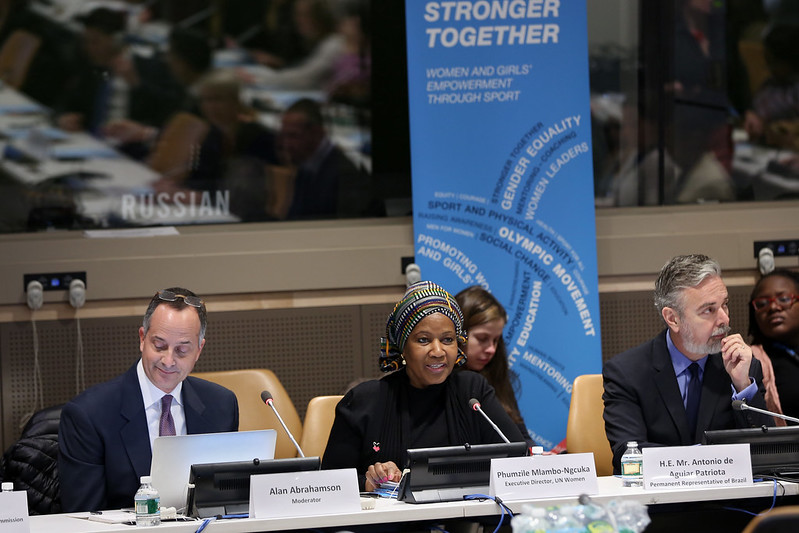
We hear a lot about ‘one-nation’. Whether it comes from Rory Stewart, Boris Johnson, or even Ed Miliband back in 2012. In these divisive times, creating one-nation may be a furlong hope when it comes to Brexit, as a culture war rages on a daily basis. However, when it comes to sport, there is no more powerful weapon that sweeps differences aside and brings people together.
Watching a Sky News report on Polo at the Royal Windsor Cup, wouldn’t usually grab my attention. But this year, two youth polo teams based in South London were invited to play during the event. These youth teams weren’t just your stereotypical upper class polo players, instead they were from council estates in Brixton. Some of them were former gang members whose friends had been murdered. Watching this report was truly inspirational as I witnessed people from completely different worlds play sport together and show that we all have common ground. This, to me, is what Benjamin Disraeli’s one-nation is all about.
Looking back, I’ve seen a one-nation ethos in sport so many times throughout my life. I have been playing football since I was in primary school and every week, I see so much more camaraderie than I do ill-will. I remember when I was working in Sheffield back in 2013, my colleagues and I were in a park having a kickabout. Five or six students were playing next to us so we asked them if they wanted a match. They said yes, so we set up goals and started playing.
10 minutes later, three Chinese people (with Neymar haircuts!) were walking past and they asked us if they could play. We, of course, said yes. After another period of play, a couple of what turned out to be Ghanaian students were cycling past. They asked if they could join in and, amazingly, this melting pot of different people now meant it was 11-a-side. We mixed the teams and had a great time. That was the power of football to create one-nation.
What’s fantastic about football or even rugby, is all you really need to get going is a ball (and hopefully a few friends). Football in particular has inspired working classes for generations, but having worked with hundreds of children in care over the last few years, it is worrying how little interest there is in football – or any other sport. There are many plausible explanations for this. In many cases, parents haven’t encouraged their children to get involved in sport. If the child didn’t have to go to school when living at home, they wouldn’t have had the opportunity to get involved. And of course, we must not forget, with video games more popular than ever, there is a major issue of millions of children being isolated in their room all day.
There is so much going on in sport which is truly inspirational. From the Paralympians’ extraordinary achievements now gaining the recognition they deserve, to women’s football being more popular than ever. But if the Conservatives are to be the party of opportunity, we need to be leading a national campaign to support charities, schools and the private sector in engaging our young people in sport. This is surely one agenda where we can all come together, as one-nation.
Paul Maginnis is the author of The Return of Meritocracy: Conservative Ideas for Unlocking Social Mobility. You can follow him on Twitter @PaulMaginnis1.
Mark Field has done nothing wrong – Elena Bunbury
21 June 2019 | OPINION
When I awoke this morning to Mark Field trending on Twitter, I was shocked as I knew it was far too late for it to be a last-minute leadership bid that nobody expected. I then clicked on the link and was met with an onslaught of tweets stating how he’s abusive, a woman-beater, needs to resign etc, only to look further to find that all he did was defend a senior MP from a potential threat.
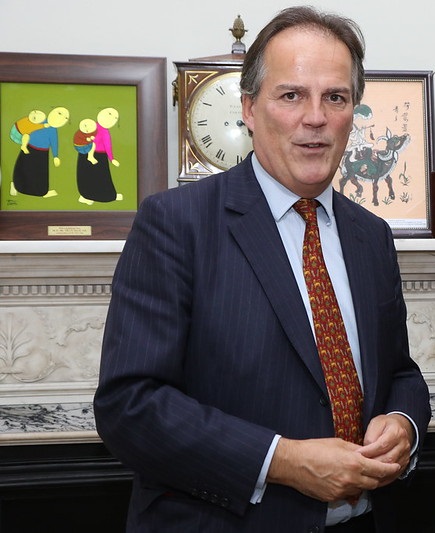
There was very clearly a security lapse at Mansion House last night as a group of Greenpeace protestors broke into a dinner that The Rt Hon Philip Hammond MP was speaking at. They proceeded to ‘peacefully protest’ about climate change, until one of the Greenpeace members, a white middle-aged woman in a dress (as it keeps being pointed out) headed towards Philip Hammond. Mark Field proceeded to get in her way, restrain her and remove her, eliminating the potential threat due to the lack of security present to do it themselves.
I am more than certain that when people come to protest, they know the potential risks. They know that they will most likely be removed, and they know that to create the media attraction they crave, they must cause a stir. That is what they did. The person, and I say person, because the gender of the protestor really isn’t relevant, was approaching a senior MP at pace. Mark Field placed himself in potential danger to remove the perceived threat. He should be commended for this, not vilified.
So much of the debate has been focused around the fact that this is a white, middle-aged woman in a dress, but that is not relevant. It’s naïve to think that because of these characteristics she is not a threat and it shows prejudice to the narrative that women are meek and mild and will not pose danger, when they can be just as dangerous and vicious. If this had been a big burly BAME man, people would not have been complaining because of the awful narrative that is wrongly painted about BAME people in the media regarding aggression. The whole narrative around ‘Mark Field is cancelled’, is based around him ‘attacking’ a small innocent woman. She might not have been.
A continuous point has been made that she did not have a weapon and act violently, but, that is not a chance I think should ever be taken. More and more often, people and groups who want to commit acts of violence put forward innocent women as they are much less likely to be stopped or taken seriously. Have we really reached a point where the quality of Mark’s actions depends on whether a weapon was found on her person afterwards?
All the focus on this has been placed on Mark Field, not the security who were also physically removing people. Yes, they did it more swiftly and smoothly, but they were still physically removing people, even women… is this because he is a white middle-aged man who is also a Tory MP?
The political climate has become so heated that MPs need to be careful of all potential threats. What happened to the likes of Jo Cox MP and PC Palmer losing their lives to extremism was heart-breaking. With the rise of milk-shaking against Nigel Farage and others, Jeremy Corbyn getting egged and many other threats of violence, we need to be careful that MPs are not scared to defend their and their staff’s security for fear of the media backlash. If someone feels there is a credible source of danger or intimidation, they have a right to ensure that threat is removed.
On the 3rd of March this year, a man sadly attacked Jeremy Corbyn with an egg, and was then forcibly removed by staff member Jack McKenna. After the event, he was visibly praised by Jeremy Corbyn for his swift actions, and rightly so as he removed the threat. But why is it one rule for one party and another rule for the other?
Yes, the woman did not get the chance to carry out any actions of violence, but she could have, and that is the point. So, I applaud Mark Field for putting himself in potential danger to protect his colleagues. He should be praised for his quick actions, not vilified for acting in the interests of security.
Thank you, Mark Field.
UPDATE @ 29/07/2019: Wolves understands that the Cabinet Office investigation into Mr Field has since been dropped, given that he has not been re-admitted to the new government by PM Boris Johnson. However, the internal Conservative Party investigation is continuing.
Elena Bunbury is on the Conservative Parliamentary selection list, and also works as Head of Communications for 1828, a neoliberal opinion platform.
Tory Leadership: Hunt on the back foot as public approves Boris for PM – Chris Bradford
21 June 2019 | ANALYSIS
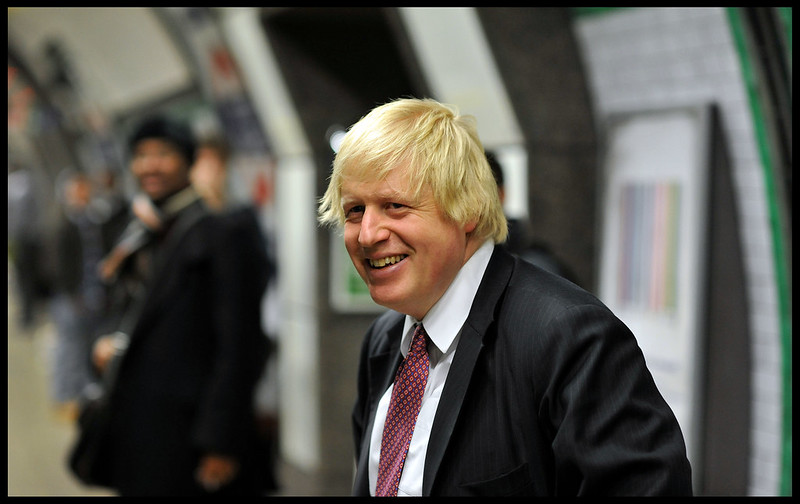
Ahead of Conservative Party members deciding our next Prime Minister, Boris Johnson is the overwhelming favourite amongst the public. In relation to outsider Jeremy Hunt, a Sky Data poll revealed that the former Mayor of London would make the best Prime Minister; he is the most likely candidate to win a General Election for the Tory Party, and is the preference to deliver Brexit.
The poll revealed that 44% of respondents felt Mr Johnson would be the best Prime Minister to Mr Hunt’s 25%; that 55% felt Mr Johnson would be more likely to win a General Election to Mr Hunt’s 19%; and that 43% felt Mr Johnson would handle Brexit the best to Mr Hunt’s 29%.
This poll will be welcome news for the Johnson camp. When addressing Tory members, he could use this poll to articulate that a Jeremy Hunt premiership is not in the interests of a divided Tory party and indeed, the country. The former Foreign Secretary clearly has the momentum going into the members’ ballot, having acquired 160 votes in the final ballot, which equates to over 50 per cent of the parliamentary Conservative Party (PCP). Prior to the Sky poll, YouGov concluded that Johnson was preferred two-to-one by Conservative members. No doubt, it is Boris Johnson’s contest to lose.
Ahead of the first hustings in Birmingham tomorrow, Mr Hunt will have intense difficulty in convincing members why they should trust him in delivering Brexit. After all, the current Foreign Secretary voted Remain in the 2016 referendum and there is a fear that he could replicate the same mistakes as Theresa May. May promised in excess of 100 times at the despatch box that the UK would leave the EU on March 29th, and almost on the three-year anniversary of the referendum, the UK remains in the departure lounge, but has missed the plane.
As a Prime Minister who voted Remain has previously failed to deliver Brexit, there is an increased scepticism of this approach, and widespread acknowledgement that a Brexiteer should be steering the ship. The entrenchment of Tory party members on their position on Brexit is evident: a majority want Brexit achieved, even if it destroyed the Conservative Party, caused a significant economic downturn and resulted in the disintegration of the U.K.
Boris received an overwhelming verdict in relation to being the best candidate to challenge Jeremy Corbyn and Nigel Farage. This could be interpreted in relation to delivering Brexit. If Brexit is completed, then the relevance for Nigel Farage and the threat that the Brexit Party poses in marginal constituencies, such as Peterborough, has dissipated. No doubt, Boris has caused offence in the rhetoric he has used in the past; some notable examples include comments in relation to women of Muslim faith who wear the veil, the LGBT community and Scots.
Despite several examples of cavalier language, Boris is a formidable campaigner; he did receive a standing ovation for his concluding speech in the BBC debate ahead of the EU Referendum at Wembley Arena. In a General Election, Johnson would resemble a form of populist character, as opposed to Mr Hunt who is more diplomatic and operating a pro-business campaign. By ‘turbo-charging’ the UK economy, he pledged to cut corporation tax to 12.5% from its current rate of 19 per cent. Johnson’s charisma will certainly pose competition to Corbyn in post-industrial Britain and marginal seats which he needs to win if Labour is to form a majority government.
Jeremy Hunt only polled 19 per cent on the issue of a General Election. It must be said that a quarter of participants did not know. This low score, however, could be interpreted from his performance as Health Secretary and that Corbyn could exploit this consistently in a General Election campaign. Hunt was the longest serving Health Secretary and under the coalition, health spending was only 1 per cent of GDP amid the deficit reduction programme. Not to mention, there was a 30 per cent increase in A&E visits between 2005 and 2015 and A&E targets of 95% were missed under Hunt’s watch. In 2018, 85.3% of patients were seen within the target of four hours.
Ahead of the hustings across the country, Mr Hunt is certainly the outsider, but they can produce several opportunities for the Foreign Secretary. He can expose the lack of detail behind Mr Johnson’s Brexit plan, force him to provide a Plan B if a no-deal Brexit is prohibited by Parliament. He could also question Boris’ integrity as a future Prime Minister. Boris is certainly the frontrunner but as the prominence of Jeremy Hunt increases and policies are scrutinised, this leadership election is certainly no fait accompli and polls can change.
Chancellor to give speech warning against No Deal impact
19 June 2019 | UK NEWS
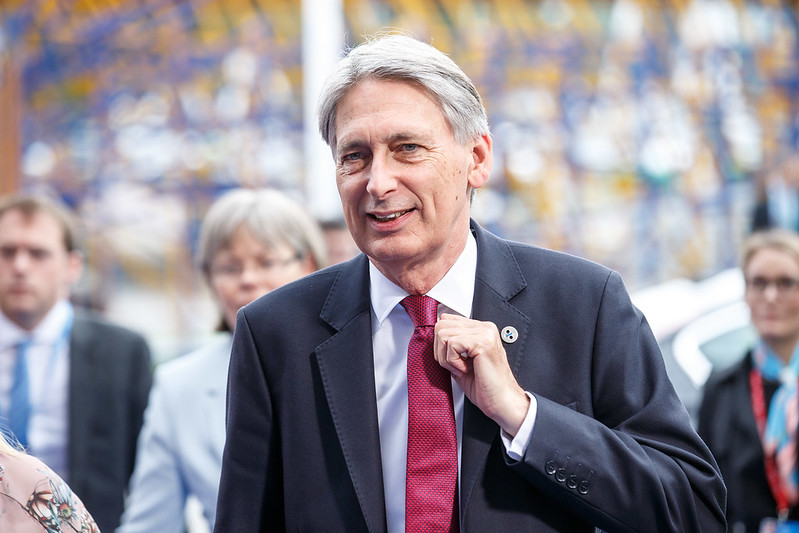
The Chancellor, Philip Hammond, is to use a major speech tomorrow in the City of London to warn that public finances could be severely impacted in the event of a No Deal Brexit. He will also say that he believes such a scenario could have adverse consequences for the union of the United Kingdom and damage Britain’s prosperity.
Mr Hammond will state that the £26.6 billion “fiscal headroom” earmarked for a No Deal scenario is likely to be soaked up quickly. He will say: “I cannot imagine a Conservative and Unionist-led Government, actively pursuing a no deal Brexit; willing to risk the union and our economic prosperity”, and is expected to add that any such developments would be likely to increase the risk of an early General Election, which could “put Jeremy Corbyn in Downing Street”.
In the speech, which will take place at Mansion House, the Chancellor will also say that he will “fight, and fight again, to remake the case for pragmatism and, yes, for compromise in our politics – to ensure an outcome that protects the union and the prosperity of the United Kingdom”. He will challenge the current Conservative leadership contenders to set out their “Plan B” for if their preferred approach to delivering Brexit fails, and is likely to hint that another referendum may be needed to resolve the current impasse.
Mr Hammond is expected to stress that a No Deal Brexit cannot pass through Parliament, and that the current Withdrawal Agreement and Political Declaration have already been decisively rejected. He will add: “It may be that I’m wrong, and a new leader will persuade Parliament to accept the deal it has already rejected, or that the European Union does a 180-degree U-turn and re-opens the Withdrawal Agreement.” However, he will urge the candidates to set out their plans in the event that this does not transpire.
The Chancellor will urge the candidates to be “honest with the public” and say that “if your Plan A is undeliverable, not having a Plan B is like not having a plan at all”, and will say that “if the new prime minister cannot end the deadlock in Parliament, then he will have to explore other democratic mechanisms to break the impasse. Because if he fails, his job will be on the line – and so, too, will the jobs and prosperity of millions of our fellow citizens.”
The problem is: choice – Patrick Timms
19 June 2019 | OPINION
The view that has constrained free markets, and free societies, for so long
For any true supporter of freedom, choice must surely be the most sacred of doctrines. It underpins every principle that holds free markets together, and we know that free markets and free societies create and support one another. As Milton Friedman noted: “A society that puts equality before freedom will get neither. A society that puts freedom before equality will get a high degree of both.”
We know that when we give people both the means to succeed, and the hope to do so, they tend to grasp them with fervour. We do this best by giving them true choices, encouraging them to be arbiters of their own destiny. But while Adam Smith did remark upon the ‘self-interest’ of “the butcher, the brewer or the baker” – and not without some wisdom – to my mind this is in fact what also brings us together in unity. Because we share a common purpose, we share a common understanding along with a common morality, and these things form part of the glue that binds a society together.
That morality is not, as critics might suggest, a form of greed; rather, we merely acknowledge our own self-interest and, in doing so, we tame and tailor it to help support our society by contributing to it in the best ways we can – because we choose to. What we get back from that should mirror what we put in.
It is for
this reason that I believe Brexit will rejuvenate that spirit once again within
these islands. The European Union, at
least in its upper echelons, has a fundamental culture problem with both Unity
and Choice, in that it understands neither.
The main trouble with the level of homogeneity behind the principle of
‘ever closer union’ is that it implies two things: –
1) ‘Unity by uniformity’ – how can we fail to be united if we are all the same?
2) ‘Unity by necessity’ – the EU is essential to all our economies, so how could anyone ever leave?
But neither of these principles can lead to true unity. Unity means mutual collaboration, in the face of difference and diversity, through choice. There must be a genuine choice as to whether to unite with others in a common purpose. The only tool the EU seems able to wield to manage diversity, however, is to eliminate it. The only way it feels it can hold its members together is to withhold from them a number of very real choices about their future as a nation – as the German Chancellor is rumoured to have all but confirmed at an event for the Konrad Adenauer Foundation in November 2018[1].
That is not Union – that is Dominion. It is also the way in which very corrupt people have always come to power, and retained it, throughout the ages – at least when they could not do so by the sword. Once, in Europe, it was said that “all roads lead to Rome”. Now, it would seem, “all roads lead to Brussels”. There has been a certain sense of inevitability about it, which fuelled the genuine culture shock felt by many people, both in this country and abroad, when Britain rejected that dogma – for a dogma it is.
During the 2016 referendum campaign, people up and down the country were asking themselves many important questions, stemming from the perceived key issues of choice and control over our own lives. In the debate this became: “what will it mean for our lives if we stay?” and “what will it mean if we go?” But for me, as the campaign wore on, it became clear that the real nub of the matter was in fact something far more fundamental, and inextricably connected to the nature of choice: “what does it mean if we can’t leave the European Union?”
We were certainly told by enough people that we couldn’t – from the government, to the banks, to the majority of economists and academics who came scurrying out of the woodwork. True, the message was framed as ‘shouldn’t’, but in fact the meaning behind it all was quite clear. Even the former President of the United States was wheeled out to warn us that free trade with a sovereign, independent Britain was of little interest to his country (a notion that his successor, whatever else you may think of him, has since emphatically denied).
There could be no viable alternative to remaining within this political and economic union that would not devastate our country, we were told. What all these negative campaigners did not appear to comprehend was that they were attempting to deny the British public the very soul of choice: each option presented must be genuine, and all opinions in the debate must be respected.
To put it in free market terms, the European Union has claimed a monopoly over the notions of unity and progress. It dominates that ‘market’ within Europe, denying free choice to those who might seek it in different ways. In an economic sense, it lauds the Single Market it has created as its crowning achievement, but alas this is indeed the ‘single’ market that its members are allowed to trade in freely, unless 27 other countries can collectively agree a deal with another.
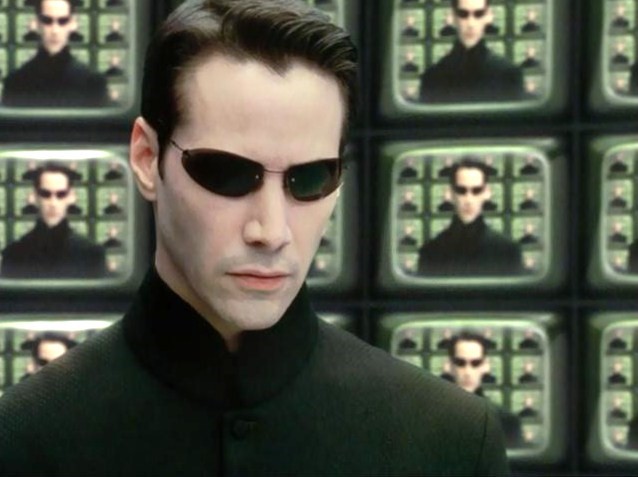
In a political sense, it has established a supreme role for its legislature and its courts above those of whom it claims to unite, while convincing countless millions that only this approach can guarantee their ‘rights’. And it has done these things for the same basic reason underpinning all monopolies: to protect itself from choices that might lead to competition, while simultaneously claiming to promote them. As the protagonist in the Matrix film series finally realises about the system designed to constrain and control him: “the problem is choice”.
At its heart, this is a question of power, but not so much in the legislative or judicial sense: rather, it is the power over hearts and minds. This is the power that has caused millions to believe the European Union is vital to their values and their way of life. It is the power that led so many citizens of a highly developed, first-world society to believe they needed to be ‘saved’ from their own government by political structures set up beyond our borders. It is the power that caused Gina Miller to feel ‘physically sick’ – or so she said – at the referendum result. And it is the power that inspired Steve Bray to put his entire professional life on hold to campaign tirelessly against the legitimate result of the largest democratic exercise in British history.
Now that, dear reader, is true power. It is also why the question of just how ‘democratic’ the EU’s political structures are is utterly irrelevant. By all accounts, there is plenty to say about that too – an elected Parliament that can merely amend legislation proposed by an appointed Commission would arguably resemble our system of the Commons and the Lords turned on its head – but I must admit, when I am asked about how democratic the EU is, I tend to reply: “that hardly matters”.
I suggest that those who wrangle interminably about whether or not the EU’s decision-making processes are founded upon democratic principles are rather missing the point. When you wield the kind of power that causes hundreds of millions to believe you are “the Way, the Truth and the Life” [John 14:6], then you have truly forged for yourself a Monopoly of the Spirit. From a Christian perspective, this may well be appropriate for God, but nothing of mankind born should hold such great sway over hearts and minds, for this denies us alternatives. Such a worldview can only invite hegemony, as indeed we have seen with the European Union.
All of this must surely run counter to the instincts and intuitions of anyone who supports free markets, but opposes sprawling monopolies. Markets have been dominated before by great entities that were deemed ‘too big to fail’, although history shows us that did not always save them in the end. But certainly during those periods of dominance, it was the consumers – perhaps, in this case, we might call them ‘citizens’ – who suffered the most.
With Brexit, we would seek to send a message, not just to our own country, nor even to the rest of Europe, but in fact to the entire world: “there is another way”. We must not allow the core values that we say we all share – peace, freedom, democracy – to become monopolised by any single player in that ‘market’. Nor should we allow ourselves to believe that the great abuses of the last century – hatred, warfare, empire-building – can only be prevented in the future through membership of a political union that seeks ever greater dominance in all affairs.
For that would make a caricature of the progress that all of humanity has made since the Second World War. We must demonstrate instead that peace and prosperity arise from human choice; that mutual collaboration must be a genuine choice; and that a stronger whole is brought about through embracing and overcoming enduring differences, which the principle of ‘ever closer union’ does not really allow for. Above all, we must show the world that these choices can be made without leading to ‘political suicide’ or ‘economic collapse’. Brexit will be the first – and by no means the last – step on that long journey.
To put it somewhat poetically, Britain has a long history of writing its own future. It has shaped that narrative down the centuries through its own choices as a nation. I would prefer to live in a world where the choices around free trade, migration and sovereignty in the ‘market’ of any given nation state are made democratically by its ‘consumers’ – its own citizens. The combined decades of successful application of free market principles in countries around the globe have taught us that this is the best way to achieve peace and prosperity for all. For that, there must be a unity of purpose that is freely entered into. And for that, there must be choice.
[1] https://www.express.co.uk/news/politics/1048913/brexit-news-angela-merkel-germany-eu-sovereignty-uk
Conservative Leadership Debate: Underwhelming Boris remains on track for top job – Chris Bradford
19 June 2019 | ANALYSIS
A cacophony of noise without substance. Rather than being a contest which should assist Conservative Party members in deciding the next Prime Minister, the debate was an episode of playground politics amongst primary school children.
The dynamics ahead of tomorrow’s third round ballot have not changed. Michael Gove, Jeremy Hunt, Sajid Javid and Rory Stewart are vying to finish in second place and join Boris Johnson on the ballot paper ahead of the Tory membership vote in July. In reality, the debate was not a game changer and failed to live up to expectations. Despite an underwhelming performance, Boris Johnson did not suffer any mortal blow to his chances of becoming the next Prime Minister.
Johnson refused to answer questions directly, but the number of participants and the absence of a studio audience ensured that he was not held accountable. He appeared to be riding two horses by describing ‘no deal’ on October 31st as only ‘feasible’. It was not a definite commitment – a deliberate tactic designed to prevent Stewart from capitalising. The former London Mayor refused to reject Heathrow expansion, despite expressing ‘grave concerns’ regarding noise and air pollution. It is clear that whilst Stewart is appealing to wider electorate, Boris is adhering to the immediate task at hand: appealing to MPs. Heathrow expansion and a ‘no deal’ Brexit are controversial issues; Boris is unwilling to alienate his supporters from either side of the argument.
Despite encouraging Boris to participate in debates so he could expose supposedly unrealistic proposals, Stewart’s momentum stalled as the other four candidates exposed his anti no-deal Brexit approach. The Development Secretary was accused of ramming the same ‘cold porridge’ through Parliament by Michael Gove; Jeremy Hunt articulated that Britain would lose their negotiating leverage by taking no-deal off the table, and Sajid Javid, who demonstrated his competence, claimed that keeping no deal as an option helps ‘focus minds’.
Unsurprisingly, the candidates had different options regarding how they would resolve the Irish border issue. Johnson believed that the Irish border question can be solved during the implementation period; he inaccurately used General Agreement on Trade and Tariffs (GATT) Art. XXIV as a justification for the absence of tariffs. For Article XXIV to be invoked, there must be an agreement of sorts between the EU and UK. Sajid Javid commented that technology could solve the border issue, despite there being no evidence of such infrastructure in place. Contrastingly, Gove and Hunt believed they could renegotiate the Withdrawal Agreement – despite Brussels confirming that there would be no renegotiation, as it stands. Not all the candidates can be correct, so it is clear that the bedevilled backstop will continue to dominate the Brexit discourse into the autumn (and beyond).
Boris used a question on tax and spending to discuss what he had done previously whilst arguing that he would increase National Insurance thresholds, without providing any detail. Johnson was criticised for prioritising income tax cuts for citizens earning in excess of £50,000. Rory Stewart continued to polarise, suggesting that there should be no tax cuts; Jeremy Hunt pledged that individuals should earn their first £1,000 every month without paying any income tax or National Insurance, whilst also articulating that he wanted to ‘turbo-charge’ a post-Brexit economy. This would entail cutting corporation tax to 12.5%. However, the sustainability of this policy has been questioned as bust, typically, follows boom.
Sajid Javid received a verbal commitment that there would be an external investigation into Islamophobia within the Conservative Party. Boris Johnson apologised for any offence caused by some of his comments, which he claimed he made when he was a journalist, although he was a politician when he claimed that Theresa May’s Brexit withdrawal agreement was a ‘suicide vest’ wrapped around the British constitution, and that veil-wearing Muslims looked like letter boxes. Rory Stewart will surely feel regretful if this debate proves to be a turning point in his chances to become Prime Minister. He could have been more assertive in condemning Donald Trump for retweeting the far-right commentator, Katie Hopkins, who described London under Sadiq Khan as ‘Londonistan’.
This leadership debate failed to live up to the theatre of previous contests and clarity often went awry. The conservative and restrained approach of Mr. Johnson did not prove detrimental. As Stewart disappointed and the rest failed to shine, this leadership election remains Boris Johnson’s to lose.